

Intelligence agencies are often blamed when the use of military force has an unexpected or negative result. The experts FREQUENTLY argue leaders end up in difficult situations because they are not fully informed, or the intelligence agencies got it wrong.
Of course, the analysis is sometimes wrong. Failures of intelligence happen and can lead to bad decisions and disastrous results. When intelligence agencies fail, as they did before 9/11the price is high. But, more often than notintelligence analysis is very good.
Perceived failures are much more likely when political leaders manipulate, ignore or even revise intelligence findings for their purposes.
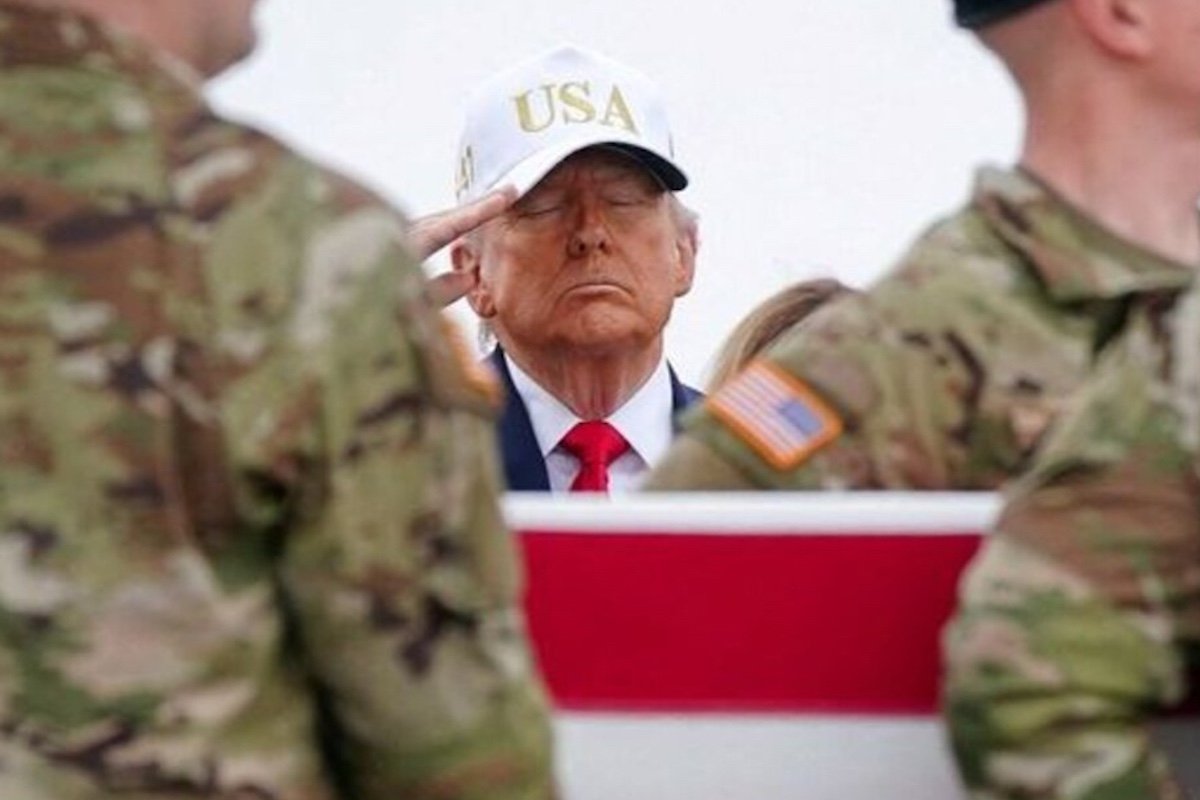
Donald Trump’s administration appears to be playing politics with intelligence regarding the ongoing US-Israel war in Iran. Tulsi Gabbard, the current director of national intelligence, told the US Congress last week that judging whether Iran presented a immediate threat it belonged to the president.
This statement exposes how intelligence was politicized and how various agencies were ignored early in the conflict.
Modern intelligence agencies resulted from difficult experiences; The Central Intelligence Agency (CIA), for example, was not created until 1947, six years after The Japanese attack on Pearl Harbor. The US had enough information to predict the attack, but the institutions of the time and the interpretations of political leaders failed to create a complete picture together.
Dramatic spycraft makes for great fun. But the most important work of intelligence agencies is meticulous collection and assessment bits and pieces of information of various kinds.
Experiences like Pearl Harbor resulted in practices that guard against individual interpretation, force analysts to consider alternatives, and subject assumptions to the critical eye of experts. It is a massive enterprise: mes 100,000 and 120,000 people now works in the US intelligence community.

The importance of autonomy
Intelligence agencies, by the nature of what they investigate, often have incomplete data. They must work carefully to avoid bias.
These biases range from internal biases, such as the concept of mirror imagesto external ones, such as political interference. Recent history is replete with examples of political interference in intelligence assessment to the detriment of their country.
Most European analysts did not believe Russia would invade Ukraine at the start of the full Russian offensive in 2022. The reason for their mistrust was that given Russia’s stated strategic goals, an outright invasion would compromise the country.
Vladimir Putin, however, had was isolated from objective analysis and continues to do so. Instead, the structure of the Russian state encouraged people who agreed with him and not those who did analysis based on expertise.
The result is a war entering its fifth year, with a heavy harm to the Russian people and Putin’s dream of a stronger Russia stalled.
But the US need not look abroad for similar examples. The greatest American strategic folly of the 21st century, the invasion of Iraq, was instigated by the George W. Bush administration. misrepresentation of CIA estimates this did not advance the goal of invading Iraq.
In charge of the invasion of Iraq, it is said that Bush and his inner circle “Cherry-picked” intelligence ratings. to justify their case for war, making them fall victim to a form of bias known as groupthink.
The invasion of Iraq had long-term consequences – it still compromises America’s geostrategic position in the Middle East and globally. The invasion, in fact, helped reinforce the regional power of the current US adversary, Iran.

Failure to learn from the past
It seems that the Trump administration has not learned from the Iraq debacle.
In her congressional testimony, Gabbard avoid the topic if intelligence agencies agreed that Iran posed an immediate threat to the US. Since Gabbard was under oath, her evasion suggests the White House misinterpreted the information or dismissed the intelligence reports.
Joe Kent, director of the National Counterterrorism Center, recently resigned in protest on the decision to attack Iran.
Kent, despite his troubled past, noted in his resignation letter that Trump chose to ignore intelligence that Iran he didn’t pose an imminent threat and instead relied on an inner circle of supporters to justify his decision to go to war.
The problems arising from Trump’s attack on Iran are grave and predictable. Not just the US failed to bring about regime change — supposedly one of the reasons to attack — but the government now in charge of Iran is even more radical than the one that has been replaced.
Moreover, the world is now facing an energy crisis, which, according to the head of the International Energy Agency, it’s worse than oil spills of the 1970s. This stems directly from Iran’s closure of the Strait of Hormuz.
While Trump is trying to determine his decision to attack Iran as victoryit is likely to be anything but not just America’s strategic position in the Middle East, but for the intelligence community and global security.
James Horncastle is assistant professor and the Edward and Emily McWhinney Professor of International Relations, Simon Fraser University AND Jack Adam MacLennan is an associate professor of international relations and national security studies and director of the graduate program for national security studies, Park University
This article was reprinted from Conversation under a Creative Commons license. Read on original article.



