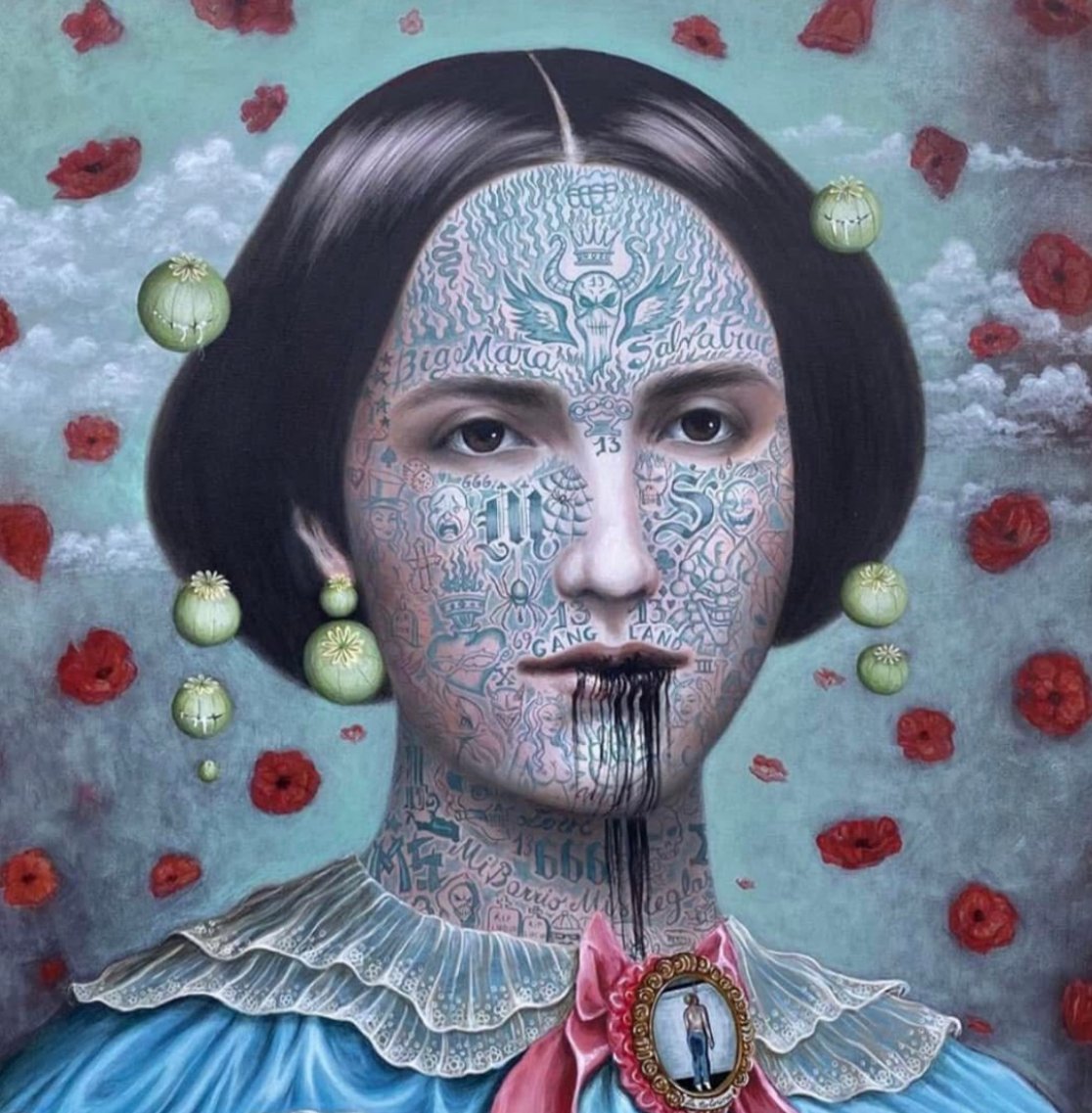


The last time I was in Santa Fe, I found myself standing in front of a tall digital screen that, every few minutes, flipped to a different view from Google Street View. I saw a man sitting on the side of the road in a white plastic chair in Serbia; a woman walking her dog on a leafy Los Angeles street; the bare ass of someone who must have seen the tech company’s can’t-miss camera car and decided to make a show of his own. The piece cycled through the images for over an hour. The Nine Eyes of Google Street View BY Canadian artist Jon Rafman was one of the cornerstone pieces in the Thoma Art Vault, a 3,500-square-foot digital art gallery, the only one of its kind in the American Southwest. Art Vault and SITE Santa Fe (one of America’s largest and best-known contemporary art museums) are two of the biggest attractions in the city’s Railyard District, the former train depot that has become a growing art district and is home to more than half a dozen galleries, all focused on modern and contemporary art.
One of the world’s most powerful art centers, this small city of just over 150,000 residents is said to have more artists and creative institutions per capita than anywhere else on Earth. However, it has a reputation, probably well-earned, as a center of more traditional and, often to a fault, Southwestern art. It’s a place where a large oil painting of a Native American warrior can go well into the five-figure range—many of Santa Fe’s more traditional galleries feature art directly inspired by New Mexico’s most famous cultural resident, Georgia O’Keeffe.
Except O’Keeffe was anything but a traditionalist and, in a roundabout way, you can draw a line from Rafman to O’Keeffe. If the Railyard Arts District had existed in her day, perhaps O’Keeffe would have found her gallery home there. Maybe not. I am neither an O’Keeffe scholar nor an expert on the Santa Fe art scene. But what stuck with me was the idea that, like any art scene worth its weight, there are, alongside Santa Fe’s more traditional galleries, contemporary art spaces where locals are creating the future of art.
According to SITE Santa Fe curator Brandee Caobathis push/pull between traditional and boundary-pushing is by no means new—contemporary art has long existed in Santa Fe. “For centuries, it has functioned as a meeting point between indigenous communities, trade routes and later, waves of artists, writers and travelers drawn to the region,” she said. “This layered history of encounter and dialogue has shaped the artistic life of the city. Within this context, artists working in contemporary forms such as installation, conceptual practices, performance, and interdisciplinary work are often discussed as a more recent development. But in many ways, these practices have long existed in Santa Fe.”
In addition to SITE’s biennial and year-round exhibitions, which keep the city’s name and reputation in the global art consciousness, she said Santa Fe’s crop of “artist-run initiatives, smaller galleries, alternative art spaces and independent curators have helped cultivate a scene that is less tied to community expectations of experimentation, the tourist market and more.” She pointed to art spaces and collectives like Axle Contemporary Art, Vital Spaces, Santa Fe Community Gallery, Relay, Ghost, Cocoon, Santa Fe Noise Ordinance, The Downlow, High Mayhem, and new galleries like The Valley, H&H and Smoke the Moon as places and people who are “central to supporting this ecosystem.”
However, as is the case in many other once-vibrant grassroots art scenes around the world, Santa Fe’s rising rents are forcing those communities to the brink, “putting increasing pressure on artists and threatening the sustainability of the contemporary art ecosystem.” One of the city’s art emergency posts is Keep it contemporarya locally owned gallery that spent years in Santa Fe Plaza, around which many of the city’s more traditional galleries can be found, before moving to the fringes of Santa Fe’s central art district.

Jared Antonio-Justo Trujillo opened the gallery in 2016, hoping to build a space to platform contemporary and local artists while maintaining a connection to the city, where his direct ancestors came from Spain to settle in Santa Fe in 1690. The gallery was his attempt to give those artists who exist outside the more traditional city limits a place to show and sell their work. However, rising rents forced him to close his original location and open a new iteration of the Keep in a neighborhood adjacent to the Railyard Arts District. “There’s not a lot of Chicano dudes from the ‘hood with locally owned galleries in this town,” he said with a laugh. “So it made sense for the gallery to move to a proper neighborhood.”
In addition to providing a place for local, contemporary and often indigenous artists to display their work, Trujillo represents many artists, both local and global, including Dennis Larkins, Dirk Kotz, Nico Salazar, Orlando Allison, Ross Pino AND Pearl Whitecrow. According to Trujillo, one of Keep’s driving missions will always be to keep art as accessible as possible. “Nothing in my gallery will ever cost more than twenty grenades,” he said. “And that’s on purpose. I want art to be accessible to everyone.”
He also sees the Keep as an introduction to people visiting Santa Fe who might not otherwise be aware of the city’s strong contemporary scene. “A lot of people come to Santa Fe to buy indigenous art: pottery, painting, weaving. I opened this gallery to educate travelers and collectors, to tell people there’s a movement here. And to me, contemporary indigenous artists, that’s the most important movement there is. The whole premise of this place is to help people give it a voice.”

Artist based in Santa Fe Ian Quali’i echoed Trujillo’s sentiment, emphasizing the value a gallery like the Keep provides, not only as a place for platform artists, but also as a place to showcase the variety of art being made in a city like Santa Fe. “There are times when people would walk in the door of the Keep and say, ‘Oh wow, this is a breath of fresh air, because every other place I’ve been in is just bronze statues of Navajo warriors or fake war bonnets hanging on the wall.’ This is not where they are coming to buy a cowhide rug,” he said.
Kuali’i is a native Hawaiian but has lived in Santa Fe since 2016, when he moved there from his longtime home in Jersey City. It was in the East Coast city’s once buzzing art scene that Kuali’i began making a name for himself as a grain cleaner and graffiti artist. He left for New Mexico to become the inaugural artist in residence at the Institute of American Indian Arts, where he honored wild intricate paper cut pieces for which he is already widely known.
No matter how modern or contemporary things get in Santa Fe, however, Quali’i still sees a thread in the work being done in the city, one that stretches back centuries. “There are art practices that have existed here since ancient times,” he said. “And those practices grow with some of the foreign art that finds its way into this city.” He noted artists such as Rose B. Simpson and her mother, Roxanne Swentzellwhose sculptures stand as perfect examples of the marriage of traditional and contemporary – the kind of art that pushes old cultural practices forward.
While there will always be artists who stay away from the scene — which, Kuali’i points out, is especially easy in a place like Santa Fe, given how much open space exists on the city’s fringes — there is a tight-knit group of people in the city whose goal is to foster a more collaborative, community-based environment. “To be so individualistic is such a white settler mentality,” added Kuali’i, who is currently guest curating an exhibit with the Georgia O’Keeffe Museum that focuses on the artist’s time in Hawai’i. “But here, there’s a small community of people who, when they succeed, pull people along.”
Santa Fe will likely always be known for its traditional arts scene. And for good reason. The city has spent the better part of the last century creating an arts ecosystem rooted in Southwestern art, indigenous or otherwise. But for collectors willing to look beyond the traditional, Santa Fe rewards a contemporary scene as vital and surprising as any other.

More artistic travel guides