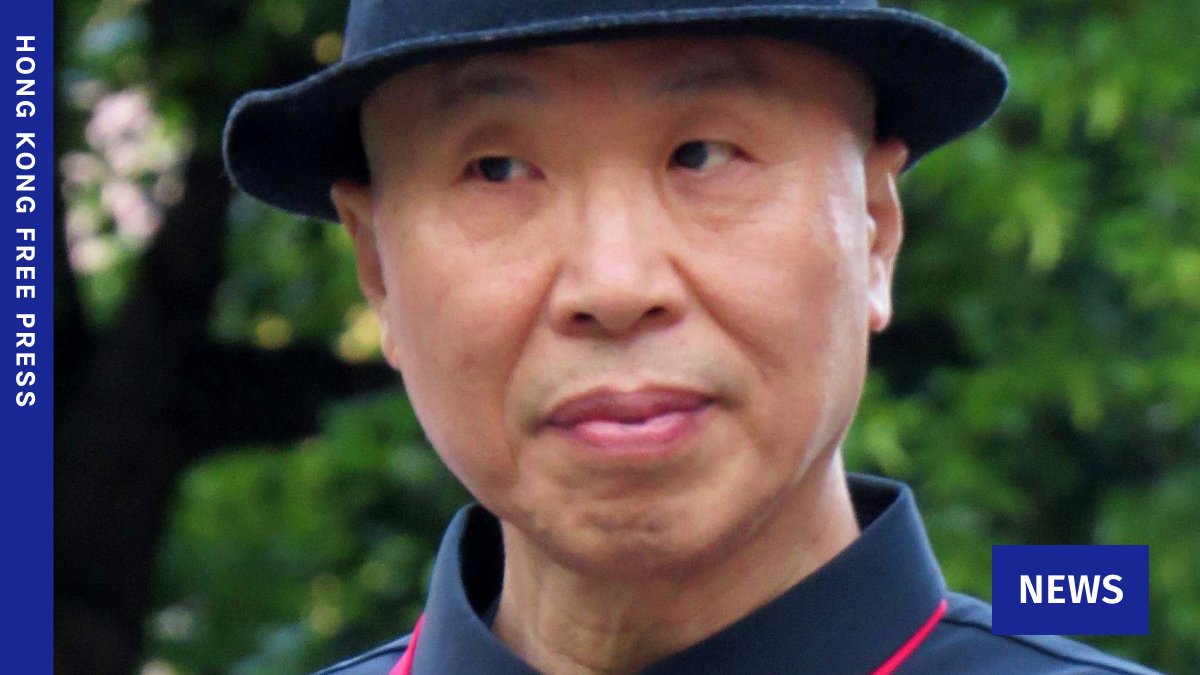

A human rights group called for the immediate release of imprisoned Chinese artist Gao Zhen, whose works criticized former leader Mao Zedong, as his trial began on Monday.

The US-based Chinese Human Rights Defenders (CHRD) said 69-year-old Gao, who is accused of defaming China’s heroes, was tried behind closed doors in a court in the northern city of Sanhe, although no verdict has yet been announced.
“Gao Zhen has the right to freedom of artistic expression. The use of a made-up law, applied retroactively, and a closed trial underscores serious due process violations,” CHRD researcher Shane Yi said in a statement.
“The charges should be dropped and Gao Zhen released immediately.”
Gao and his brother Gao Qiang rose to fame in the early 2000s for art that touched on sensitive political topics such as the Cultural Revolution, the Tiananmen Square protests and the legacy of Mao, who ruled China from 1949 until his death in 1976.
Their works include a sculpture of the kneeling communist leader, titled “Mao’s Guilt,” and another called “The Execution of Christ,” in which several bronze statues of Mao point rifles at Jesus.
Gao Zhen, who immigrated to the United States in 2022, was detained at his studio on the outskirts of Beijing in August 2024 during a visit to China.
He was charged in June of last year with the accusation of insulting “heroes and martyrs”, according to KLDNJ.
As of 2021, this crime carries a maximum sentence of three years in prison, but authorities appear to be applying it retroactively to offenses Gao created between 2005 and 2009.
Gao has several medical conditions and his health has deteriorated during his detention, CHRD said.
His wife and their seven-year-old son, a US citizen, have been banned from leaving China.
The lack of a decision on Monday indicated that “a political decision has not yet been made on the case,” CHRD co-executive director Sophie Richardson said.
“This has nothing to do with the law.”
Space for artistic expression in China has narrowed since President Xi Jinping came to power in 2012, with authorities often using the crime of insulting heroes and martyrs to target artists and cultural figures.