
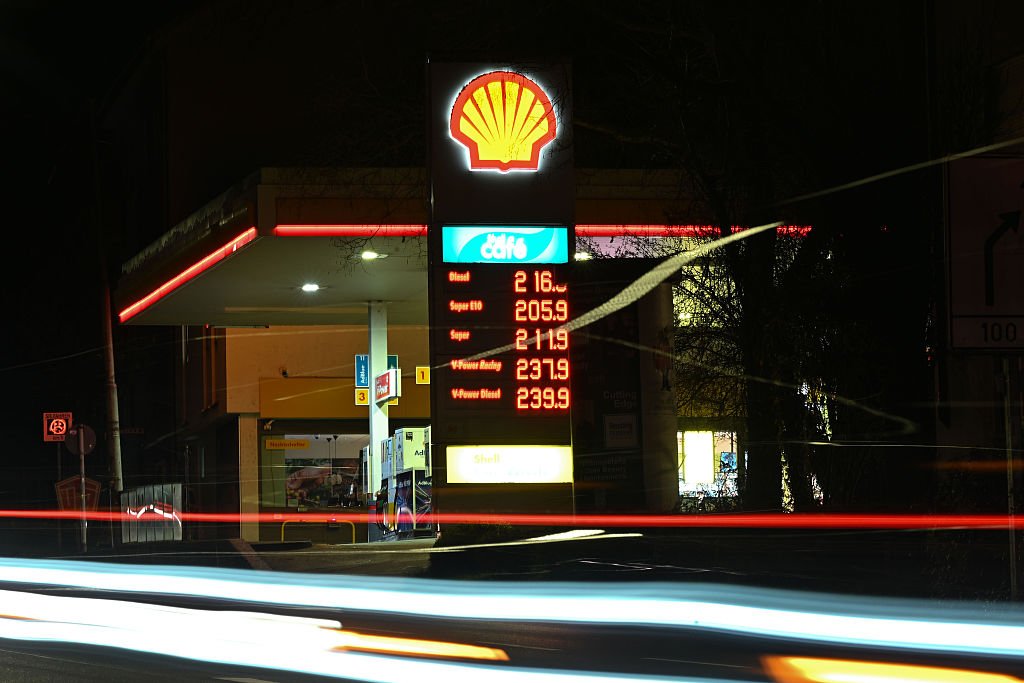

Capitals across Europe have been scrambling to intervene before prices at petrol station forecourts begin to hit voters’ pockets and the wider economy.
Iran’s blockade of the Strait of Hormuz following the US-Israeli attacks has cut global seaborne oil supplies by a quarter and LNG by nearly as much, and markets have reacted accordingly to the shortage. But market watchdogs are on guard across the EU to stamp out any attempts at profiteering.
Hungary – where general elections are just a month away and the nationalist government is trailing in the polls – was the first to put a cap on prices at the pump. Prime Minister Viktor Orbán DESIGNATED on Monday afternoon, petrol would be capped at 595 forints (€1.52) and diesel at 615 forints (€1.58). In the hope of preventing ‘petrol tourism’, only vehicles with Hungarian license plates and registration documents are acceptable – operators can charge foreigners what they like.
With Germans already paying some of the highest prices at the pump across Europe, Berlin quickly came under pressure to act, but it stopped short of Budapest-style market intervention, warning retailers not to try any funny business. First, the government assembled its antitrust enforcers.
“If price reductions do not now pass as quickly as price increases, this naturally raises questions,” said Andreas Mundt, head of the German competition authority. Katherina Reiche, the country’s energy minister, told reporters on Wednesday that Berlin would follow Vienna in banning gas stations from raising their prices more than once a day.
Austria doubles
Meanwhile, the Austrian government had decided that this was not enough and doubled down on the restriction of price adjustments, transmitted via the now commonplace electronic screens prominently placed on garage fronts.
Only on Mondays, Wednesdays and Fridays can petrol station owners increase the offer price, the Austrian government decided in response to an increase of around 15% for petrol and 25% for diesel.
The Dutch look to Belgium
The Netherlands, where fuel excise duty rose by 5.6 cents per liter on petrol and 3.6 cents on diesel this year, has been hit harder than most.
Oil prices in particular temporarily crossed the €2.5 per liter barrier before stabilizing slightly below. In response, many Dutch drivers have taken to neighboring countries to fill their tanks – and often a few cans – in Belgium or Germany.
Rocket and feather
In the UK, the immediate reaction was to let fuel retailers know they were being watched closely and that profiteering would not be tolerated. The Competition and Markets Authority said companies operating thousands of petrol stations across the country had been “notified that formal requests to supply revenue, costs and sales data will be submitted”.
Although it was not empowered to dictate prices, the CMA said it would “look into any disruptive behaviour”. Longer term, would be alert for any signs of “rocket and feather pricing”. The practice, alluded to by Germany’s competition authority chief Mundt, of raising prices quickly when input costs rise, but reducing them slowly once they have fallen.
Watch your step
France took a similar, watch-your-step approach. The French government decided not to interfere in the companies’ pricing decisions, but instead to carry out a campaign of extraordinary checks on the prices displayed at gas stations, to ensure that they are in line with what the companies declare to the government.
In just three days, the French Directorate General for Competition, Consumer Affairs and Fraud Control (DGCCRF) carried out over 630 checks, half the number of the whole of last year – and found grounds to impose fines in 5% of cases. Nothing unusual, apparently: authority said that this was “a stable rate compared to the results observed in recent months in this sector”.
Humble families and carriers
Rome, meanwhile, is preparing “compensation measures” for low-income families and “cost control measures” for road transport companies, Italian Enterprise Minister Adolfo Urso said. said The Italian Senate on Thursday.
The measures will be presented to businesses and unions “in the coming days, once we have a clearer picture of the consequences and duration of the conflict,” Urso said.
(rh, vib)



