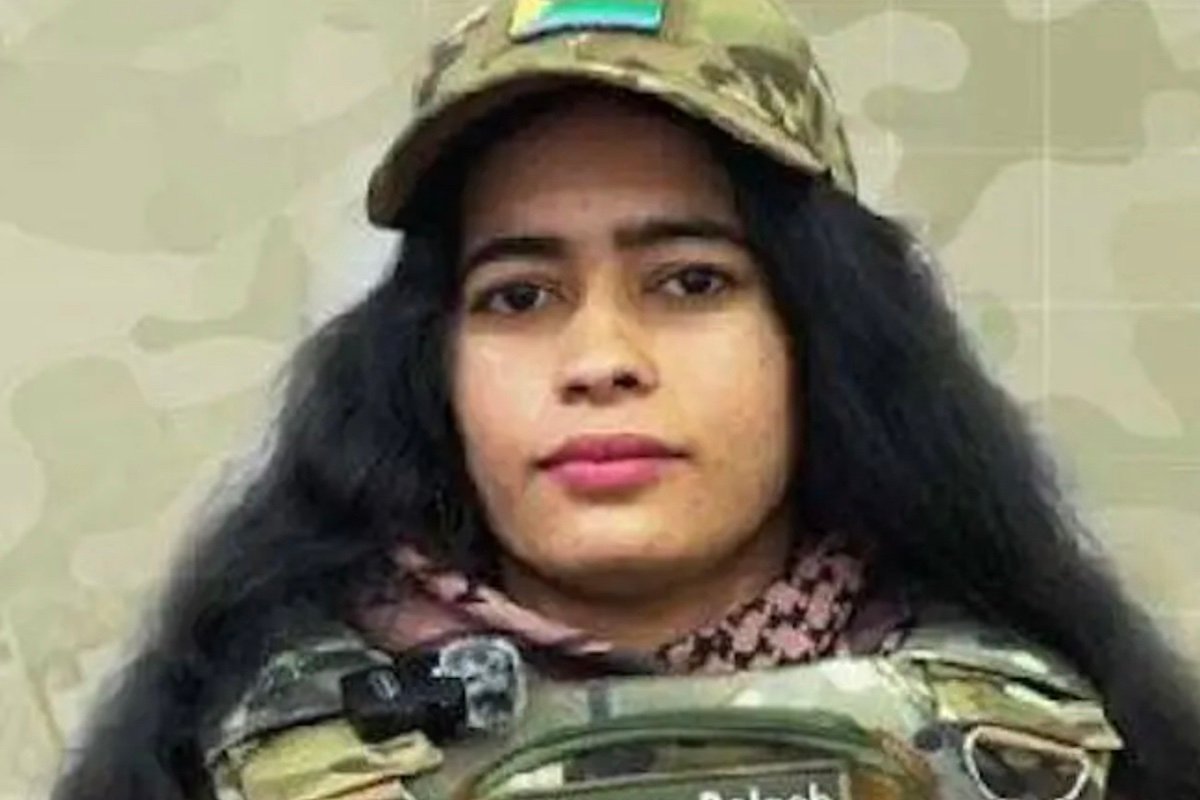

A carefully staged photograph circulated widely in early 2026: a young Baloch couple in combat fatigues, rifles slung over their shoulders, smiling at the camera in front of what the Balochistan Liberation Army (BLA) described as their joint suicide mission.
Released by the insurgent group’s media arm after its major offensive, the image wasn’t just propaganda — it signaled a deliberate transformation in Pakistan’s long-running insurgency in Balochistan, one that combines improved firepower with strategic inclusion of women.
Balochistan, the largest province of Pakistan by area and rich in mineralslocated at a critical geopolitical crossroads. It borders Iran and Afghanistan and hosts key infrastructure linked to the China-Pakistan Economic Corridor (CPEC).
For years, separatist groups such as factions of the BLA and the Baloch Liberation Front (BLF) carried out relatively restrained attacks on security forces and infrastructure. This model is shifting towards more adaptive and high-visibility operations.
The trend towards using women in militant roles gained attention in April 2022, when Shari Balochan educated teacher and mother of two, carried out the first known female suicide attack linked to the BLA at the Confucius Institute at Karachi University, killing three Chinese nationals and a Pakistani driver.
Since then, the tactic has spread. In November 2025, Zareena Rafiqattached to the BLF’s newly formed Operation Saddo Battalion, rammed an explosive-laden vehicle at the Frontier Corps headquarters in Nokundi, Chagai district. This marked the first confirmed female suicide operation by the BLF and the fifth known case overall in the Baloch insurgency.
of the rate increased dramatically in late January 2026 during the BLA’s coordinated campaign, called Operation Herof 2.0 or “Black Storm”. The wave of attacks in many districts resulted in dozens of deaths.
The BLA publicized the involvement of six women, including three suicide bombers. Militant channels published videos and photographs of women training and participating in operations, framing the development as an expansion of “resistance”.
Pakistani officials and analysts see this as a calculated response to sustained counter-terrorism pressure. Many of the women involved come from educated, middle-class backgrounds, suggesting recruitment through online platforms, stories of grievances – such as enforced disappearances and disputes over resources – and, in some cases, manipulation. Security forces have foiled several plots involving young women in recent months.
This evolution coincides with the activities of the Baloch Yakjehti Committee (BYC), a protest movement that has organized large demonstrations focusing on enforced disappearances, economic marginalization and political rights.
BYC describes itself as a non-violent civil rights platform. However, some observers note that intense narratives of victimization and state oppression can create a more conducive environment for radicalization, even if the group rejects any connection to armed violence.
Tactical changes have been facilitated by access to more sophisticated weapons. Pakistani authorities have repeatedly pointed out proliferation of weapons and equipment left behind after the US pulls out of Afghanistan in 2021. These include American-made rifles, night vision equipment and other materials said to have increased the range, coordination and lethality of attacks.
While verification of exact supply routes remains difficult, post-2021 Afghan stockpiles have been cited in regional conflict zones as a contributing factor. In Balochistan, this has allowed militants to conduct more complex, multi-target operations rather than relying solely on traditional guerrilla tactics.
The developments have implications beyond Pakistan’s borders. Attacks on Chinese interests have already strained aspects of cooperation with CPEC. A more lethal and socially embedded insurgency risks undermining regional connectivity projects, investment confidence and stability along the sensitive Pakistan-Afghanistan-Iran border.
Pakistan’s security forces have responded with large-scale clearance operations. Following the January 2026 attacks, the military reported significant militant casualties under counter-operations such as Radd-ul-Fitna.
Officials say that while legitimate socio-economic and political grievances in Balochistan require attention through dialogue and development initiatives, the deliberate use of women in suicide missions and the exploitation of external arms flows represent a dangerous escalation.
Staged images of smiling militants – including couples going on suicide operations – highlight how modern insurgencies increasingly combine kinetic violence with sophisticated narrative and propaganda strategies. In Balochistan, both elements seem to be making headway.
Addressing this emerging threat will require a balanced approach: strong security measures to dismantle networks, alongside credible political commitment and targeted socio-economic programs to reduce the space for radicalisation.
As the insurgency adopts new faces and tools, policymakers in Islamabad—and observers across the region—will need to carefully distinguish between genuine local aspirations and the adaptive tactics of armed groups.
The situation remains fluid, with competing claims by militants and security forces. Independent verification of casualty figures and operational details remains challenging in this remote and contested province.