

Along with refusing to help the United States escort oil tankers and other vessels through the Strait of Hormuz, the Europeans have also rejected President Trump’s request for minesweepers. “We defend all these countries and then I ask them: Do you have any minesweepers?”
The president knows that the US has no minesweepers. The US Navy didn’t like it and got rid of it.
Belatedly, the Navy devised an alternative of sorts, deploying a mine countermeasures package aboard some littoral combat ships. But the LCS is a big fat ship that cannot safely escort ships or destroy mines. It must operate in a deterrent capacity – it has an aluminum and steel hull and large engines that can set off underwater mines.
As a result, you won’t see any LCS ships escorting oil tankers in the Persian Gulf.
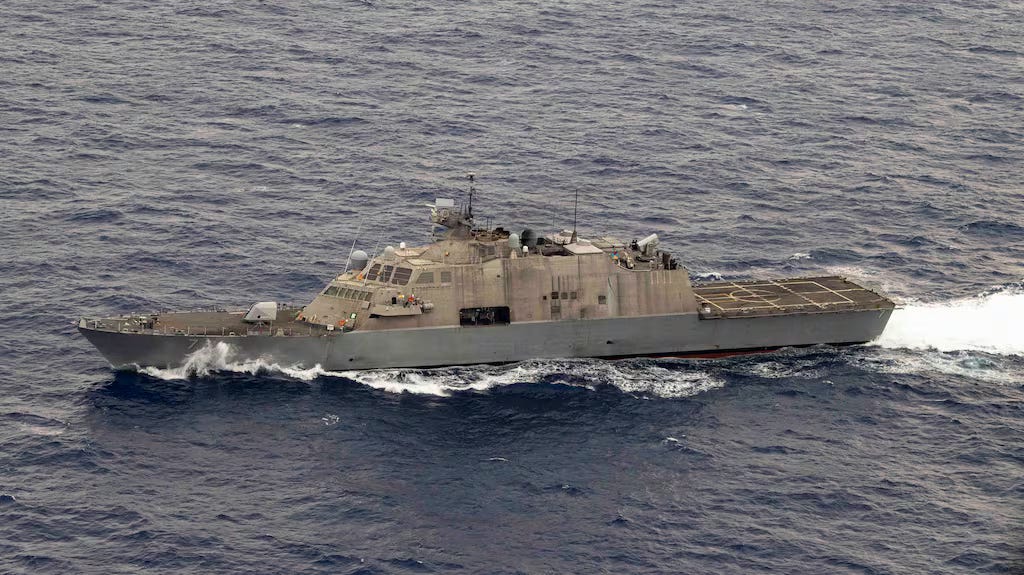
The last group of minesweepers the US had were the Osprey class hunters. These ships were produced at Avondale Shipyards in Savannah, Georgia in partnership with the Italian firm Intermarine. The design was Italian and was based on Italy’s successful Lerici class minehunters. Eight Ospreys were built at Avondale between 1990 and 1996; four more were built elsewhere in the United States under a technology license.


Lerici-class ships were exported to a number of countries, including Algeria, Egypt, Greece, Finland, Australia, Taiwan and India. Built between 1985 and 1996 (the later ones were an upgraded version sometimes listed as the Gaeta class) While Italy now plans a new minesweeper, the Lerici class vessels remain in service.
Europe has many anti-mine ships, either minesweepers (they find mines) or mine hunters (they find and destroy mines).
In 2012 I asked the US Navy to reconsider the towing of US Osprey-class ships. At one time, there were twelve Osprey minesweepers in the US Navy; two moved home to Bahrain. All have been decommissioned and a number have been sold.
Two (MHC 51 and MHC 54) docked at Beaumont, Texas in 2012.—MH-51. it was marked for disposal. MH-54 was sold for scrap. MHC 52 and MHC 53 were transferred to Greece. The MHC 55 and 59 were sold in Taiwan. MHC 56 and 57 were offered to Lithuania but not sold. Later these two ships were sold to India. MHC 58 and MHC 62 were sold to Turkey and MHC 61 was sold to Egypt while MH-62 was sold for scrap.
Consider the case of MH-62 which the Navy removed. Named the USS Shrike, it served between 1992 and 2007, or just 15 years. The typical service life of a US warship is 30 years, and the timeframe can often be extended if necessary. It was the last Osprey-class ship built in the United States.
The result of the divestment is that the US Navy lost much of its mine hunting and mine disposal capabilities.
Ospreys have fiberglass hulls to minimize the chance of triggering a magnetic mine and very quiet trolling motors. Equipped with excellent sensors, they played a major role in clearing Soviet-type mines placed in the Gulf of Iraq during the first Gulf War. They not only cleared transit waterways, but also proved effective in clearing mines from ports, including Basra, and have significant advantages over helicopter anti-mine systems.
MHC-61 Raven operated in the North Arabian Gulf and participated in exercises in the Gulf in support of Operation Iraqi Freedom. Other ships of the class, such as Cardinal (MHC-60), Heron (MHC-52), and pelican (MHC-53), were active around this time, though raven it is most specifically mentioned in the Iraq operations of 2003. (MH-60 and 61 were transferred to Egypt; MH-52 and MH-53 were sent to Greece.)
Greece says it will not participate in any military operation near Iran, Prime Minister Kyriakos Mitsotakis announced. The Egyptians deactivated their mine launchers in 2025-2026.
The Europeans have between 150 and 170 active minesweepers and minehunters. They have experienced operators and well-trained crews and ply their trade as part of NATO requirements.
NATO conducts specialized mine countermeasures (MCM) operations using standing naval forces to ensure maritime safety and security, focusing on locating and destroying naval mines, particularly in the Baltic and Black Seas. Operations in both areas amid the war in Ukraine and tensions with Russia suggest that Europe is not adverse to conducting military operations under the NATO flag against what they perceive as their main adversary.
But despite a deep mine countermeasures capability, Europe is deliberately withholding support from the United States to keep open the Strait of Hormuz, an international waterway. European argument, like Italian Prime Minister Meloni said itthat doing so is a first step toward engaging in the Iran war is inconsistent with previous escort operations to keep waterways open in the Gulf and Red Sea.
Europeans are deliberately withholding vital equipment needed to keep international shipping lanes open. This is the bottom line, no matter what chatter comes from the EU and its members.
The broader implication of these political moves by the European Union is to undermine confidence in the Western alliance system, led by the US, that has guaranteed Europe’s security since 1949, and well before World War II.
The US did not need to declare war on Germany and Hitler or save the British from extinction. Nor does the US need to come to Europe’s aid or provide vital aid if the US chooses not to. After all, the war in Europe was not America’s war.
Certainly, EU policy is undermining European security by mistreating the United States and withholding vital support.
One can be sure that there will be an account.
Stephen Bryen is a former US Deputy Under Secretary of Defense. This article originally appeared on his Substack, Weapons and Strategyand reprinted with permission.



