
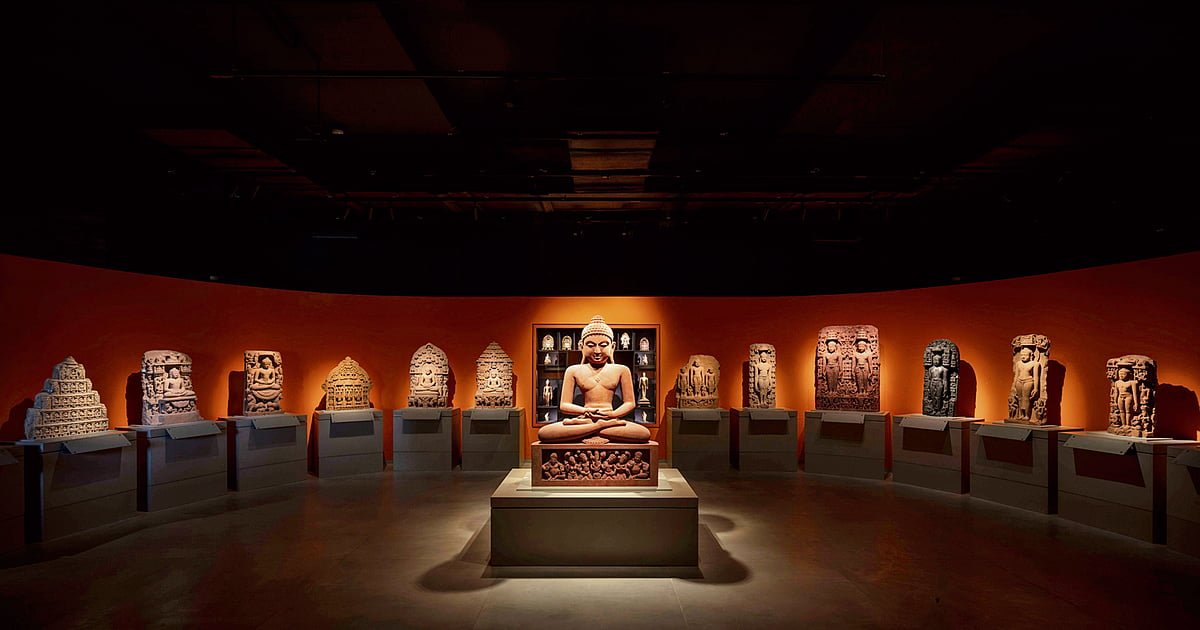

Acharya Padmasagar Surishwarji, a Jain monk conceived the museum and spent years collecting the rare artifacts now gathered within its walls. The collection he has bequeathed to his descendants counts more than 2000 objects, arranged chronologically in seven wings. Visitors enter through an introduction to the two fundamental principles of Jainism: ahimsa, the principle of nonviolence, and aparigraha, non-possession.
Pride of place among the early galleries belongs to the objects associated with the 24 Tirthankaras. A highlight is a Jina Matruka Patta – a marble slab depicting Tirthankaras reclining on their mothers’ laps. Dotted stone idols in sandstone, slate, granite and marble range from the 2nd century BCE to the 16th century CE. The famous Vasantagadh Chamber, dated between the 7th and 9th centuries CE, provides one of the most historically significant episodes of the collection. Alongside it are examples of pancha dhatu idols, while palm-leaf texts share cases with paper manuscripts, miniature paintings and more.



