
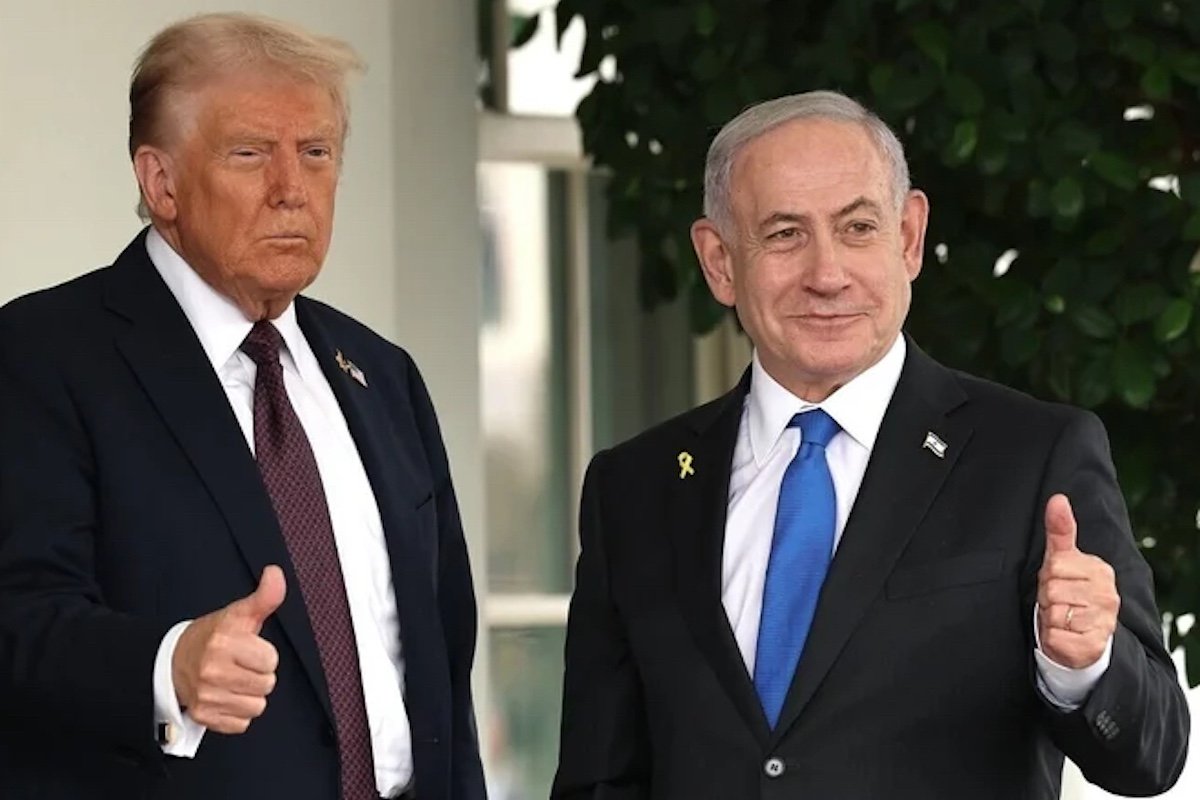

As fighting spreads across the Gulf, the war is often portrayed as a unified campaign against Iran. it is not. The reality, as is often the case in the Middle East, is more complicated.
The United States and Israel see Iran as a dangerous adversary. But dangerous for whom, in what way and for what purpose? On these questions—the ones that determine how wars are fought and how they end—Washington and Jerusalem are operating from different strategic playbooks.
For Israel, confronting Iran is a matter of survival. Iran’s nuclear ambitions, its support for proxies like Hezbollah and the Houthis, and its openly stated goal of destroying Israel pose serious threats to a country with limited strategic depth.
From Jerusalem’s perspective, the objective in any war with Iran is straightforward: dismantling the nuclear program, degrading the Iranian military, and breaking the regional network that supports it. Anything less risks merely delaying the threat.
Washington’s calculation is much broader. The US must keep open the Strait of Hormuz, through which roughly one-fifth of the world’s traded oil flows. It must avoid a regional escalation that could draw in powers such as Russia or China at a time when both are already challenging the international order.
And after two decades of costly interventions in the Middle East, Washington has little appetite for another endless war.
These limitations push US strategy toward narrower objectives: to significantly degrade Iran’s nuclear capabilities, strike the conventional capability of the Islamic Revolutionary Guard Corps, and restore deterrence—without necessarily requiring regime collapse.
A weakened but stable Iran, driven toward negotiations, may be acceptable to Washington. However, it is much less acceptable for Jerusalem.
The differences go beyond the aims of the war. They affect timelines, risk tolerance, and expectations of what happens next.
Israel operates under a sense of urgency that American planners do not share. Every month that Iranian centrifuges spin and missile factories expand brings Tehran closer to a threshold that Israeli defense doctrine has long treated as intolerable.
In contrast, American policymakers tend to evaluate conflicts through political and fiscal cycles. A prolonged confrontation in the Persian Gulf suits no one.
Risk tolerance also varies. Israel may be willing to endure heavy rocket attacks from Hezbollah, renewed fighting in Gaza and the expected wave of international criticism. It has withstood these pressures throughout its history.
The US faces a different reckoning. Its economy underpins the global financial system and its alliance commitments stretch from Europe to the Pacific. Instability in the Persian Gulf is not limited to the region; it affects energy markets, financial systems and domestic politics.
Can these interests be reconciled? Only partially – and only with deliberate coordination at the highest levels.
In the near term, the overlap is real. Both countries want Iran’s nuclear infrastructure crippled. Both seek to weaken the Revolutionary Guard and demonstrate that Iranian proxy war carries a cost.
On these objectives, the alliance remains strong. American military capabilities are unmatched, while Israel’s intelligence penetration of Iranian networks is formidable. Divergence can emerge once the first phase of strikes is over and the debate shifts from what to destroy to what comes next.
Washington will inevitably look for a diplomatic provision — a revised version of the framework once attempted under the Joint Comprehensive Plan of Action, or a similar agreement that allows both sides to back away from escalation.
Israel will be far more skeptical of any outcome that leaves the Islamic Republic capable of rebuilding its nuclear program within a decade.
Pressure on Washington – from Gulf partners, European allies and financial markets – would be intense. Israel, on the other hand, may fear that a US administration might trade off long-term security concerns for short-term geopolitical stability.
History suggests that such tensions are not unprecedented. Strategic disagreements have repeatedly surfaced within the alliance, including over the 2015 nuclear deal with Iran. The partnership continued, but the fundamental differences never fully disappeared.
Reconciling American and Israeli interests in the current conflict is possible, but it will require sincerity. Washington must acknowledge the extent of Israel’s security concerns, while Israel must recognize the limits of what even the US is willing or able to sustain.
The US and Israel share an enemy. But if their goals don’t align, they may discover too late that they were never fighting the same fight.
Eric Alter is a non-resident senior fellow in the Atlantic Middle East programs and a former UN civil servant.



