


A British court jailed two Chinese-British dual nationals on Thursday after they were convicted of spying on Hong Kong dissidents in the United Kingdom on behalf of China.

Former UK Border Force officer Peter Wai, 40, was jailed for 10 years and retired Hong Kong policeman Bill Yuen, 65, was jailed for eight years for carrying out “shadow policing” on British soil.
Tens of thousands of people, including democracy activists wanted by Chinese authorities, have moved to Britain since Hong Kong passed a draconian national security law in mid-2020.
Sentencing Yuen and Wai at London’s Old Bailey, Judge Bobbie Cheema-Grubb said their actions had been “deliberate, concerted and serious”.
They had caused “real and significant” harm, leaving the targets in fear and anxiety, the judge said.
Both men were convicted in May of assisting a foreign intelligence service under national security laws after a two-month trial.
Wai, who worked for the UK’s Border Force immigration and customs enforcement agency after previously serving in the British police and the Royal Navy, was also convicted of misconduct in a public office.
He had searched the interior ministry’s computer system for people of interest to Hong Kong authorities, prosecutors said.
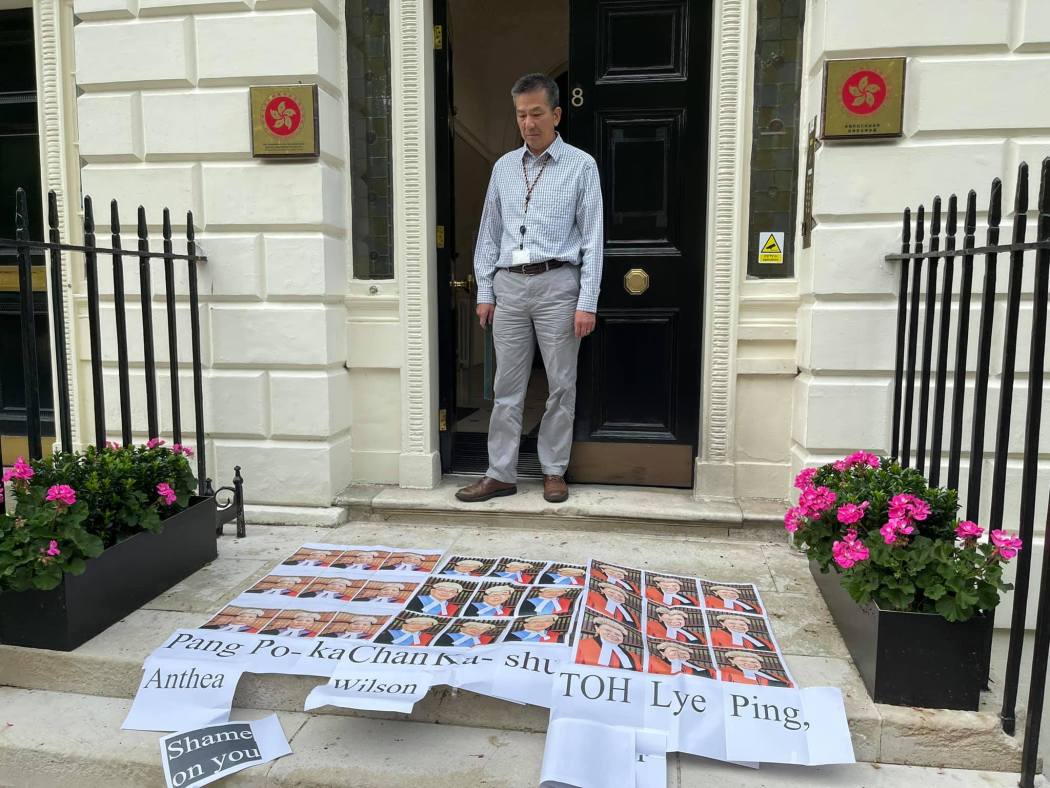
The jury was also told how Wai gathered intelligence at the behest of Yuen, who was a senior manager at the Hong Kong Economic and Trade Office (HKETO), which represents the Hong Kong government in London.
The Hong Kong government on Thursday denied what it called “baseless accusations and defamation” and said the allegations were “absolutely unrelated to the HKSAR Government, the London ETO and its duties”.

“The UK side launched the case on baseless charges, abused the law and manipulated court proceedings to secure conviction,” it said in a statement.
“Hold China to Account”
The court heard the pair targeted Hong Kong dissidents and pro-democracy protesters living in Britain, with “particular attention” also paid to politicians, including Iain Duncan Smith, a former leader of the opposition Conservative party.
They carried out intelligence gathering, surveillance and acts of deception, with one operation seizing pictures of prominent campaigner Nathan Law.
Their activities coincided with Hong Kong authorities announcing rewards of around £100,000 ($132,000) for information helping to identify several UK-based activists, including Law.
Hong Kong’s sweeping National Security Law, which severely curtailed freedoms in the former British colony, contributed to years of strained ties, which further worsened as London and Beijing traded accusations of espionage.
Britain’s current Labor government has sought to restore relations but has faced domestic opposition from some quarters, particularly after approving controversial plans for a new Chinese mega-embassy in London.
Security Minister Angela Eagle said the sentences sent a clear message that the UK will not “tolerate anyone who breaks our laws and compromises our security to help a foreign state”.
“We will continue to hold China accountable and take action against anything that endangers the security of people in our country,” she said in a statement.
This included the use of arrest warrants and rewards by the Hong Kong Police Force “which encourage illegal behavior on UK soil”, she added.





