
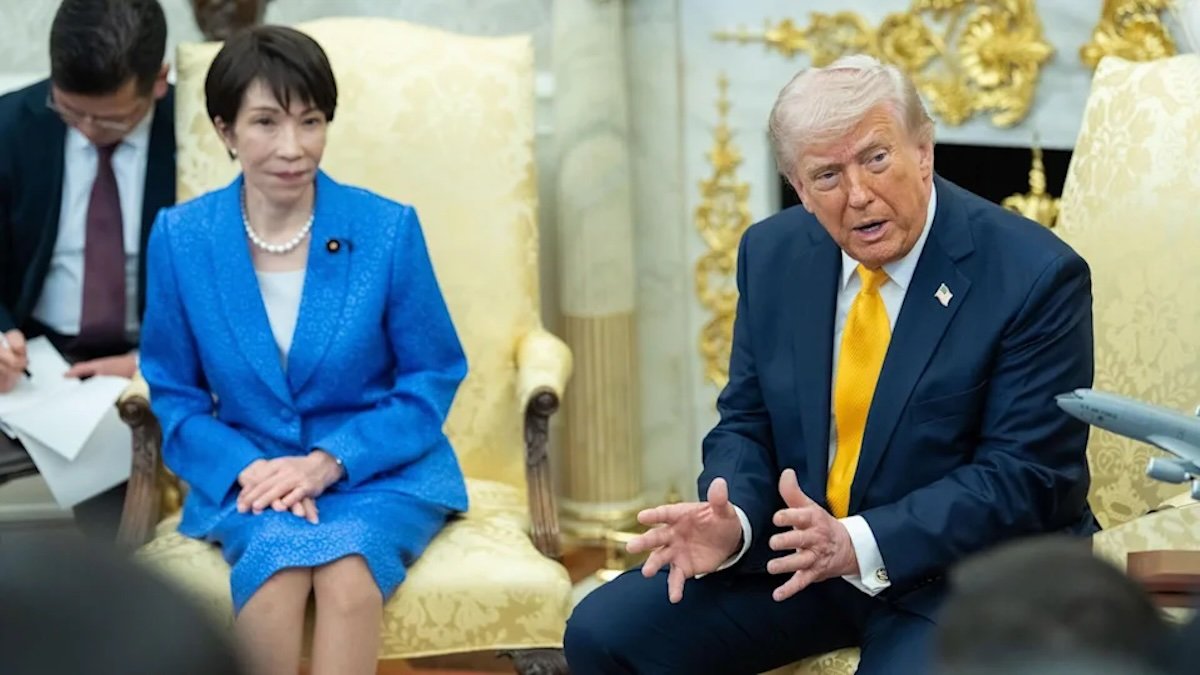

With Japan off for the Spring Equinox Day on Friday, March 20, Prime Minister Sanae Takaichi’s summit with Donald Trump was effectively the only political story of the day.
The Takaichi government itself breathed a sigh of relief, SENSE that the prime minister avoided a worst-case scenario as he headed into the summit unsure of exactly what Trump would say after demanding that Japan and other countries contribute to efforts to open the Strait of Hormuz.
So say some government sources suggested that their hopes for a broader China-focused summit became more narrowly focused on the Hormuz crisis.
Prime Minister’s performance drew positive assessments not only from members of the ruling party, but also from some opposition legislators. Democratic People’s Party (DPFP) leader Yuichiro Tamaki said it appeared to be a positive and well-run meeting, although he added that after Trump praised Japan for “progress”, it was up to Japan to determine what it can do.
Center Reform Alliance (CRA) leader Junya Ogawa similarly expressed his appreciation for the apparent warmth between the leaders – and Takaichi’s apparent success in explaining Japan’s legal restrictions – but suggested her statement that “only Trump can bring peace” was at odds with many Japanese and said she must account for her comments at home.
Japanese Communist Party leader Tomoko Tamura naturally accused him of sycophantically praising “the person responsible for bringing war and chaos to the world.”
However, in the daily newspaper Sankei, columnist Masato Inui suggested that “flattering diplomacy” could still pay dividends for Japan, arguing that the alternative in a “world full of evil” would be to lift postwar restrictions and pursue a more independent and assertive foreign policy.
Asahi’s Koji Sonoda pointed out in the same way that Takaichi’s approach to the summit reveals the uncomfortable realities of living in a world in which force reigns supreme, testing Japan’s commitment to the rule of law internationally.
In general, Takaichi appeared to capitalize on the perception that she is a “winner” – Trump repeatedly spoke of her landslide electoral victory – a tendency that has been evident in his meetings with other figures. (See his meeting with New York Mayor Zohran Mamdani, who certainly does not share Trump’s politics.)
The two leaders further strengthened their ties at a small dinner hosted at the White House, in which the group played X Japan’s “Rusty Nails” in honor of Takaichi and the two leaders cELEBRATE their relationships in front of a crowd that INCLUDING Numerous CEOs, including those of Google, IBM, Micron, Qualcomm, Palantir, Lockheed Martin, Morgan Stanley, Blackrock, Boeing and Booz Allen Hamilton.
Softbank’s Masayoshi Son, who has been heavily involved in bilateral investment negotiations (NO thoroughly welcome in Tokyo) was also present.
Meanwhile, new investment projects – small modular reactors in Tennessee and Alabama, gas-fired power plants in Pennsylvania and Texas – satisfied Trump but HAVE review withdrawn within the country.
He did not escape notification that the projects announced in the first two tranches of Japanese investment in the United States are either in battleground states that could be important for midterm elections in November or in “red” states that support Trump. There are many question whether these projects will benefit Japan and, even if they do, whether the benefits will appear on a reasonable time scale.
At the same time, Japan is still seeking commitments from the Trump administration to set Japan’s tariffs at the levels agreed last year after the Supreme Court struck down the IEEPA tariffs, prompting the administration to introduce new tariffs under its Section 122 authority. These fees were not mentioned in both the public hearing and the various ones DOCUMENTS released after the summit.
After all, like this REVIEW by the Nikkei Shimbun suggests, there is plenty of awareness that, however close the relationship between Takaichi and Trump, the structural drivers of anxiety for the Japanese government remain salient. “It will take ingenuity to keep the US committed to security in Asia,” the article notes. A review from Nikkei Washington bureau chief Takeshi Kawanami as well endnoteS the main issues that remained unresolved.
Like Asahi writesThe summit leaves important questions unanswered about the US’s commitment to East Asia, especially as it shifts assets and draws resources to wage war in the Middle East.
The paper also notes that despite Thursday’s bonhomie, there are looming issues in the alliance’s burden-sharing as Japan prepares to update its core national security documents and the two governments prepare for negotiations on a new special measures agreement to determine Japan’s contributions to host-nation support for US forces in Japan.
of Tobias Harris Japan Foresight LLC originally published this article, which Asia Times is reprinting with permission. For more information about Japan Foresight’s services or information on how to register for a trial or schedule a conference, visit its website or I extend my hand to him.



