
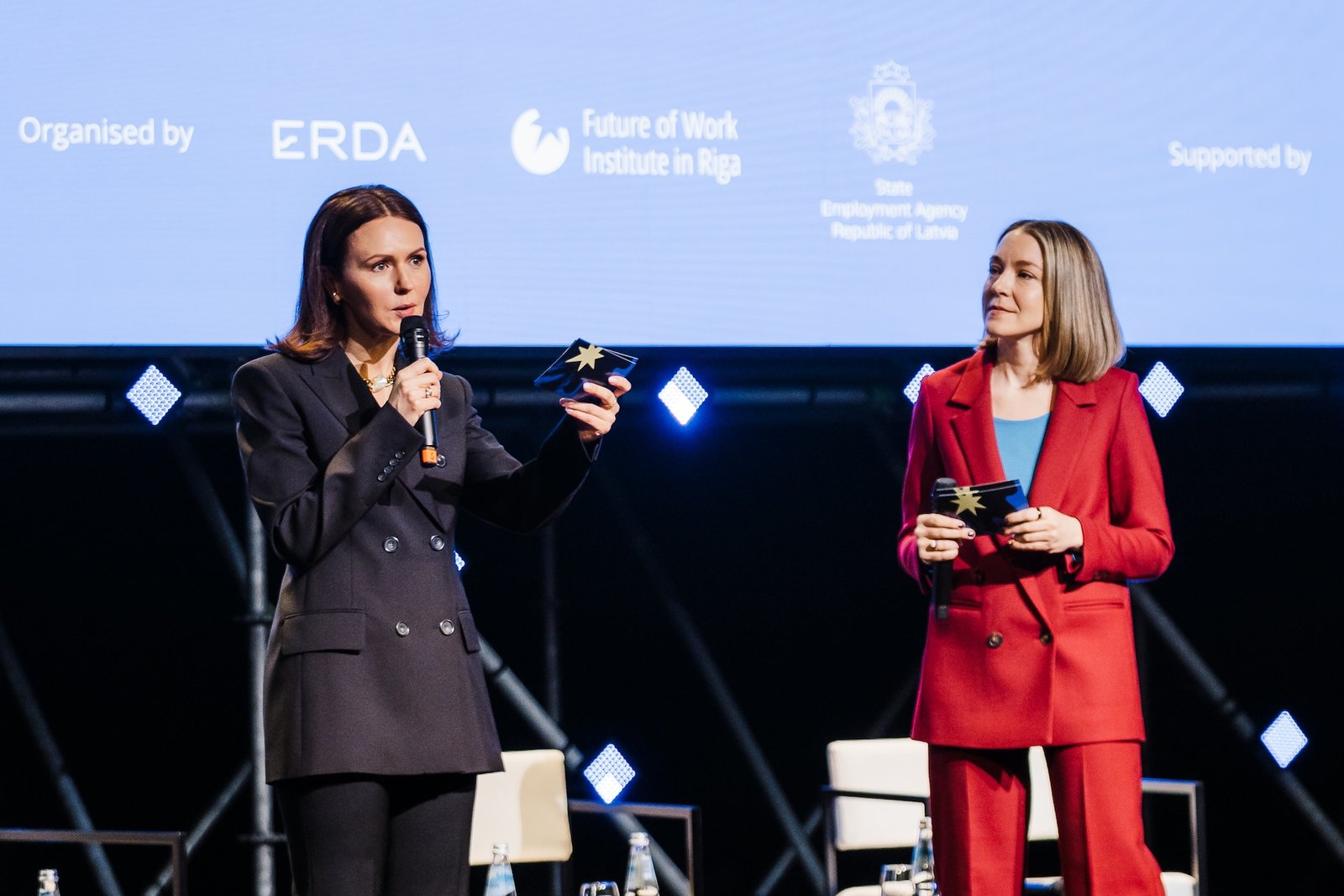

Artificial intelligence (AI) is expected to eliminate some jobs, but it will also create new ones, said the Executive Vice-President of the European Commission, Roxana Mînzatu. Mînzatu spoke in a video address at the Future of Work in the Age of AI forum in Riga, arguing that the EU should help workers navigate the transition.
She said the EU should make it easier for people to move from one job to another by expanding support for retraining and skills development. Mînzatu confirmed that these challenges will be addressed in the Quality Jobs Act, which the Commission will present later this year.
“Europe needs a skilled workforce to stay competitive, sustain its economic model and protect its way of life,” she noted.
The forum, organized by the Future of Work Institute in Riga, state employment agency and future of work consultancy ERDA, saw Google launch its AI Works for Europe initiative to help Europeans acquire AI skills. The company pledged $30 million to support Google.org’s European AI Opportunity Fund as its first AI Works for Europe commitment.
“We need to prioritize AI education at scale. Every worker from the factory floor to the ministry office needs to know when to trust AI and when human judgment is needed,” said Annette Kroeber-Riel, vice president of government affairs and public policy in Europe at Google.
Fostering the skills needed for the AI revolution
The conference comes as headlines increasingly focus on young graduates who send in hundreds of applications only to face repeated silence or rejection. At the same time, companies have continued to cite artificial intelligence as a factor in layoffs, although some experts argue that the technology is sometimes used as a scapegoat to mask other issues.
The World Economic Forum (WEF) estimates that 92 million jobs will be displaced by 2030, but still predicts a net gain of 78 million jobs, with 170 million new roles expected to be created.
“However, underneath this net gain is a significant amount of attrition. And when we look at the proximity of skills, it is not clear that those who will lose roles have the same skills needed for the roles that will grow,” said WEF managing director Saadia Zahidi.
The latest from the WEF The Future of Work Report finds that workers can expect two-fifths (39%) of their existing skill sets to transform or become obsolete over the next 4 years.
Latvian Prime Minister Evika Siliņa (JV, EPP) told the Riga audience that EU leaders agree that Europe needs to innovate faster, invest more in technology and invest more in people.
“Skills are changing, but technology cannot replace judgement, responsibility or human values,” Siliņa said.
Speaking to Euractiv on the sidelines of the event, the chairman of Ireland’s Parliamentary Committee on AI, Malcolm Byrne, said that agreeing on shared values across the 27 member states is not unique to AI, but a core strength of the EU, helping to create a unified framework that supports its wider competitiveness agenda. He said it was important to have debates, but called for more public information campaigns about AI.
“So that a wider public is informed about all of this, that there’s transparency when AI is used, but also that people are able to understand: hey, you know something, if we use AI, we’re going to be able to have better health care outcomes in all of our societies,” Byrne said.
Keep AI in classrooms, the minister asks
Byrne also called for AI to be introduced into European education systems.
His point was echoed by Estonia’s Education Minister Kristina Kallas (Eesti 200), who told Euractiv that she is noticing that European countries are regulating the use of technology outside the classroom. Technology poses great risks if untrained teachers use it. However, if used properly, AI offers many opportunities, Kallas said.
“Think about what will happen if education systems become stagnant and outdated. Kids will still use technology, but they’ll learn about it outside of the classroom in some kind of subculture or playroom,” Kallas said. “They’re not going to want to go to school and they’re going to end up sitting at home on their computer. And that’s already happening as the dropout rate is going up. Kids are finding school irrelevant.”
(BM)



