
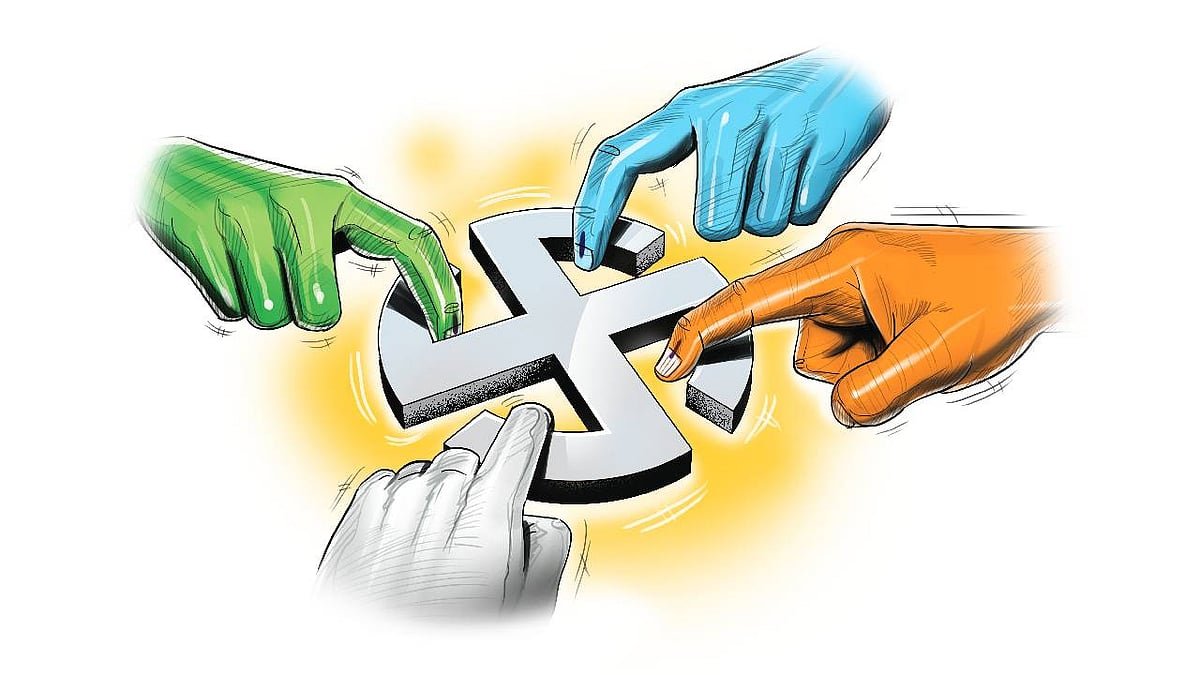

Calling the bill “anti-constitutional” and “anti-democratic”, Chavda argued that India’s Constitution deliberately gives separate powers and governance structures to states and the proposed framework threatens to erode those rights.
He raised serious objections to provisions dealing with mid-term collapse of governments, saying any deal that avoids new elections after a government loses its majority would directly violate democratic principles.
“The people elect a government for five years, not for half a term,” Chavda said while invoking Dr BR Ambedkar’s observations during the 1949 Constituent Assembly debates.
The Congress leader also challenged the BJP’s cost-saving argument, claiming that election expenditure accounts for less than one per cent of the state budget. On the contrary, he argued, simultaneous elections would require massive deployment of security personnel, EVMs and VVPAT machines at the same time, potentially increasing expenditure by thousands of crores.
Chavda further warned that if Lok Sabha, Assembly and local body elections are held together, national narratives would overshadow issues of hyper-local governance.
According to him, concerns about municipalities, district panchayats, taluka panchayats and civic administration would be buried under national political campaigns, leaving local democracy weakened and voters confused.
He also dismissed the BJP’s repeated claims of governance paralysis during the model code of conduct period, insisting that approved schemes and ongoing works do not stop during elections and accusing the government of spreading “misleading propaganda” to justify the proposal.
In a sharp political message, Chavda stated that the Congress will continue to oppose the bill at every stage, calling it “an attack on democratic and constitutional sentiments”.
Meanwhile, the Aam Aadmi Party also registered a strong opposition before the KPK and later reinforced its objections through a press conference. Senior AAP leaders including Isudan Gadhvi, Gopal Italia, Hemant Khawa, Karan Barot and Anup Sharma participated in the discussions and questioned the Centre’s intentions behind the proposal.
As the JPC continues its nationwide consultations, Gujarat’s political battle has once again exposed how the “One Nation, One Election” proposition is fast turning into a larger ideological confrontation, with one side projecting it as administrative reform and national efficiency, while the other sees it as a direct challenge to India’s federal and constitutional balance.



