
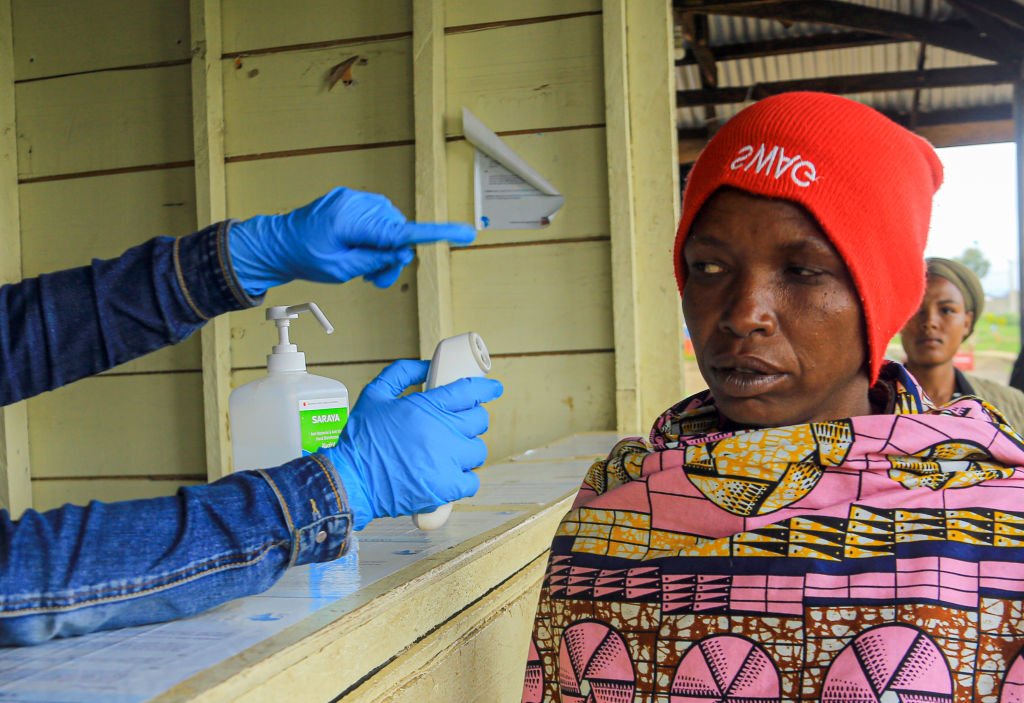

The World Health Organization declared an international health emergency on Sunday over an outbreak of a strain of Ebola in the Democratic Republic of Congo that has killed more than 80 and for which there is no vaccine.
Fears of further spread grew when a laboratory on Sunday confirmed a case in DRC’s main eastern city of Goma, which is controlled by the Rwandan-backed M23 militia.
A total of 88 deaths and 336 suspected cases of the highly contagious hemorrhagic fever have been reported so far, the Africa Center for Disease Control and Prevention (CDC Africa) said in an update on Saturday.
“A positive case in Goma has been confirmed by laboratory tests. It involves the wife of a man who died of Ebola in Bunia, who traveled to Goma after her husband’s death while already infected,” said Professor Jean-Jacques Muyembe, director of Congo’s National Institute for Biomedical Research (INRB). AFP.
WHO director-general Tedros Adhanom Ghebreyesus expressed deep concern as reported cases increase.
“I determine that the epidemic constitutes a public health emergency of international concern,” Ghebreyesus said has written at X, adding that it still “does not meet the criteria for a pandemic emergency” as defined by existing international health regulations (IHR).
As things stand, the Geneva-based WHO has now declared its second-highest alert level under the IHR – a pandemic being the highest – with the global health body warning that the scale of the current outbreak remains unclear.
“There is considerable uncertainty about the true number of people infected and the geographic spread,” the WHO noted.
The medical aid group Doctors Without Borders (MSF) said it was preparing a “large-scale response”, calling the rapid spread of the outbreak “extremely worrying”.
“The Bundibugyo outbreak has no vaccine, no specific treatment,” said DR Congo’s Minister of Health, Samuel-Roger Kamba.
“This type has a very high mortality rate, which can reach 50%.
Patient zero
The species – first identified in 2007 – has also killed a Congolese national in neighboring Uganda, officials said on Saturday.
Vaccines are available only for the Zaire strain, which was identified in 1976 and has a higher mortality rate of 60-90%.
Health officials had confirmed the latest outbreak on Friday in DRC’s northeastern Ituri province, bordering Uganda and South Sudan, according to CDC Africa.
“We have seen people die for the past two weeks,” said Isaac Nyakulinda, a local civil society representative contacted by AFP by phone.
“There is nowhere to isolate the sick. They are dying at home and their bodies are being treated by their families.”
According to Kamba, patient zero was a nurse who reported to a health facility in Ituri’s provincial capital Bunia on April 24 with symptoms suggestive of Ebola.
Symptoms of the disease include fever, bleeding and vomiting.
“The number of cases and deaths we’re seeing in such a short space of time, combined with the spread to several health zones and now across the border, is extremely worrying,” says Trish Newport, MSF’s Emergency Program Manager, who is mobilizing medical and aid staff in the area.
Large-scale transport of medical equipment is a challenge in the DRC, a country of more than 100 million people that is four times the size of France but has poor communications infrastructure.
High risk of spread
It is the 17th Ebola outbreak to hit the DRC and officials have warned of a high risk of spread.
With the outbreak mostly concentrated in hard-to-access areas, few samples have been tested in the lab.
But the WHO said the high positivity rate of initial samples, confirmation of cases in two countries and increasing reports of suspected cases “all point to a potentially much larger outbreak than is currently being detected and reported, with significant local and regional risk of spread”.
The previous Ebola outbreak was last August in the region, with at least 34 people dying before it was declared extinct in December.
Over the past 50 years, the disease has killed about 15,000 people in Africa, despite advances in vaccines and treatment.
Nearly 2,300 people died in DRC’s deadliest outbreak between 2018 and 2020.
Ebola, believed to have originated in bats, can cause severe bleeding and organ failure.
Outbreaks over the past half century have seen a fatality rate of between 25% and 90% among those affected, according to the WHO.
The virus is spread from person to person through bodily fluids or exposure to the blood of an infected person, who become contagious only after showing symptoms. The incubation period can last up to 21 days.
(hmm)



