
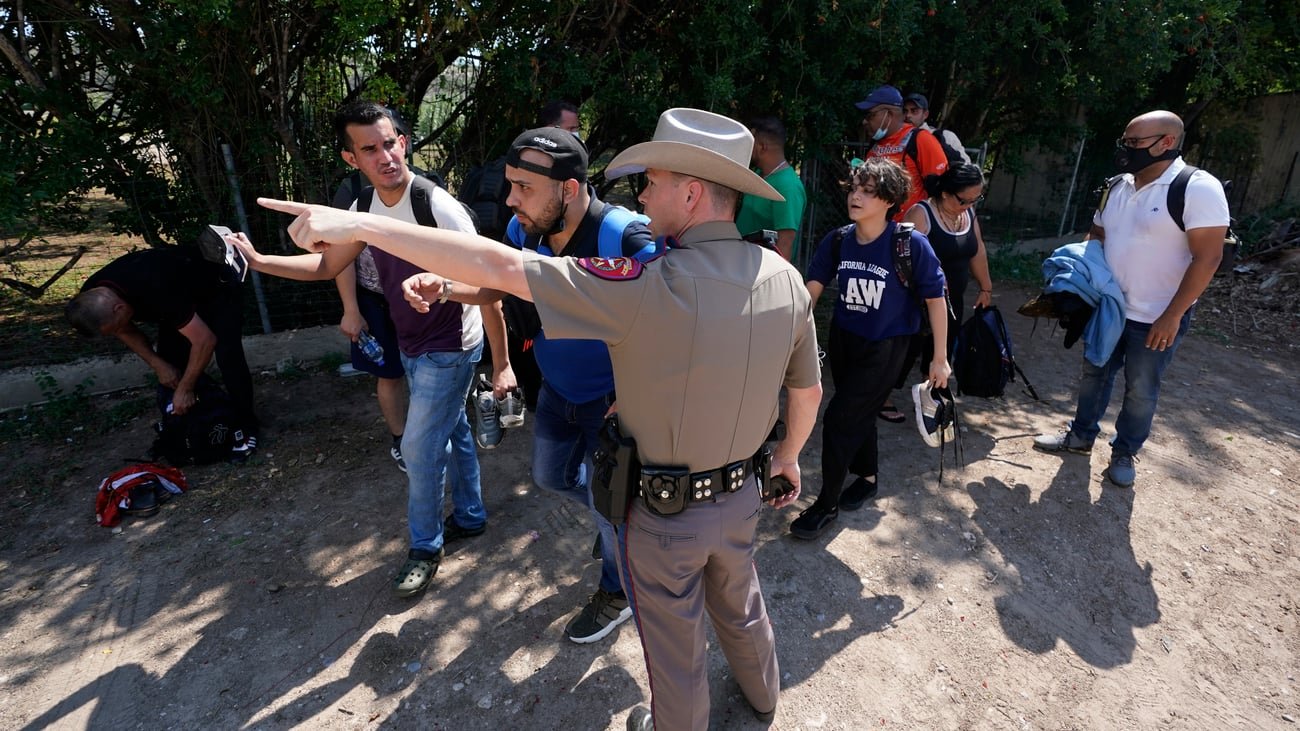

One order will prevent Texas from arresting and removing immigrants who have re-entered the US, but other parts of the law, including parts criminalizing illegal entry, will take effect on Friday.
AUSTIN, Texas (CN) – On Thursday, a federal judge blocked the state of Texas from enforcing several provisions of its controversial immigration law, just one day before they were to take effect.
In his Order with 78 pages In granting a preliminary injunction, U.S. District Court Judge David Alan Ezra found that two anonymous Honduran immigrants leading a class action had met their burden to show they faced a substantial threat of enforcement under Senate Bill 4.
“Enforcement of this law would place Plaintiffs at risk of arrest, prosecution, detention, and ultimately removal,” Ezra wrote. “The court finds that this threatened execution and the severity of the damages imposed upon the plaintiffs in the event that the potential statute of preclusion is enforced against them constitutes irreparable harm.”
The remaining provisions of SB 4 unaffected by Ezra’s order will be allowed to take effect Friday, including the ability for police to arrest anyone suspected of trespassing. The order applies only to those suspected of illegal re-entry.
Both plaintiffs live in Austin and are the primary providers in their families. One is a green card holder, while the other has received temporary approval for a U visa, which protects crime victims who have been helpful to law enforcement from deportation.
The American Civil Liberties Union, the ACLU of Texas and the Texas Civil Rights Project filed the class action lawsuit on their behalf. The defendant in the case is Freeman Martin, director of the Texas Department of Public Safety, the agency responsible for enforcing the law.
In his order, Ezra wrote that he believed the provisions of SB 4 challenged by the plaintiffs likely to violate the US Constitution supremacy clause, because the law conflicts with and impairs the federal government’s interest in regulating immigration.
Passed in 2023, SB 4 made it a state crime to violate immigration laws. Once prosecuted, judges are required to order the immigrants to leave for Mexico.
For Ezra, the law is strikingly similar to Senate Bill 1070, the Arizona law at issue in the Supreme Court’s 2012 decision in Arizona v. United States.
The judge wrote that while SB 4, like SB 1070, seeks to mirror federal immigration law, the high court has barred states from taking such action. It also found that SB 4 conflicts with federal law.
“At the broadest level, SB 4 runs afoul of federal immigration law because it gives state officials the power to enforce federal law without federal oversight,” Ezra wrote. “Congress has enacted a statutory scheme to ensure that federal immigration law is enforced under the supervision of federal officials in a uniform manner in all fifty states, and SB 4 interferes with that goal.”
This new order marks the second time Ezra has ruled against SB 4. Shortly after the law passed, immigration advocacy organizations, El Paso County and the Biden administration challenged it on the same constitutional grounds raised by migrants in the instant case.
Ezra granted the coalition’s request to block the law from taking effect, and a Fifth Circuit panel affirmed. However, in April, the full appeals court heard the case and found that the plaintiffs lacked standing, giving SB 4 the green light to take effect on May 15.
Counsel for the plaintiffs, in a joint statement, said Ezra’s order reaffirms that immigration enforcement is solely a federal matter.
“Senate Bill 4 would instill fear in our communities, cause widespread racial profiling, and subject legally present immigrants to arrest, detention, and deportation,” they said. “Texas cannot override the U.S. Constitution and should stop wasting time trying to do so.”
The Texas Attorney General’s Office did not immediately respond to a request for comment.
Other GOP-controlled states have followed Texas’ lead and passed laws similar to SB 4. And like SB 4, they’ve faced an uphill battle in the courts.
Last October, the Eighth Circuit blocked an Iowa law criminalizing the re-entry of previously deported immigrants. During the summer, The US Supreme Court upheld an appeals court’s decision to block parts of a Florida law targeting immigrants without permanent legal status.

Subscribe to our free newsletters
Our weekly newsletter Closing arguments provides the latest on ongoing trials, major litigation and decisions in courts around the US and the world, while monthly Under the lights feeds legal dirt from Hollywood, sports, Big Tech and the arts.



