
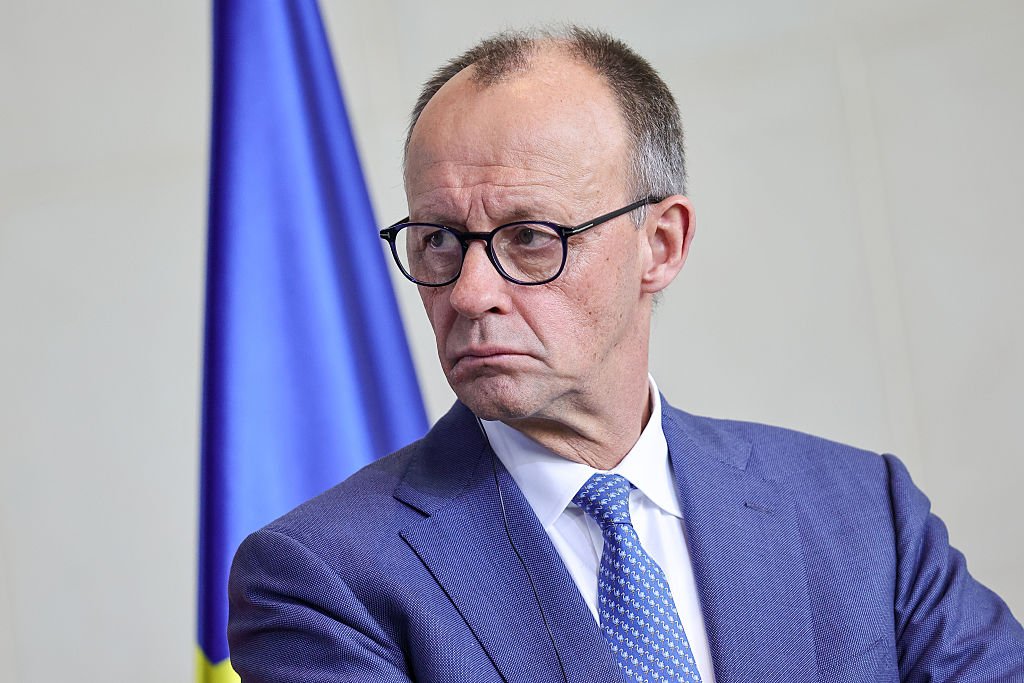

German Chancellor Friedrich Merz urged the European Union on Thursday to reform its budget to include more investment and reduce subsidies, but ruled out any joint borrowing by EU countries to do so.
The EU’s 27 countries are squabbling over the bloc’s 2028-2034 budget, with so-called frugal nations such as Germany and the Netherlands opposing a major spending increase proposed by the bloc’s Executive Commission.
“We cannot meet the challenges of the 21st century with a 20th century budget,” the conservative leader declared in Aachen, Germany, in a speech at the Charlemagne Prize ceremony for former European Central Bank president Mario Draghi.
In a scathing report on European competitiveness in 2024, Draghi called for a fundamental change of course by the bloc to stay competitive against the United States and China, particularly through joint investment.
Merz supported Draghi’s call, criticizing the fact that the EU budget “has remained, in its content and structure, practically unchanged over the last decades”.
He criticized the fact that “more than two-thirds of European funds go to redistribution and subsidies”.
The EU has long relied on subsidies and redistribution to ease the impact of disruptions caused by the reduction of internal trade barriers, as well as to help integrate poorer nations as the bloc has expanded to the east.
Merz called on the bloc to cut the budget and increase investments aimed at increasing competitiveness and protection.
However, the German leader reiterated his opposition to the mechanism championed by Draghi to finance investments: joint borrowing by EU countries.
“Excessive debt threatens sovereignty and limits the ability to act,” said Merz, whose comments were also likely aimed at a domestic political audience.
Last year, after years of inaction, Germany reluctantly eased its strict constitutional borrowing limits to boost investment in defense and infrastructure.
‘Unfinished work at home’
In his acceptance speech for the Charlemagne Prize, given to someone who advances European unity, Draghi expressed skepticism about the EU’s efforts to sign multilateral free trade deals to boost growth, a policy strongly supported by Germany.
“New trade deals are easier to agree on than dealing with unfinished business at home, because this work forces choices that Europe has long preferred to avoid: confronting entrenched rent positions and vested interests that benefit from an incomplete single market and fragmented energy markets,” Draghi said.
The former Italian prime minister, who led the ECB from 2011 to 2019, is widely seen as having saved the euro during the bloc’s debt crisis.
Draghi’s replacement at the ECB head, Christine Lagarde, delivered a similar message about the incompleteness of the European single market and the responsibility of national leaders to act on Draghi’s report.
“The United States and China have entered a new era of industrial strategy and geopolitical competition — intensified by tariff wars and rare earth battles — and all in the midst of the worst energy crisis in history,” Lagarde said in a speech last night.
(aw)



