
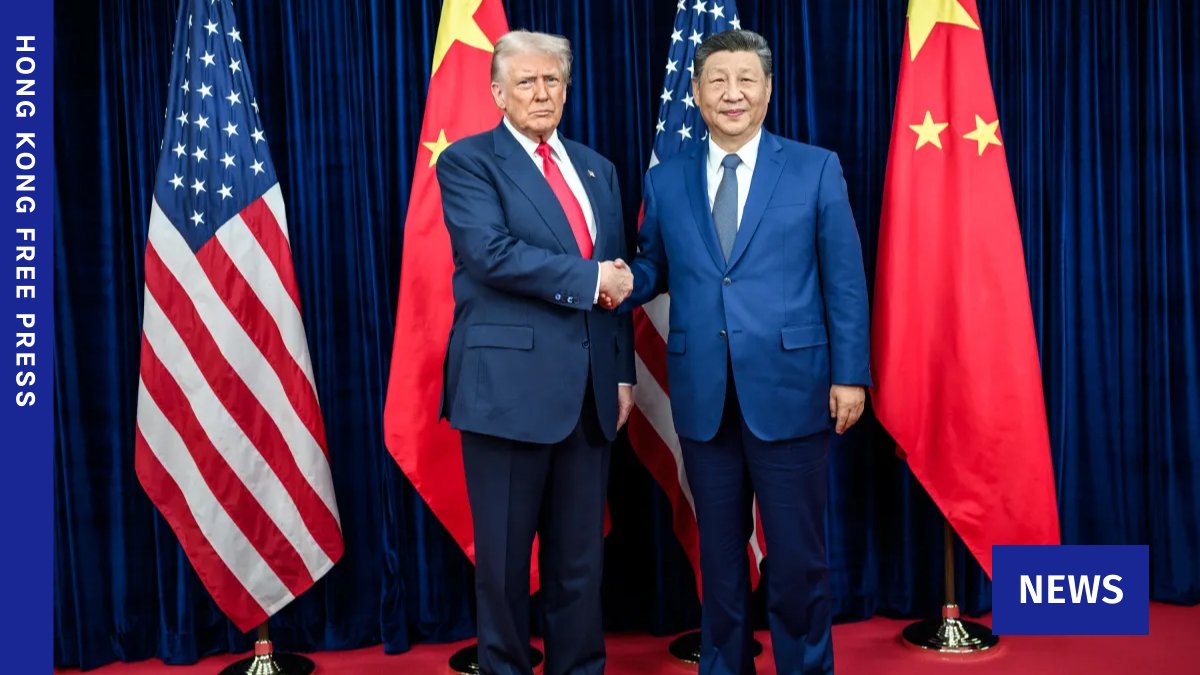

US President Donald Trump is will visit China on May 14-15where he is expected to meet with leader Xi Jinping, after an earlier summit was postponed due to the war in Iran.

Here’s what Beijing can hope to achieve:
What does China want?
Beyond diplomatic niceties and behind closed doors, Beijing will seek small concrete achievements, analysts said, but will remain “really pragmatic” given Trump’s unpredictable nature.
China wants a broad restoration of ties but knows that would be impossible, said Benjamin Ho of Singapore’s S. Rajaratnam School of International Studies.
Beijing and Washington were locked in a bitter trade war in which US tariffs on many Chinese goods reached 145 percent.
Escalation cooled after Trump and Xi agreed in October to a one-year ceasefire, with experts saying Beijing’s main goal for the upcoming meeting would be to extend that deal.
“What China needs is for Trump to follow through on his promise to engage, with at least some concrete results discussed at the highest level,” said Yue Su of the Economic Intelligence Unit (EIU).
Beijing will be satisfied with “targeted” results, such as limited tariff reductions that would justify a measured rollback of its own tariffs or export restrictions, she said.
What about the Iran war?
The topic of Iran will be “hard to avoid” in the Trump-Xi meeting, experts said, but “this is not an area where China wants to engage deeply.”
“The US is already ramping up pre-summit pressure on China by targeting its economic ties with Tehran,” said Lizzi Lee at the Asia Society Policy Institute.

Trump warned last month that he would hit China’s goods with a 50 percent tariff if it provided military aid to Iran.
Beijing is a close ally of Tehran and has called US-Israeli attacks on Iran illegal, but has also criticized Iranian attacks on Gulf countries and called for the Strait of Hormuz to be reopened.
However, China will not accept pressure from the United States to take action against Iran or Russia, over which it “may have an influence but not decisive control,” EIU’s Su said.
Beijing will also aim to avoid “additional complications” such as the introduction of new US tariffs on China’s trade with Iran in an “already complex relationship”, Su said.
The Iran war will add “another layer of mutual pressure,” Lee said, but the real ground for negotiations remains trade and investment.
What are the shopping points of China?
One of China’s main talking points is rare earths – metals essential in the production of everything from smartphones to electric cars.
China’s dominance of the rare earth industry, from natural reserves and mining through processing and innovation, is the result of decades of effort.
It remains China’s strongest tool if significant concessions are needed from the United States, Su said.
Trump has shown he “cares a lot about” rare earths, said Joe Mazur, a geopolitical analyst at Beijing-based consultancy Trivium China.
“I think that’s something that the U.S. doesn’t really have an answer for,” he said.
Mazur thinks China will “line up … quick wins” ahead of the visit, which could include buying more American agricultural products or Boeing jets.
China, he said, can hope “this will put Trump and his team in a positive frame of mind when they next discuss more complex and sharper issues.”
How is Beijing prepared?
China has hedged against Trump-induced instability by diversifying trade toward Southeast Asia and the Global South and strengthening regional ties, said the Asia Society’s Lee.
Beijing has also sharpened its legal and regulatory tools, she said, and “has a potentially broader playbook” as seen in recent times blocking the acquisition of AI firm Manus by tech giant Meta.

However, many of these measures, including the diversification of energy imports, a push toward electrification and technological self-sufficiency, predate Trump’s second term, Mazur said.
“If this meeting goes extremely well, it will not change the trajectory that China is on,” he said.
“This push to protect the Chinese economy against America will continue no matter what.”
Is China safe?
Beijing will enter the talks with “certain caution,” Lee said.
She believes she can absorb the pressure better now and is more comfortable playing “a long game” than Trump, who is facing the pressure of the midterm elections, she said.
A visit to Beijing by Russian President Vladimir Putin is also on the cards, with Foreign Minister Sergei Lavrov, who met Xi in April, saying it would happen in the first half of this year.
A back-to-back visit would send the message that “just because he (Xi) had a good meeting with Trump, it doesn’t mean that Chinese support for Russia is going anywhere,” Mazur told AFP.
“This relationship is strong.”





