
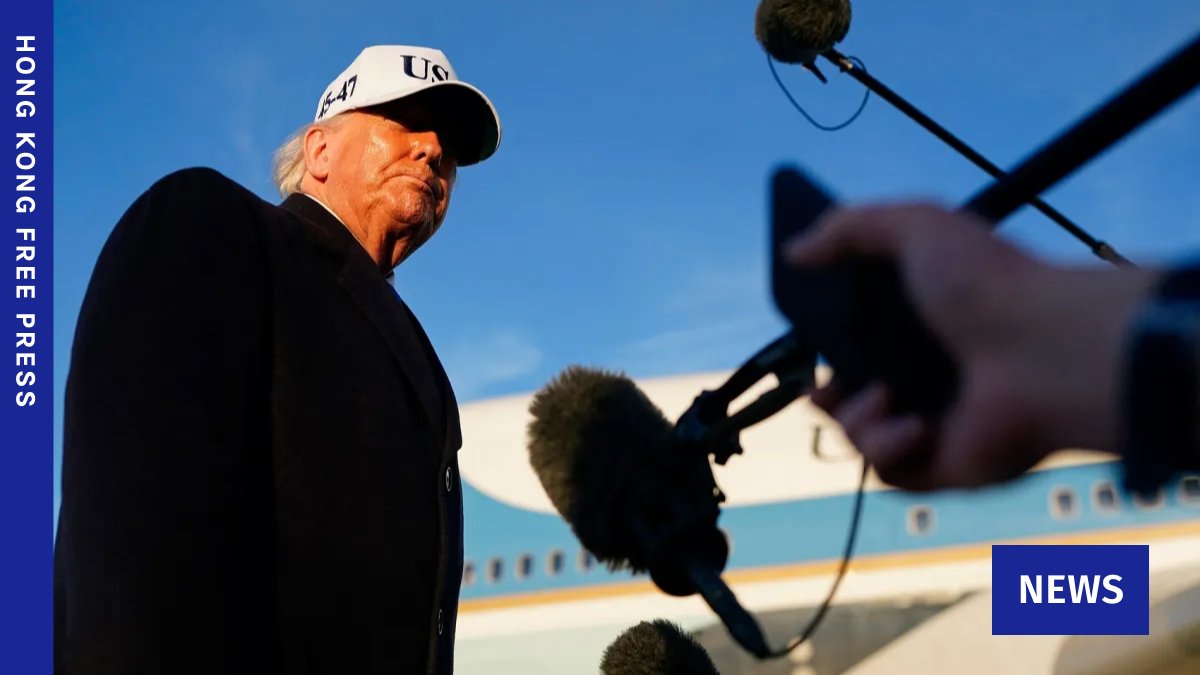

Beijing said on Monday it is in talks with Washington about an expected visit by US President Donald Trump, who has exerted pressure on NATO allies and China to help reopen the Strait of Hormuz.

Trade is set to take center stage at potential talks between President Xi Jinping and Trump expected at the end of the month.
However, Trump has suggested he may delay a meeting with Xi if Beijing does not help reopen the strait, and warned that not complying with his request would be “very bad for the future of NATO”.
The waterway, critical for transporting oil, has been effectively closed by Iran in retaliation for the US-Israeli war against Tehran.
Beijing’s Foreign Ministry said Monday that Beijing and Washington “are maintaining communication regarding President Trump’s visit to China.”
“The head of state’s diplomacy plays an irreplaceable strategic guiding role in China-US relations,” spokesman Lin Jian said at a press conference.
Lin did not address Trump’s recent pressure on NATO allies and China.
The “tense situation” in the strait has “interrupted international trade routes for goods and energy,” Lin said when asked about Trump’s comments.
Washington has said Trump will visit China from March 31 to April 2, although Beijing has yet to confirm those dates in line with its usual practice.
Top US and Chinese economic officials met in Paris for talks over the weekend, in a meeting widely seen as setting the stage for Trump’s visit.
US Treasury Secretary Scott Bessent met with Chinese Vice Premier He Lifeng, with US Trade Representative Jamieson Greer also present for the talks, according to his office.
Bessent said in a statement on Thursday that “economic dialogue” between the countries is “moving forward”.
But the meeting follows a turbulent year in US-China economic ties since Trump returned to the presidency.
Commercial investigations
United States announced new trade investigations last week on industrial overcapacity, targeting 60 economies including China and other key partners.

According to US officials, the investigations will examine “failures to take action on forced labor” and whether these burden or restrict US trade.
The move opens the door to new sanctions, prompting criticism of China earlier on Thursday for “political manipulation”.
Beijing said on Monday it “made representations” and asked Washington to “correct its wrongful trade practices”.
“We call on the US side to immediately correct its wrong ways, meet China halfway… and resolve issues through dialogue and negotiation,” Beijing’s commerce ministry said in a statement.
The latest round of investigations “is extremely one-sided, arbitrary and discriminatory,” he said, accusing Washington of “attempting to build trade barriers.”
Global oil prices have risen 40 to 50 percent since the start of the war, with the sinking of Hormuz and Iran’s attacks on energy industry and shipping targets in its Gulf neighbors.
Experts say China, which holds huge oil reserves, is better equipped than many other countries to deal with the impact of the war.
But it has reason to worry about the consequences of the situation in the Middle East on trade.
China’s official trade data for January and February, before the start of the war in Iran, showed that the country’s economy has been mainly supported by exports and international trade.





