


Through auction houses, luxury collections have become one of the most effective categories for offsetting declining art sales by expanding audiences. As shown – and reinforced – by Sotheby’s “Another World” strategy.which repositioned its headquarters as an experience-driven boutique, the the luxury segment is increasingly central to the business models of auction houses. In 2025, Sotheby’s luxury category generated $2.7 billion in revenue, up 22 percent year-over-year and surpassing $2 billion for the fourth consecutive year. IN Christie’sluxury sales reached $795 million in 2025, up 17 percent from 2024, and proved to be one of the most effective vehicles for attracting young and new buyers, who accounted for 38 percent of new buyers last year.
Across all auction houses and geographies, luxury jewelry and accessories emerged as some of the strongest performing segments, accounting for a decade-high 18.8 percent of total auction value in 2025. At a time when gold and other precious metals continue to rise, it is especially important to observe how the market is moving dynamically across secondary categories. price levels.
Sotheby’s jewelry sales topped $300 million through December, excluding the Dec. 5 jewelry and watches auction in Abu Dhabi, which was led by an $8.8 million 31.68-carat vivid rose-orange fancy diamond. Other debut format auctions at the Breuer Building generated $43.9 million in total sales. Meanwhile, Christie’s held a series of high-selling jewelry auctions throughout the year, including an $87.7 million June sale in New York and a $46.5 million December auction, with the Geneva jewelry sales in between. Among the highlights was the Mellon Blue diamond, which sold for an estimated $25.5 million — the year’s highest jewelry amount — during a week in which jewelry sales rose 24 percent.
While the market for colored gemstones has remained extremely strong, prices have been significantly driven by a small number of high-quality stones. At the same time, demand grew for signed jewelry with historical origins. A notable example was a diamond brooch once owned by Napoleon Bonaparte, which sold for nearly $4.4 million — more than 15 times its high estimate — at Sotheby’s Royal & Noble Jewels sale last November. However, there is a divergence between seasoned collectors and a younger generation of buyers, who tend to gravitate toward heritage dress designs from the late 1960s and 1970s. Tiffany & Co., Van Cleef & Arpels, Cartier, hermes, Bulgaria AND Chanel continue to attract the most attention in this category.
A recent study by FashioNica, a luxury retailer, analyzed iconic jewelery from leading heritage brands to assess which have experienced the strongest retail price growth since 2020, making them increasingly compelling opportunities when they appear on the secondary market and also proving their role as reliable long-term value-preserving assets.
Over the past five years, Chanel’s Coco Crush line has grown more than 30 percent at retail, with the bracelet now priced at $15,750 and the ring at $3,250, respectively, up 36 and 32 percent from their previous retail prices ($11,600 and $2,500). On secondary platforms, prices generally range between about $10,000 for the bracelet and $2,500 for the ring, depending on condition and materials.

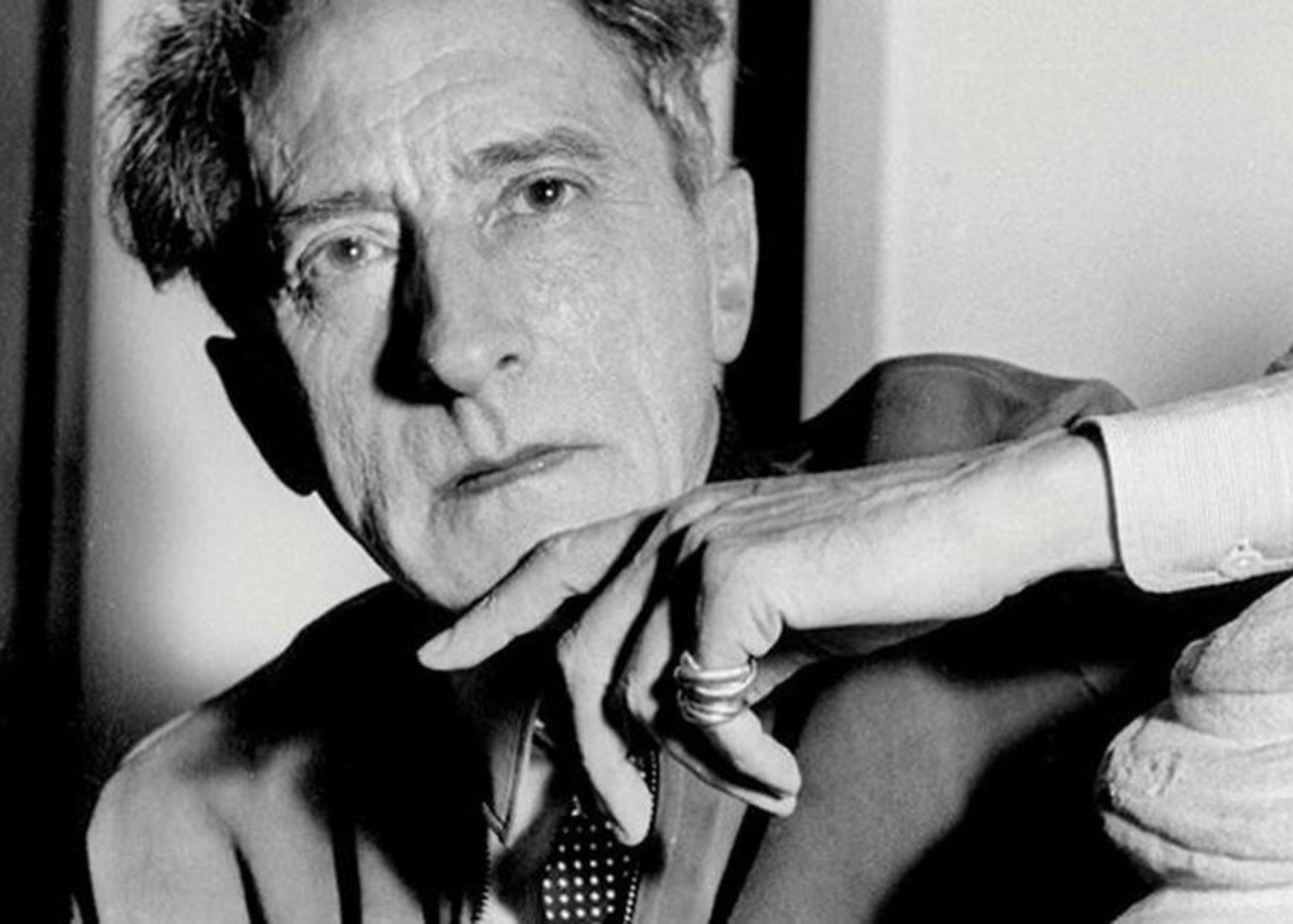
The Cartier Trinity Ring stands out as having recorded the biggest retail increase, rising 65 per cent over five years to $2,350 from its previous price of $1,400. Secondary market prices remain closely aligned, usually averaging around $2,000. As FashioNica notes, the Trinity Ring contains approximately seven grams of 18k gold—worth about $750 at current metal prices—while retailing for $2,350. The remaining price reflects the brand equity and cultural capital associated with a design that has remained iconic since 1924. Notably, as with some heritage jewelry designs, the history of the Trinity Ring is deeply intertwined with the art world. According to widely quoted accounts, her inspiration is linked to her close friendship with Louis Cartier artist and writer Jean Cocteauwho famously wore two stacked Trinity rings on his little finger, their six bands intertwined creating a visually striking gesture. The ring quickly became a cult favorite, especially within the avant-garde and queer circles of Paris, cementing its status not just as jewelry, but as a cultural signifier.
Bulgari’s B.Zero1 ring follows close behind, increasing 41 percent at retail, from $2,700 to $3,800. The bold design aesthetic continues to resonate, with more than 67,000 annual online searches. On the secondary market, B.Zero1 rings typically trade around $2,800, representing roughly 75 percent value retention. Recent results at smaller European auction houses, including Stockholm’s Auktionsverk, show standard 18k gold B.Zero1 rings selling from around £810-1,012 ($1,000-1,250), broadly in line with estimates.

Van Cleef & Arpels’ Alhambra necklace remains one of the most sought-after pieces of luxury jewelry, attracting an estimated 2.6 million searches each year. In a recent time Phillips sale, an old Alhambra onyx necklace sold for about $12,700 against an estimate of $5,000-$7,000. Rings from the same collection sold at or above estimate, ranging from approximately $4,825 to $7,000. On secondary platforms such as 1stDibsvintage Alhambra necklaces show wide variance, from about $11,750 for mother-of-pearl examples to $75,000 for rare gold versions with 20 motifs, depending on materials, number of motifs and provenance.
Hermès’ Finesse ring is another highly coveted heirloom design that has seen notable increases in retail prices. The white gold and diamond versions now start around $9,700 in the US, up nearly 20 percent from roughly $7,600 five years ago. While it rarely appears on major auction houses, the ring frequently trades on secondary platforms such as eBay, 1stDibs and RealRealtypically ranging from $1,200 to $4,800, depending on materials, condition and provenance. Diamond-set versions with heavier carat weights can exceed $5,000.
Cartier’s love bracelet also rose from a retail price of about $4,500 five years ago to $5,500 today, a nearly 20 percent increase that reflects the enduring strength of the design, which has been a flagship since 1969. Diamond versions now retail between about $12,000 and $15, On the secondary market, value retention can reach 95–96 percent for well-documented examples, placing the love bracelet—alongside the Trinity Ring—among the most “investment” pieces of jewelry at this price point. Plain 18k gold versions typically retail for between $4,000 and $8,000, while diamond models can reach $12,000.
Even higher is the current retail price of Cartier’s Juste un Clou bracelet, now listed at about $8,700, up 16 percent from $7,500 five years ago. On the secondary market, plain 18k gold versions generally trade between $4,500 and $6,000, while diamond-set examples range from $9,000 to $14,000, depending on condition and configuration.

When it comes to heritage brand jewelry, the logic of the secondary market differs fundamentally from that of art. The appeal lies less in upside resale than in structural stability. While secondary prices often dip below retail, they tend to track higher over time as primary prices rise, limiting downside volatility rather than generating speculative profits.
However, the fact that secondary prices are now closely tracking rising retail levels after relatively short holding periods supports the long-term investment appeal – especially as scarcity increasingly favors vintage examples. In a secondary market shaped by inflation, repeated retail price increases and tighter primary supply, iconic jewelry functions less as a speculative commodity and more as a store of value, benefiting from liquidity while exhibiting relatively low volatility.
Heritage jewelry houses such as Cartier, Van Cleef & Arpels, Bulgari, Hermès, and Chanel tightly control production and supply, enforce strict retail price discipline, and implement regular price increases. At the same time, a significant portion of the value of jewelry remains anchored in tangible materials—gold, platinum, diamonds, and colored stones—whose price is supported by global commodity markets. Together, these structural factors create predictable upward pressure on retail sales, compressing volatility between primary and secondary markets.
More in Lux




