

TOKYO – Indonesian officials are working overtime to dismiss any suggestion that Jakarta is catching a whiff of 1997 in the air. But the strength of their interventions to sustain the rupiah tells a different story.
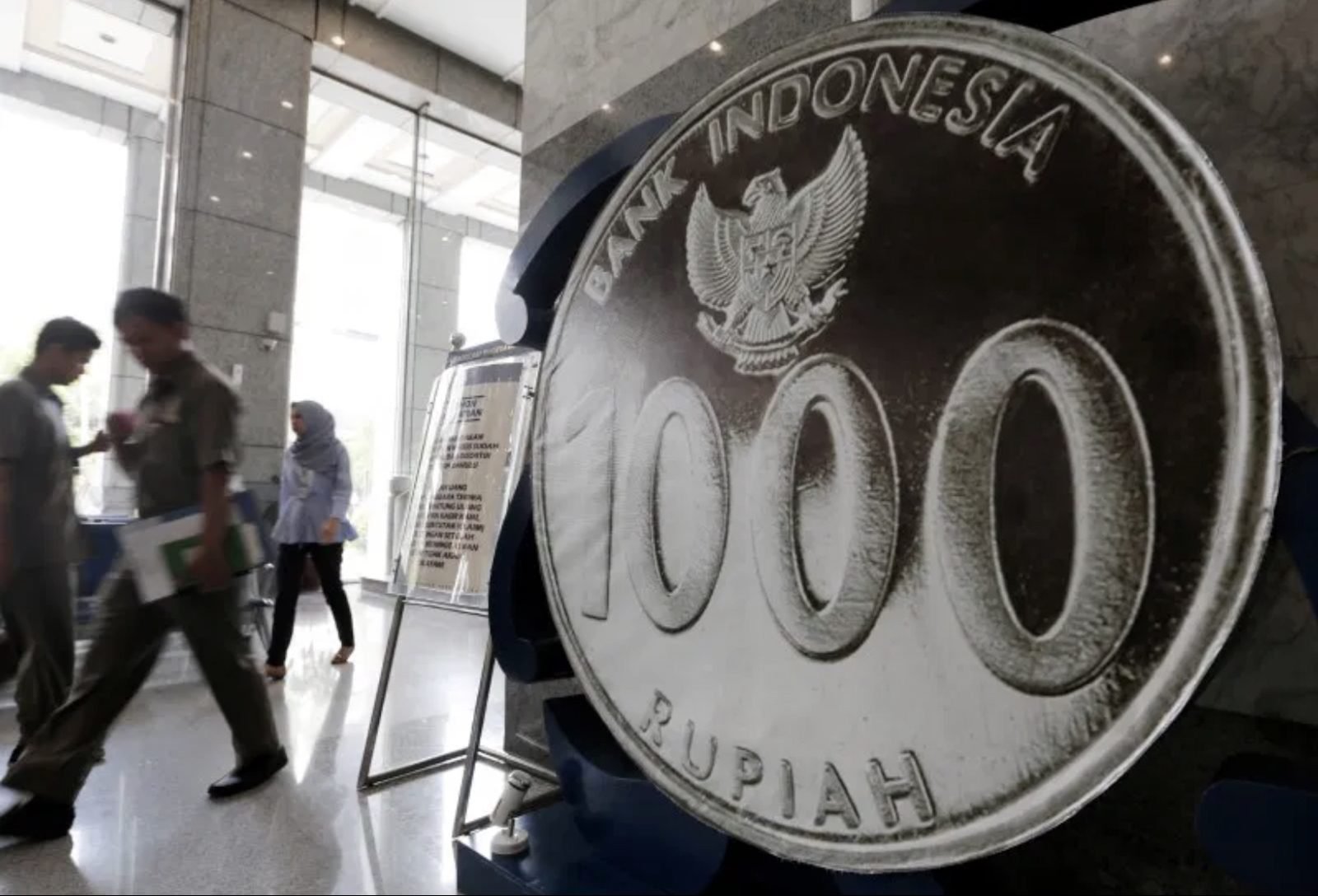
Bank Indonesia is bleeding foreign reserves to put a floor under the rupiah, which recently fell to a record low. That includes levels seen during the Asian financial crisis 29 years ago, as the fallout from the Iran war hit global markets.
However, Indonesia’s move to impose capital controls suggests that Southeast Asia’s largest economy is going to the mats against currency speculators — in ways that could backfire.
Next week, Indonesia will activate a Bond Stabilization Fund to support the rupiah, according to Finance Minister Purbaya Yudhi Sadewa. However, Jakarta’s use of so-called capital flow management tools at the start of the battle evokes more panic than strength.
To be sure, the rupiah’s fall to around 17,400 to the dollar is dramatic and a clear and present threat to the economy. A weaker exchange rate makes it harder to keep up with overseas debt payments.
It increases the chances that Indonesia will import inflation. And that complicates the export of coal, nickel, palm oil and other key commodities, all of which are priced on global markets in dollars.
But there is a dynamic of throwing the baby out with the bath water in Jakarta. Capital outflows from Indonesia reflect investors voting with their feet against the priorities President Prabowo Subianto has pursued since October 2024.
The dual budget and current account deficits are definitely part of the problem. But the biggest concern is the boring gap between Prabowo promises for reforms and the current macroeconomic policies he has advocated.
It is good that Prabowo embraced the mega-infrastructure agenda of his predecessor, Joko Widodo. But global investors have remained eager for new projects that increase productivity. They also prefer financing arrangements that do not stifle private investment by worsening the national debt.
Nor is economic nationalism a good look for a government seeking to increase its regional leadership role. This includes export restrictions on nickel and other minerals that disrupt global supply chains and regulatory instability that increases risk premiums.
Prabowo, meanwhile, has done little, if anything, to reduce Indonesia’s reliance on commodities to generate growth. This dynamic exposes that of the nation 287 million people to extreme price fluctuations.
The Prabowo team has done itself no favors by dismissing investors’ concerns. Its heavy intervention in the currency and the pressure on the state-owned banks are exacerbating these concerns. Indications of more spending efforts to come are not helping.
It seems the markets are no longer buying what Team Prabowo is selling. The fall in the rupiah “is a signal that macroeconomic fundamentals are under pressure,” says Liza Camelia Suryanata, head of research at Kiwoom Sekuritas Indonesia. Also, notes Suryanata, “the 8% GDP growth target has become very unrealistic, and even maintaining around 5% is starting to look difficult.”
Nor is Suryanata surprised that the Jakarta Composite Index is down nearly 19% year to date. This compares to positive year-over-year returns Malaysia and Thailand and a stock market in the Philippines that is basically flat.
In late April, index giant MSCI widened its review of Indonesia’s stock market to determine whether it could be downgraded from “emergency” status amid growing concerns about transparency under Prabowo.
Since January, Jakarta has announced steps to increase the amount of shareholder data and doubled the share of shares available to the general public to 15%. Exchange too banished some shares owned by the tycoon.
Last month, Jeffrey Hendrik, acting CEO of the Jakarta stock exchange, said his team would “continue to engage with global investors to gather input on future capital market strengthening.”
Indonesia’s problems run much deeper than that. Nor is it the only Asian economy in harm’s way. The Indian rupee, for example, has depreciated even more year-to-date than the rupee (down 5.1% AND 4.1%respectively).
“Emerging market Asia is in the direct path of being hit with relatively loose policy,” says economist Lucila Bonilla at Oxford Economics, noting that Oxford has added rate hikes to its base for India, Indonesia and the Philippines. Thailand, meanwhile, is “the outstanding danger of patience turning to complacency.”
However, Indonesia was reeling before the bombs started falling on Iran on 28 February. Even before the war began, the rupee and stock market were suffering their worst hits since the 1997-98 Asian crisis, sparking warning signs for emerging markets across Asia. It was clear in January that markets had become wary of general-turned-politician Prabowo’s policies.
When Prabowo succeeded Widodo with more reforms, he inherited an economy that had gained momentum. Between 2014 and 2024, the widely popular Widodo restored stability to Indonesia’s political landscape and ushered in several significant reforms – most notably a wave of transformative infrastructure projects designed to it raises productivity and competition.
In the Widodo era, Indonesia also made progress in tackling corruption and bureaucratic inefficiency, pushing government institutions towards greater transparency. These improvements helped to increase the quality of growth, ensuring that more Indonesian households shared the benefits of increased production.
And under Widodo, Indonesia weathered the Covid-19 shock more effectively than many of its emerging market peers. However, for all his achievements, Widodo left important structural issues unresolved.
Critics say he tolerated the rise of dynastic politics and allowed old-style patronage networks to continue. And by backing a successor from the armed forces, he opened the door to a much less predictable leadership style — a remarkable change given that Widodo was Indonesia’s first president from outside the military or political elite.
Global investors felt the shock almost immediately after Prabowo took office. His promise to boost Indonesia’s $1.4 trillion economy to 8% annual growth initially revived foreign enthusiasm.
But that optimism evaporated as it became clear that his strategy relied on aggressive fiscal expansion. Capital outflows surged as investors reassessed risks following the new administration’s growth ambitions.
Nine months into his presidency, in September 2025, Prabowo suddenly fired the internationally respected Minister of Finance Sri Mulyani Indrawati. A former managing director of the World Bank, she had long been seen as the main bulwark against a return to fiscal overreach.
After she got out, Prabowo installed the Purbaya trust, which quickly injected roughly $12 billion into the economy to start lending.
Purbaya then moved swiftly to advance Prabowo’s controversial “burden sharing” plan – a push to nudge the central bank towards looser monetary policy just as the government was winding down the fiscal accelerator.
Economists worry that BI is simply becoming an extension of the president’s growth strategy. ANZ Banking Group strategist Jennifer Kusuma notes that BI’s growing role in the sovereign debt market “would drive moral hazard” going forward.
In late January, as the Indonesian rupiah fell to a record intraday low, Purbaya issued a statement stressing that BI remains free to make its own calls.
“We will preserve the independence of the central bank and the government as much as possible,” Purbaya said. “I will not squeeze the central bank to finance our development programs.”
The folks at MSCI are clearly not convinced. In January, the index provider warned of “fundamental investment issues” in the Indonesia stock market – a statement that triggered one of the most dramatic sell-offs since the 1990s. It amounted to a stinging rebuke of Prabowo’s hyper-positive economic return.
Many investors now fear it is too late to give Prabowo the benefit of the doubt. Instead of taking steps to strengthen Indonesia’s economic foundations and rebuild market confidence, its finance minister has attacked economists in a style reminiscent of Donald Trump, further unsettling global funds.
Just as Trump attacked the Goldman Sachs chief economist for toeing his administration’s line, Prabowo’s team has publicly condemned Citibank analysts after a report warned that Indonesia’s budget deficit could widen to 3.5% of GDP – well above the legal limit of 3%.
Purbaya indulged in Trump-style theatrics when he dismissed the Citi forecaster — who holds two master’s degrees — as “not a real economist.” But you don’t need a PhD to see that investors aren’t shunning Citi’s warning. Least of all MSCI, which has treated the concerns as anything but trivial.
However, as MSCI continues to argue months later, only bold and transparent capital market reforms can achieve this. MSCI raised concerns about “continued ambiguity in share structures” and “potential coordinated trading behavior that undermines proper price formation.”
The biggest problem is that prioritizing political control over creating a more productive one economistPrabowo and his economic team may be dragging the economy back to the days of living dangerously.
The irony, of course, is that Prabowo is a protégé of dictator Suharto, who was toppled amid the political chaos of the 1997-1998 financial crisis. Without supply-side reforms, Prabowo’s fiscal priorities will also negatively impact the economy.
The same goes for the president’s attack on the central bank. Indonesia has, in many ways, joined the Fed on the front lines of the battle for monetary policy autonomy.
The danger, says Wijayanto Samirin, an economist at Paramadina University, is that BI officials “get too deep and detailed in fiscal matters and this disrupts our monetary policy ecosystem.”
Prabowo’s attempt to weaken the independence of the central bank and implement costly populist programs suggests a poor grasp of the very forces that fueled Indonesia’s 1997-98 crisis.
And despite Malaysia’s cautionary tale 1 Development Malaysia Berhad scandal, he has continued with the creation of a sovereign wealth fund, Danantara — a move that has already raised red flags about governance risks and potential conflicts of interest.
Markets are not always fair. But chaotic stock losses and rupiah volatility have left investors feeling a 1997-like spirit in the Jakarta air. This puts the onus on Prabowo to demonstrate that he has a plan to move Indonesia forward.
The current fear of an accelerating decline is the last thing the nation needs in 2026. And moves to limit capital flows address symptoms, not underlying problems.
Follow William Pesek on X at @WilliamPesek



