
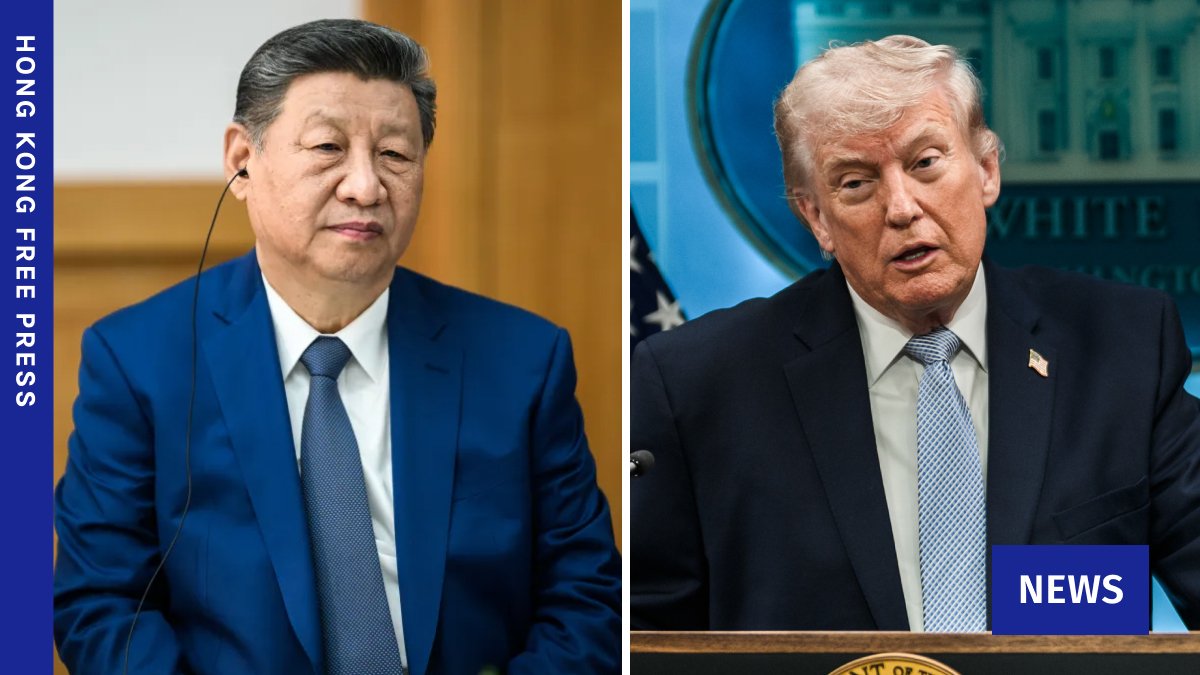

US President Donald Trump heads to a superpower summit with Chinese counterpart Xi Jinping next week hoping the war in Iran will not dampen spirits in Beijing.

Trump will receive a lavish welcome at the summit, which he postponed in March because of the conflict in the Middle East.
But the fight will still loom large during his first visit to China since 2017, which is supposed to focus on easing tensions over trade and Taiwan between the world’s biggest economies.
Trump said the two leaders would discuss the issue and that Xi had been “very respectful” of Iran.
However, as Trump desperately seeks a deal to end the war before landing in Beijing, China may seek to use its weakened position to extract concessions on key issues.
“The reality is that right now, Iran is critical to the US and the Chinese know it,” said Edgard Kagan of the Center for Strategic and International Studies (CSIS).
‘Big fat hug’
The world will be watching the Trump-Xi summit closely, but uncertainty about the timing and lack of preparation means the results are likely to be limited.
For a US president obsessed with the idea of Great Power diplomacy, the main priority during the May 14-15 visit will be the sight of him being courted by another strongman leader.

Trump, 79, has repeatedly spoken of his “very good relationship” with Xi, 72, who he met in South Korea last October, even saying the Chinese leader would give him a “big, fat hug” over Iran.
He will also hope to leave the summit with major business deals as he eyes midterm elections in which Republicans face a hammering over high oil prices from the Iran war.
While some industry leaders say the invitations have yet to officially go out, the Trump administration plans to invite CEOs from companies including Apple, Exxon, Nvidia and Boeing, Semafor reported, citing a major Boeing deal in the offing.
Trump will also hope to broker deals on AI, critical minerals and fentanyl.
One strong outcome that China in particular is hoping for could be an extension of the fragile year-long trade truce that Trump and Xi agreed to in South Korea in October.

However, China has shown it is still willing to respond to Washington, saying on May 2 that it will not comply with US sanctions against firms targeted for Iranian oil transactions.
“It seems the truce is not as strong as we hoped,” Sean Stein, president of the US-China Business Council, told AFP.
‘too much leverage’
Meanwhile, Communist-run China will seek stability in a world shaken by Trump and play for time knowing the volatile US leader is in his second and final term in office.
Beijing is also likely to use Trump’s weakened position to its advantage where it can.
“There’s actually a lot of leverage out there that Beijing can use,” said Patricia Kim, a senior foreign policy fellow at the Brookings Institution in Washington.
“Trump is looking for a win, right? I mean, he hasn’t had many wins in the last few weeks with the war in Iran going on.”

Taiwan could be one area in particular where Xi could try to extract concessions, analysts say – for example on arms sales to the self-governing island that Beijing claims as its own.
Trump has been known to go off-script on the sensitive topic before, and allies in the region who fear an assertive China will be watching closely for signs of a US waver.
At the same time, Beijing is likely to play to Trump’s love of grandstanding and flattery, knowing that a scorned and angry Trump would cause trouble.
But the Chinese will try to wash their hands of any involvement in the war against its ally Iran and avoid pressure from Trump during the meeting with Xi.
Beijing’s reception of Iran’s foreign minister this week was “a sign that they understand this is going down,” CSIS’s Kagan said.





