

A maintenance project at the fire-hit Wang Fuk Court should have been classified as high risk but was instead categorized as minor work that does not require regular inspections, a government surveyor has told a public inquiry.

Nick Yung, a senior maintenance surveyor at the Housing Bureau’s Independent Inspection Unit (ICU), gave his evidence before an independent committee investigating the massive fire at the Tai Po housing estate on Thursday.
He was the second ICU official questioned by Victor Dawes, the committee’s chief adviser, since then senior maintenance surveyor Andy Ku on Wednesday.
Yung said the maintenance project on the exterior walls of all eight buildings in Wang Fuk Court was classified as low-risk to the comfort of homeowners, which created a “gap” in security regulation, local media reported.
The surveyor said the renovation project should have been considered high risk as it involved work on the entire exterior wall of each building. However, because it was classified as minor works, it did not require regular inspections.
The ICU only conducts inspections when complaints are received, Yung added.
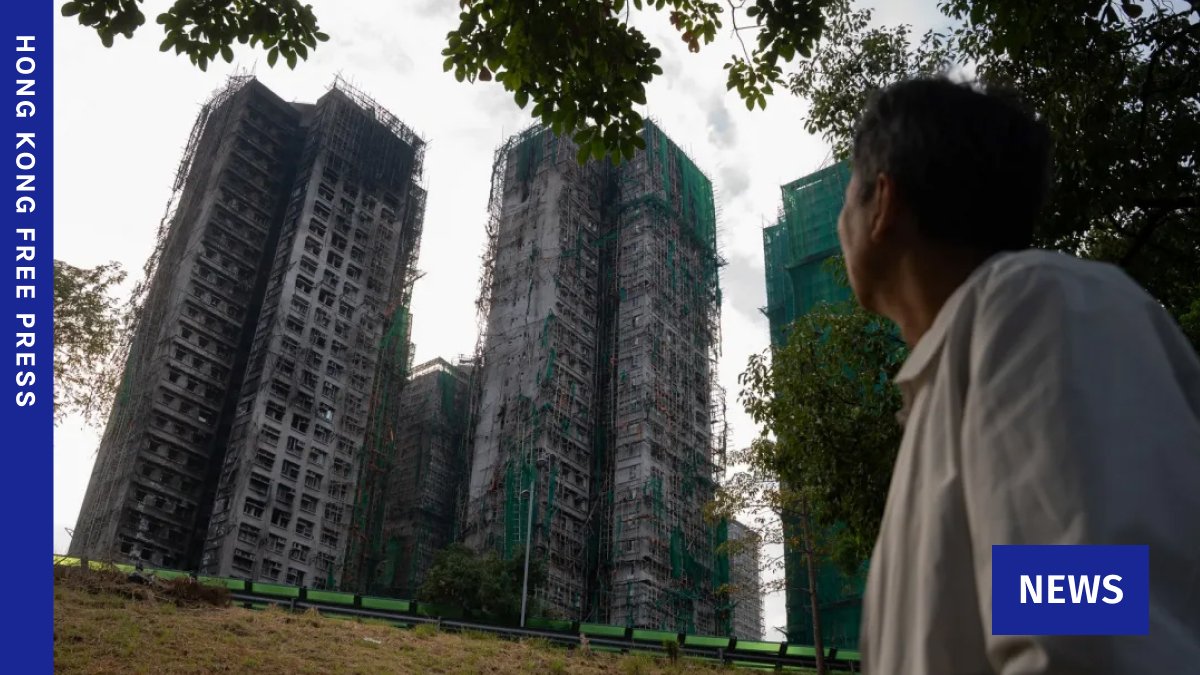
Extensive repairs to the Tai Po estate’s exterior were underway when the fire broke out in late November, gutting seven of its eight buildings. The fire, which killed 168 people and displaced thousands, was the city’s deadliest fire since 1948.
Combustible wood slabs
During previous hearings, the commission heard this removal and replacement of fireproof stair windows and fire exit doors with combustible wood panels may have violated fire safety regulations and allowed smoke to enter and spread rapidly through the building.
But Yung told the inquest on Thursday that he had tampered with the wooden boards as a protective measure to cover the damaged windows.
This prompted Dawes to point out that the windows on every fifth floor had been replaced and asked why Yung did not suspect that so many windows had been damaged.

The surveyor replied that not all the windows had been removed.
Yung said the ICU relied on contractors to self-regulate and admitted the unit’s review mechanism was “very problematic”.
Dawes said, “If even professionals fail to detect these safety issues, how can you expect residents to notice that there are problems? How can the average person know that this is such a serious issue?”
Yung said the openings were not clear in the photos, but admitted they would be visible if viewed directly in situ. Dawes replied, “Exactly, but you didn’t go down there yourself.”
The surveyor also told the committee that it was only in January – more than a month after the fire – that the ICU was notified by the Department of Buildings of “a new policy”, which came into effect in 2023, requiring random inspections of 20 per cent of small jobs.
ICU would have followed through if it had known about the deal, Yung said.
“It looks to us like you’re shirking responsibility,” said Judge David Lok, who chairs the committee.
Yung denied Lok’s claim, saying he would only say that the ICU would have had the opportunity to conduct inspections had it been aware of the new policy.





