

(Editor’s note: Urban Lehner saw this kind of situation firsthand. He was the Wall Street Journal’s Detroit bureau chief in the 1980s, when the Japanese were starting to make cars in the United States.)
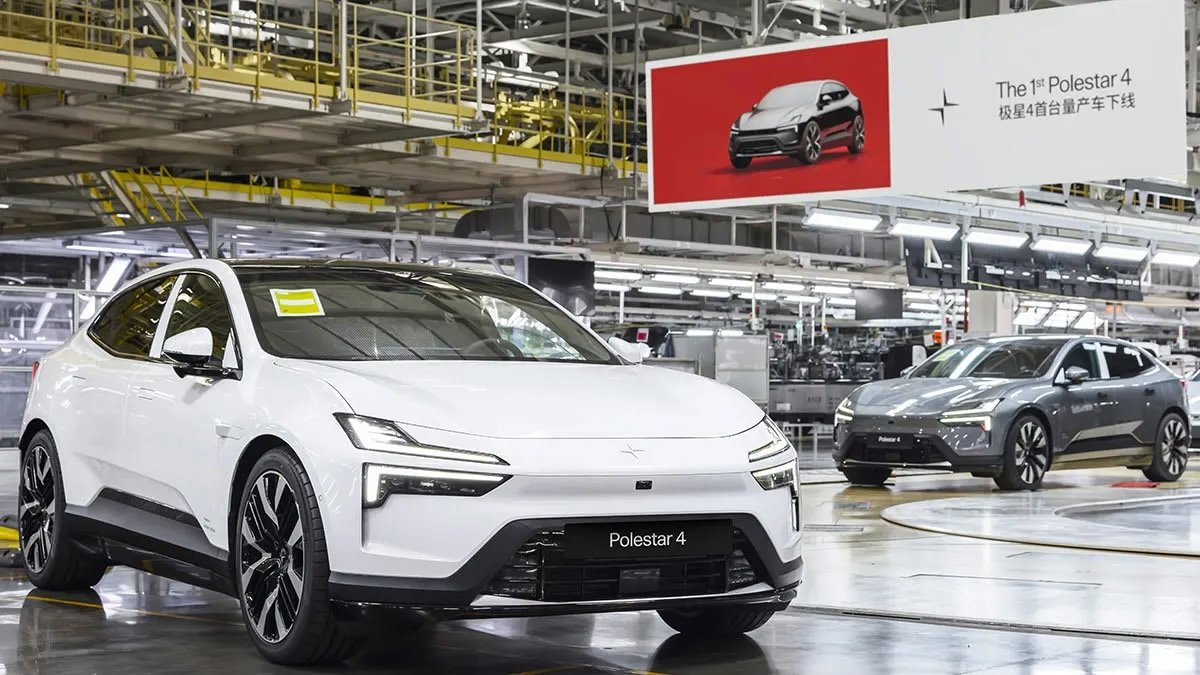
China is the world’s largest exporter of vehicles. The Chinese would like to make cars in the United States.
More than 70 House Democrats have MOVED President Donald Trump to keep Chinese cars – and car makers – out of the US market.
“As you prepare for your upcoming summit with the President of the People’s Republic of China, any effort to lower barriers to Chinese automobiles or facilitate their entry into the U.S. market would pose a direct threat to American manufacturing, workers, and national security,” the members of Congress said in a letter to the president.
Among their demands: Maintaining high tariffs on Chinese cars and banning Chinese companies from making cars in the US. Representatives said 5% of gross domestic product and 10 million jobs are at risk.
Lawmakers criticize government subsidies and exploitative labor practices that have enabled Chinese companies to produce such cheap cars. They have a point. China has done many of these things, and they are among the reasons the Chinese can undersell foreign competitors.
If the US were to start importing Chinese cars en masse, domestic car manufacturers would be at risk of losing out. But why do we stop the Chinese from making cars in the US? Hiring American factory workers at American wages would seriously undermine their cost advantage. They would be forced to compete on quality rather than price.
Granted, the Chinese can make good cars. Consumer Reports took a look on the four Chinese-made cars now available in the U.S. and found that at least one of them, the Buick Envision, “is one of the best small SUVs in its class.” General Motors says it will move production of the vehicle to the US in 2028. The other three are the Lincoln Nautilus, Volvo S90 and Polestar 2.
The Chinese are particularly big on electric vehicles; Their EVs have buyers in many overseas markets. Chinese models tend to have longer battery ranges and better digital platforms and infotainment systems. Ford’s chief executive calls the Chinese “700-pound gorillas in the EV industry.”
Chinese companies compete so fiercely in their market that their quality is likely to continue to increase. Only the highest quality car manufacturers will survive.
It might be okay for American car manufacturers to have to compete with the Chinese if the competition was on quality rather than price.
When Japanese car companies started manufacturing in the US 40 years ago, they were making better cars in smarter ways than the Americans. Detroit was forced to up its game — and it did. The quality of American cars increased. The same thing would happen now if the Chinese were allowed in.
If the goal is to protect US jobs and manufacturing, then there’s a better way than banning Chinese manufacturing: Make sure the competition is only on quality.
One way to do this would be to take a leaf out of China’s foreign investment policy book. Until recently, China imposed conditions on foreign direct investors. To set up manufacturing operations, they had to accept Chinese joint venture partners. Partnerships were created in ways that made technology transfer inevitable.
Uncle Sam could impose one or more conditions on Chinese production. Here are some possibilities:
- An American car manufacturer is a joint partner with a 50% stake in the operation. (GM has a joint partner for Envision in Shanghai.)
- The joint venture employs American workers at American rates of compensation and employs American managers.
- Chinese cars made in the US contain a high percentage of American content.
- At least initially, the high tariffs stick: Chinese cars sold in the US are made in the US.
If the president determines that American jobs and auto manufacturing need protection from Chinese manufacturing in the U.S., he can impose one or more of these conditions.
If, instead, members of Congress convince Trump to seal off the US from all Chinese cars, the result could be a widening quality gap between Chinese and American cars.
Being forced to compete with the Chinese in the US market would give US automakers an incentive to match China’s best quality.
The president can present a “come-on-conditions” policy to Xi Jinping as a win-win. The Chinese are allowed access to the American car market, something they want. The US receives continued protections for American jobs and manufacturing. American consumers get better cars.
Should farmers care? Trump hopes to return from Beijing with assurances that the Chinese will buy a lot of American soybeans. He is much more likely to win these guarantees with this modest proposal than by simply saying no to Chinese cars.
Former longtime Wall Street Journal Asia correspondent and editor Urban Lehner is the editor emeritus of DTN/The Progressive Farmer. This article, originally published on May 4 by the latter news organization and now reprinted by Asia Times with permission, is © Copyright 2026 DTN, LLC. All rights reserved. Follow Urban Lehner at X @urbanize.



