
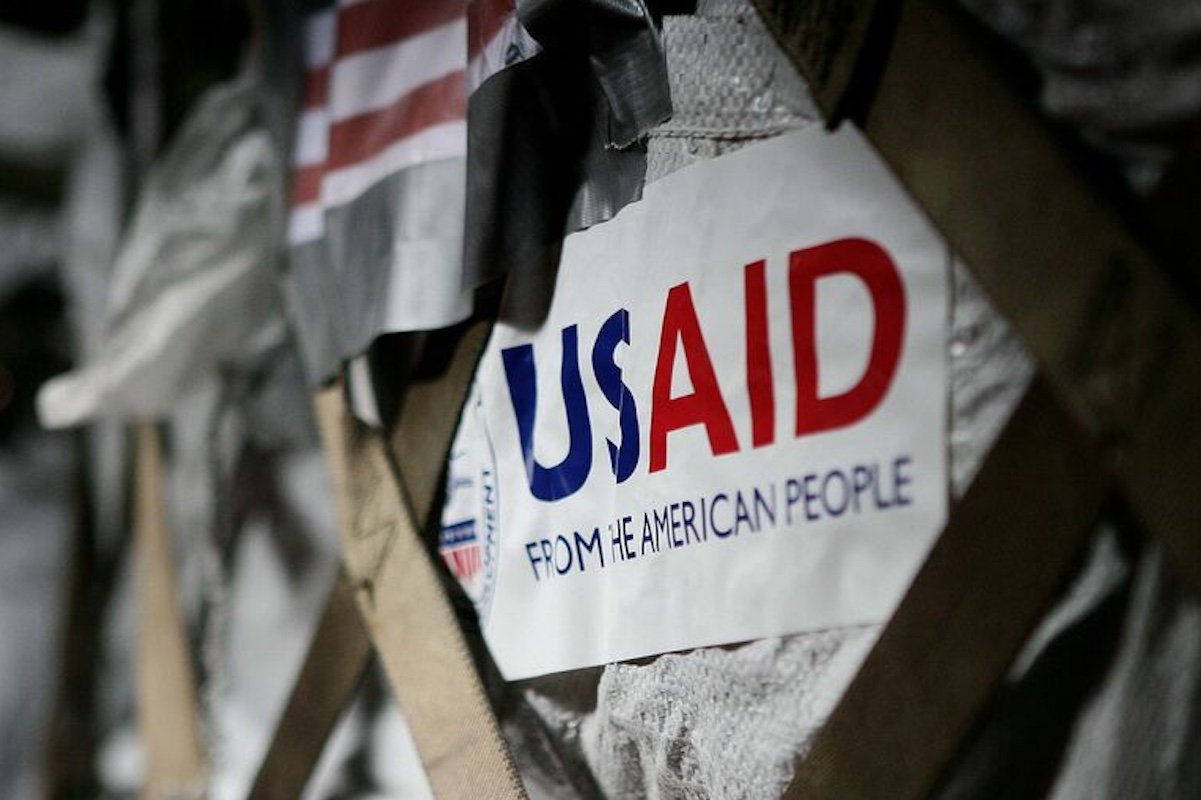

For more than 60 years, the United States Agency for International Development (USAID) was the backbone of American development diplomacy. Today, it is gone.
But the most immediate consequence is not what many assume. It’s not just the loss of funding. It is the collapse of coordination—the smooth system that aligned the United States with allies and partners throughout the developing world.
I have seen how that system works from the inside. And when it breaks, the effects are immediate.
In March 2025, the US administration fired most of its remaining staff and formally notified Congress of plans to dismantle the agency and absorb limited functions into the State Department.
What was once the world’s leading development institution is fast becoming empty. This may seem like a simple bureaucratic change in Washington, but it is not.
For decades, USAID served as a central hub connecting the US with other major development actors, including Japan, South Korea, and Australia. Through formal coordination and day-to-day operational engagement, these partnerships aligned priorities, avoided duplication and strengthened collective impact.
When that node disappears, coordination simply does not continue. It fragments, projects overlap, standards change, strategic focus weakens, and American competitors gain ground—not just because they invest, but because others fail to get their act together.
This is most important in the Indo-Pacific. From Southeast Asia to the Pacific Islands, development aid is not peripheral—it is a strategic infrastructure. It shapes governance, builds economic ties and influences political alignment.
Australia has long understood this, using development aid as a central pillar of its engagement in the Pacific. Japan and South Korea have done the same throughout Asia and beyond.
Their developmental trajectories reinforce this approach. As aid recipients, they transformed their economies through strategic investment and long-term planning.
Today, through institutions such as the Korea International Cooperation Agency, the Japan International Cooperation Agency and Australia’s development programs – historically led by AusAID – they are themselves key development actors.
I have worked alongside these institutions in the field. In Paraguay and Iraq, I saw firsthand how these partnerships work—not as abstract politics, but as day-to-day coordination between governments, agencies, and technical teams.
This coordination is not easily replaced. And China understands this. His development model does not depend on coordination with others. It is centralized, state-run and executed through related financial and operational institutions.
Where Western approaches fragment, China’s often seem more coherent and decisive. This is strategic risk. Dissolving USAID does not create a neutral space—it creates a vacuum in coordination that competitors are well positioned to exploit.
The question is not whether allies like Australia, Japan and South Korea will step forward. They already are. The question is whether they will do it together.
For decades, development cooperation functioned as one of the quiet pillars of the international system. It strengthened alliances, reinforced shared standards and enabled collective action.
That system is now under strain, if not broken. What replaces it will shape not only development outcomes but the future balance of influence across the Indo-Pacific.
Steven E. Hendrix is a former senior US diplomat and development official who served as USAID’s senior coordinator for foreign assistance at the US State Department. As the State Department’s Managing Director for Planning, Performance and Systems, he oversaw global strategies for US foreign assistance, including the Asia-Pacific region.
He has coordinated closely with international development agencies, including the Korea International Cooperation Agency (KOICA), the Japan International Cooperation Agency (JICA) and Australia’s former development agency, AusAID. He is a lawyer in the United States, Bolivia, Guatemala and Ghana.



