
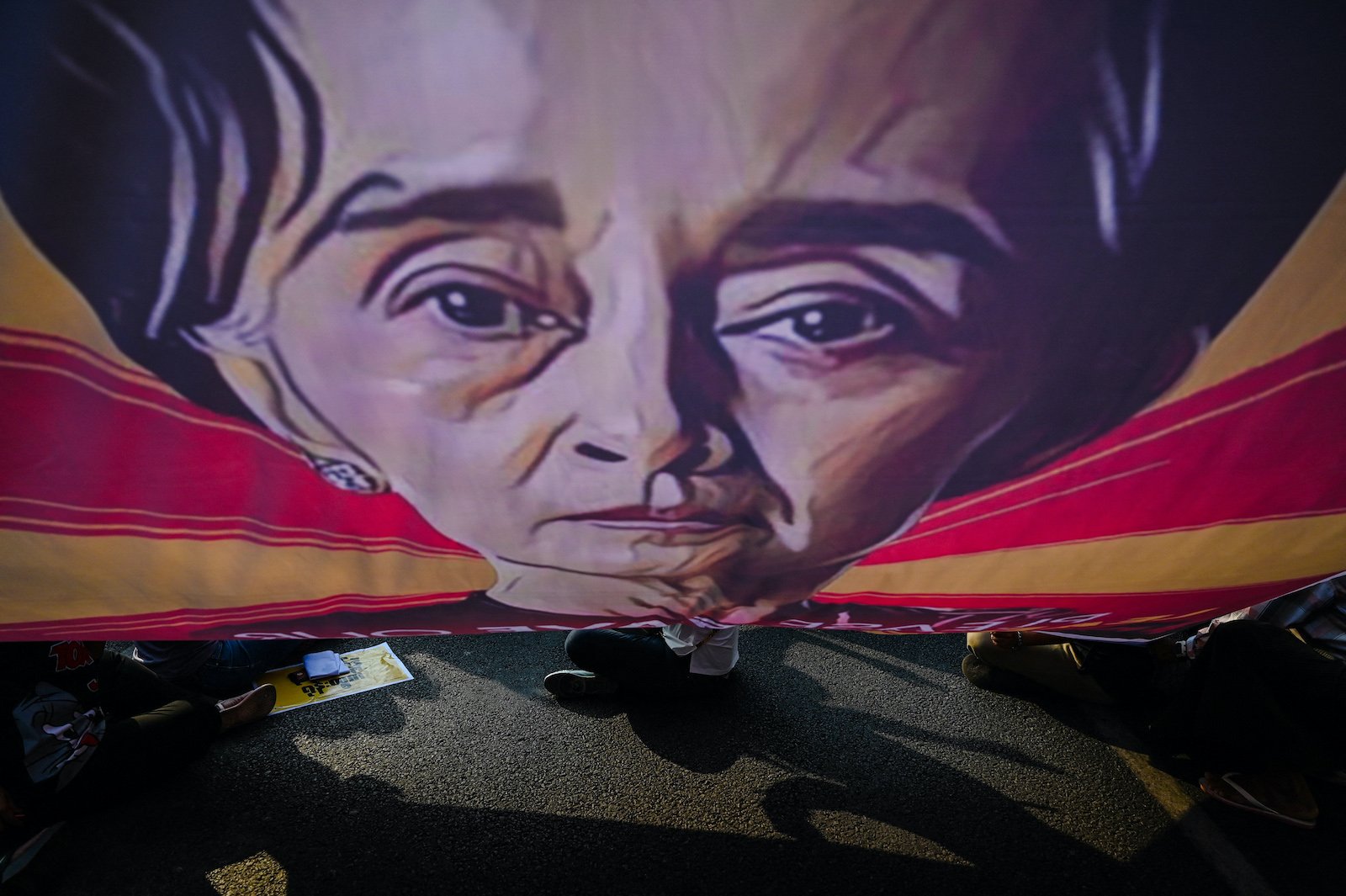

The news that Aung San Suu Kyi has been moved from prison to house arrest has stirred deep emotions among the people of Myanmar and many abroad. For those who have long admired her courage in the face of persecution, it is natural to feel relief. After the harsh conditions in prison, any improvement in her daily life is welcome for basic humanitarian reasons.
But house arrest is not freedom. She remains a political prisoner, held against her will, cut off from her people, unable to speak or act freely. Until she and all other political prisoners are released unconditionally, Myanmar cannot truly be said to be moving towards justice. This moment requires not only compassion, but clarity.
For more than three decades, Suu Kyi has been a central figure in Myanmar’s struggle for democracy – enduring separation from her family, prolonged isolation and constant pressure from those in power. Whatever disagreements people may have with her political choices, her personal sacrifices cannot be denied.
It would be a mistake to wait with indifference for the news of her arrest at home. Many ordinary people still see it as a symbol of courage and hope, and their feelings are understandable. But it would be equally wrong to imagine that this change transforms Myanmar’s political reality.
She remains under the control of the very military authorities who imprisoned her, and any words or gestures that appear to come from her should be viewed with caution. No one can freely choose his political path from within a guarded house.
Revolution bigger than one person
Since the 2021 military coup that suspended democracy, Myanmar has been rocked by horrific violence. Peaceful protests were met with bullets. Villages have been bombed, burned and emptied. Millions have been displaced.
Out of this suffering has emerged a broader, more diverse resistance: elected representatives, ethnic organizations, local defense forces, youth and women’s groups, and countless ordinary citizens who have risked everything to oppose a return to dictatorship.
This does not mean that Suu Kyi no longer matters. Rather, it means that Myanmar’s struggle is now bigger than any leader.
For those resisting military rule, the challenge is to hold two truths simultaneously: to honor its history and hope for its full freedom, while continuing to build an inclusive political order that reflects the sacrifices of all communities – especially the young and marginalized who have paid so much.
Of course, the army did not suddenly become merciful. Suu Kyi’s move to house arrest serves several calculated purposes. They may present it as a humanitarian gesture, hoping to soften their image abroad and prompt some governments to ease pressure or reopen economic channels.
Domestically, they may try to revive old habits – suggesting that the safest way forward is a managed deal with generals and a popular civilian figure at the center, while deeper injustices remain untouched.
There is also the risk that some voices will ask the resistance to silence its demands and accept a compromise that leaves military superiority intact, using San Suu Kyi’s limited situation as moral pressure, even though she cannot speak openly for herself.
With this in mind, both the people of Myanmar and the international community should be careful to treat this move as evidence that the regime is ready for real change. A move from a prison cell to a guard house does not protect villagers from airstrikes, restore burned houses, or give exiled children a chance to return to school.
What the Myanmar resistance can do
At this delicate moment, Myanmar’s resistance faces a difficult but important task. First, she can respond humanely – expressing relief that her conditions have improved, while clearly and consistently calling for her immediate and unconditional release along with all other political prisoners.
Second, it can insist on clarity: no statement made under house arrest should be treated as a free and binding political decision. This protects Suu Kyi from misuse and protects the revolution from being diverted by manipulated signals.
Third, it can keep the focus on what the people have been demanding since 2021: an end to military rule, justice for victims, a democratic federal constitution and guaranteed civilian control over all armed forces. These goals cannot be achieved by symbolic gestures alone.
For regional governments, human rights organizations and concerned citizens around the world, this news is a test of discernment. It is appropriate to encourage her to be treated with dignity. It is not appropriate to treat this change as sufficient reason to ease political, economic or diplomatic pressure on those who continue to rule by force.
If the international community really wants to help Myanmar, it should continue to call for the unconditional release of all political prisoners; insist on an end to civilian attacks and unimpeded humanitarian access; support an inclusive political process that includes ethnic organizations, resistance structures, civil society and religious actors – not just the military and a recognized civilian; and keep in mind the long-term objective: a truly federal and democratic Myanmar where all communities can live without fear.
Hope with open eyes
For many people in Myanmar, Suu Kyi’s name is associated with memories of hope and courage. Her move to house arrest will stir those memories again. However, hope must go hand in hand with truth.
The truth is that as long as it is forbidden, it is not free. The truth is that Myanmar’s struggle now belongs to an entire people seeking a new kind of country – not a return to a slightly softer version of the old order.
True peace will require more than a change of rooms for a prisoner, however beloved. She will demand freedom, justice and a political solution that listens to all the people of Myanmar.
Holding on to that vision while working for her eventual safety and freedom is the best way to honor Suu Kyi — and countless others whose names are less familiar but whose sacrifices are no less real.
James Shwe is a Myanmar American professional engineer and Myanmar democracy advocate associated with the Los Angeles Myanmar Movement.



