
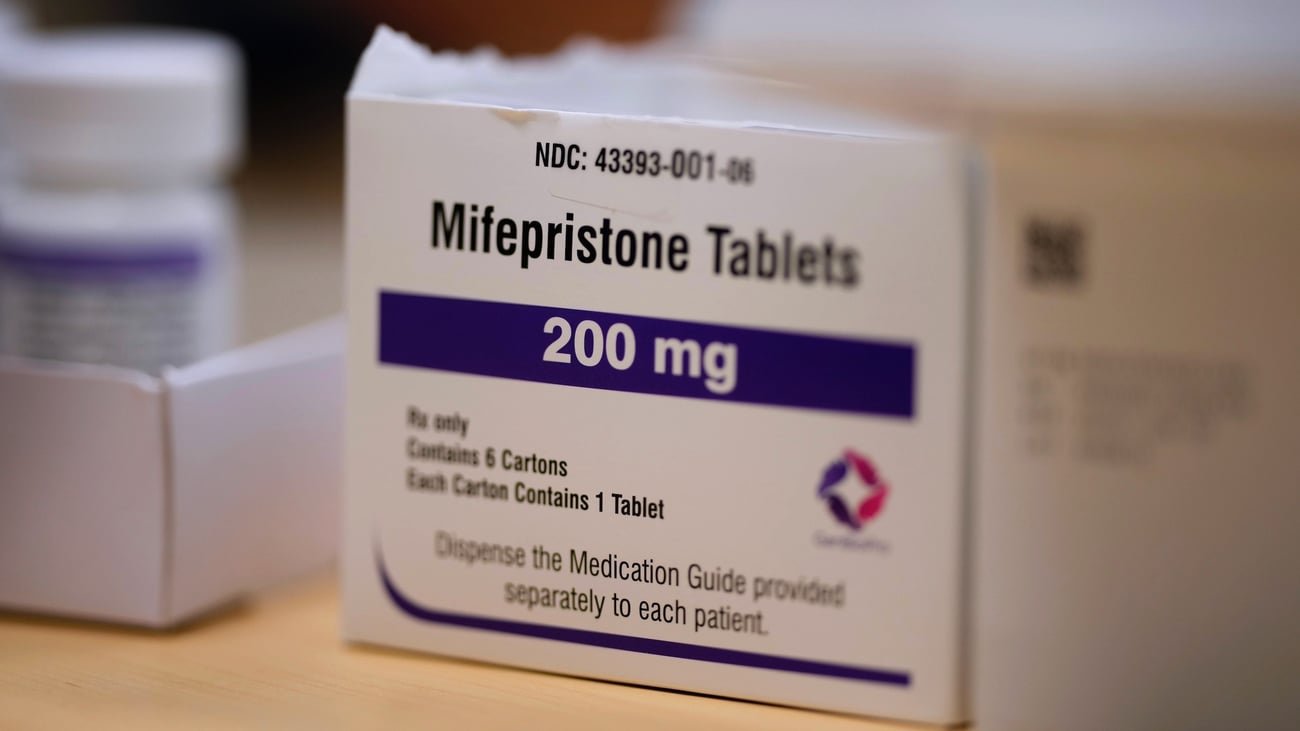

The FDA is currently conducting a review of mifepristone, one of the most commonly prescribed forms of medication abortion, particularly via telehealth.
(CN) – A Fifth Circuit panel further restricted access to abortion across the US on Friday and reinstated a Food and Drug Administration requirement for in-person dispensing of the abortion drug mifepristone.
“Any abortion facilitated by the FDA’s action invalidates Louisiana’s ban on medical abortions and undermines its policy that ‘every unborn child is a human being from the moment of conception and, therefore, a legal person,'” U.S. District Judge Kyle Duncan, an appointee of Donald Trump, wrote for the three-judge panel. The 18-page decision.
Louisiana, which has one of the nation’s stricter abortion banshad alleged that the FDA’s 2023 regulations that allowed the drug to be prescribed online and distributed through the mail violated the Administrative Procedure Act.
The ruling by the New Orleans-based panel — also made up of U.S. District Judges Leslie Southwick, a George W. Bush appointee, and Kurt Engelhardt, a Trump appointee — doesn’t stop at Louisiana.
While a lower federal court had declined to block the amended 2023 regulations, citing potential conflicts from multiple parallel lawsuits, the Fifth Circuit panel dismissed those concerns.
Directly noting the lower court’s concern with the US Supreme Court decision, June 2025 limiting nationwide ordersDuncan said “In CASAThe Supreme Court clearly stated that it was addressing only equitable relief and not remedies under the APA.”
“This is another attack on abortion that is rooted in politics, not science. The impact of restricting access to mifepristone means it will be harder for everyone, wherever they are to get an abortion,” Alexis McGill Johnson, president and CEO of Planned Parenthood Action Fund, said in a statement.
The decision is likely to be appealed to the Supreme Court, which ruled in 2023 to maintain access to mifepristone, regardless overturning the right to abortion in the year 2022.
Louisiana, which sued the FDA in 2025, had sought a stay of the regulations after a lower federal court had stayed the case entirely in April — without blocking the regulations themselves — to allow the FDA to complete a scientific review of mifepristone’s safety.
“We have now found three times that the agency’s progressive relaxation of mifepristone’s guardrails likely lacked a basis in scientific data and literature. The FDA itself now admits that the regulations were marred by ‘procedural deficits’ and a ‘lack of adequate consideration.’ The public interest is not served by perpetuating a medical practice whose safety the agency admits was inadequately studied,” Duncan wrote.
The judge wrote that the state’s appeal is about the 2023 amendment to the regulations, not the ongoing review. Duncan also noted that the FDA “could not say when that review might be complete and acknowledged that it was still gathering data.”
The FDA did not immediately return a request for comment.
Louisiana Attorney General Liz Murrill praised the decision in a statement.
“The Biden abortion cartel facilitated the deaths of thousands of Louisiana babies (and millions in other states) through illegal mail-order abortion pills. Today, that nightmare has ended, thanks to the hard work of my office and our friends at the Alliance Defending Freedom.
The FDA approved mifepristone over two decades ago as a safe way to end a pregnancy. It is usually used in combination with the drug misoprostol. According to Guttmacher Institute65% of abortions in the US in 2023 were medication abortions, with a quarter provided via telehealth.
Since the fall of Roe v. Wade in 2022, telehealth has become a major route to mifepristone for residents of states like Louisiana where access is blocked. research has shown that remote delivery of abortion drugs is as safe as receiving the drugs in a clinic.
“Telehealth has been the last bridge to care for many people seeking abortion, which is exactly why Louisiana officials want it banned,” Nancy Northup, president and CEO of the Center for Reproductive Rights, said in a statement. “This isn’t about science — it’s about making abortion as difficult, expensive and inaccessible as possible. Telehealth has transformed healthcare. Selectively stripping abortion patients is a political roadblock.”
Subscribe to our free newsletters
Our weekly newsletter Closing arguments provides the latest on ongoing trials, major litigation and decisions in courts around the US and the world, while monthly Under the lights feeds legal dirt from Hollywood, sports, Big Tech and the arts.



