


By Steven Chan, Green Earth
Ten years ago, the government introduced the Food Wise Hong Kong campaign featuring the unforgettable Big Waster mascot – a cartoon character with eyes literally bigger than his stomach.
Stay in mind rap still rings in our ears: “But only portions you can finish, buy only what you need… Stop waste! Everything is precious. Let’s be smart about food!” Schoolchildren sang it, posters were everywhere and the message sunk in. Now we all know that wasting food is wrong.
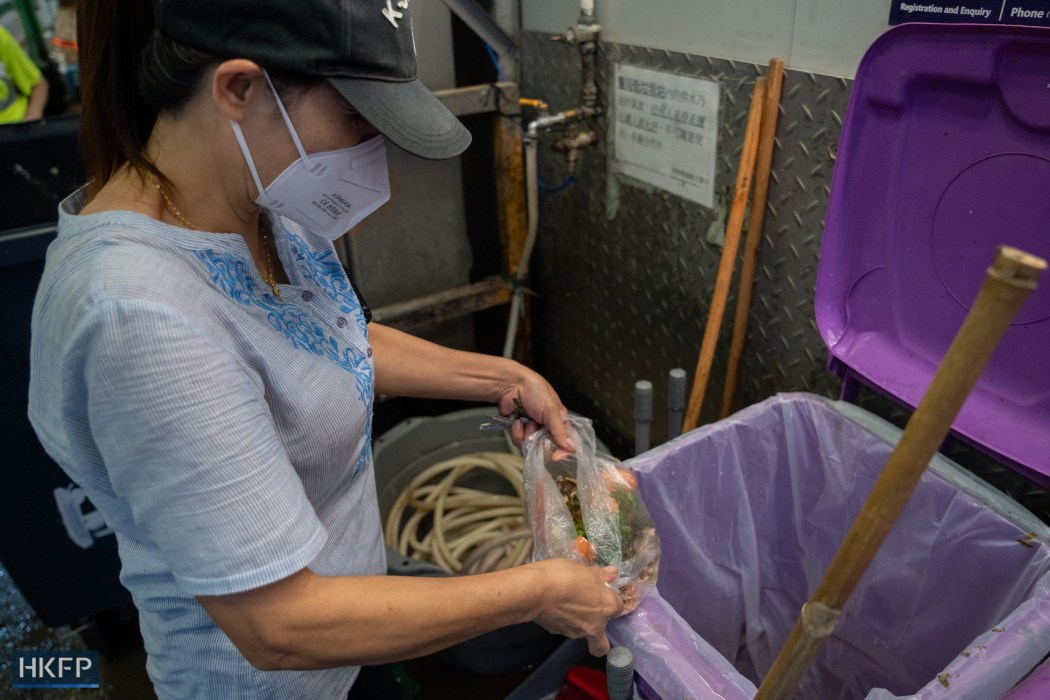
Yet here we are in 2026, and Hong Kong still throw down 3,001 tons of food waste every day – approximately 29 percent of all municipal solid waste. Food Waste and Yard Waste Plan 2014 target cutting daily disposal to 2,640 tons by 2019 was missed long ago.
Awareness is high, but real progress has stalled. The reason? Our food waste figures tell us how much we throw away, but almost nothing about what we throw away or why.
In January, The Green Earth published a REPORT. We examined the annual statistics of the Department of Environmental Protection (EPD) and found some statistical gaps, especially in food waste.
There is no breakdown by composition—no data on vegetables versus meat, cooked versus raw, high-salt restaurant scraps, versus low-contamination fruit peels.
There is no difference between edible food that could have been preserved and truly inedible parts. And there is no clear separation between households and commercial sources such as restaurants and retailers.
Without this detail, how can policy makers or NGOs design effective interventions? We are flying blind.
This data vacuum forces us to take an expensive and limited strategy: build more “end-of-pipe” objects and hope for the best.
The government has invested a lot in the treatment of organic waste: two O·Parks and sewage treatment plants.

However, even at full capacity, these facilities can PRocess at most about 600 tons of food waste per day. This is only a fifth of what Hong Kong generates.
What happens to the remaining four-fifths? It still goes to landfill or incinerator.
Technology alone cannot solve the food waste problem. Devices are necessary, but they treat the symptoms, not the disease.
The real solution lies at the source: preventing food from becoming waste in the first place. Across Hong Kong, community groups, social enterprises and even some supermarkets are experimenting with promising models, such as food-sharing apps, “ugly produce” sales, near-expiry discount shelves and education about proper storage.
Some support reforming “best before” and “use by” labels that confuse consumers and lead to premature discards. Others promote better food storage in restaurants and households.
These resource efforts are creative and cost-effective, but without meaningful statistics, we have no idea how much potential they have.
Food waste controls
How much household waste could be avoided with clearer labelling? Which sectors waste the most avoidable foods? Without reliable numbers, it’s impossible to scale what works, discard what doesn’t, or build public consensus about the most effective policies.
Now that the municipal solid waste charging scheme has been shelf indefinitelythe government budget for waste management may be under strain.
This is exactly the wrong time to continue pouring billions into treatment infrastructure alone. A much smarter investment would be in comprehensive and transparent food waste data.
We recommend that EPD conduct regular and detailed audits of food waste – at least every two to three years – with clear composition analysis and sectoral breakdown.
The annual Waste Monitoring Report can become a real window for public scrutiny, not just a total summary. Publish data in a clear, open format and translate technical findings into plain language data sheets.
The modest cost of better statistics would be repaid many times over in more targeted and efficient policies.

Other places show what’s possible when data leads the way.
South Korea treats food waste as a national priority. it leads Detailed National Waste Statistics surveys every five years, breaking down composition (vegetables, meat, fruit, etc.) and sources. Composting facilities use data to maintain high-quality produce, while local governments design hyper-local campaigns.
The result? A food waste recycling rate that has stayed above 90 percent – often reaching 97-98 percent – for years.
Japan goes further by publishing annual figures on the loss and waste of edible food separately from the inedible parts. In 2023, she reported 4.64 million tons of avoidable edible waste, less than previous years.
These transparent figures have directly informed expiry labeling reforms and consumer campaigns, helping the country make steady progress towards its 2030 targets – reducing business food waste by 60 per cent from 2000 levels.
Hong Kong does not need to copy these models wholesale, but we can certainly learn from them. With clearer statistics, our community initiatives can move from scattered experiments to coordinated and measurable success.
Businesses can target appropriate waste streams. Government can allocate resources where they make the greatest impact. And we can all see that our daily choices really do make a difference.
The numbers are there – or at least they could be. If the government already possesses more detailed data, public sharing would be warmly welcomed. Hong Kong people will appreciate transparency and work together to reduce waste.
If such comprehensive statistics are still lacking, the EPD should consider filling the gaps through regular and thorough audits. Only then can we go beyond slogans and really win the fight against waste.
Steven Chan is the assistant manager of environmental affairs at The Green Earth, an environmental charity based in Hong Kong.
| HKFP is an unbiased platform and does not necessarily share the views of columnists or advertisers. HKFP presents a diversity of views and regularly invites figures across the political spectrum to write for us. Freedom of the press is guaranteed by the Basic Law, the Security Law, the Bill of Rights and the Chinese Constitution. Opinions are intended to constructively point out errors or defects in government, law or policy, or are intended to suggest ideas or changes through legal means without the intention of hatred, resentment or hostility against other authorities or communities. |





