
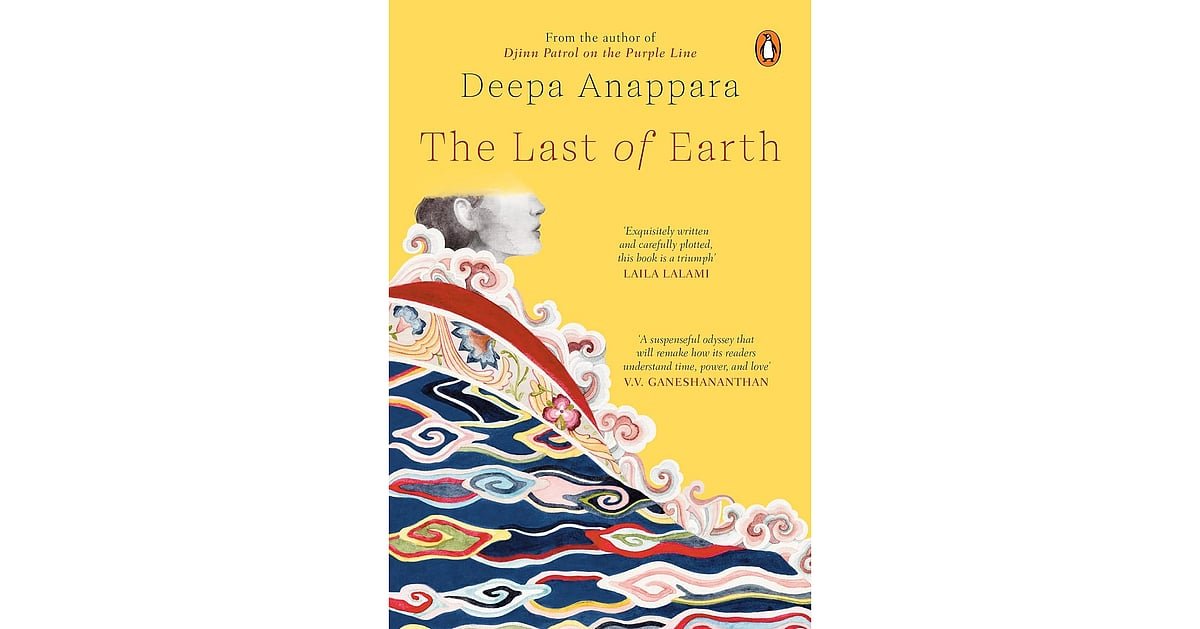

The ethics of map-making and the invisibility of those who helped the British Empire make it are at the heart of Deepa Anappara’s second book of fiction. Coming many years after Djinn Patrol on the Purple Line, her first, well-received book, this book is also meticulously researched and beautifully written.
The story unfolds in two ways – one, as a carefully planned adventure in which two groups of people with different motivations travel illegally through Tibet. The other is a quiet meditation on many issues, existential and otherwise.
The year is 1869. Tibet is closed to the Western world, and this puts the British Empire’s ambitions to map it out and expand the empire. To overcome this, they start training Indians as surveyors so that they can enter Tibet illegally and map it.
Two groups are making parallel journeys through Tibet, and these are chronicled in alternating chapters. They will meet in the end, changed by their circumstances and experiences. In one we have an Englishman, simply called the Captain, and the second in command, Balram, an Indian teacher trained as a surveyor and one who has made many such secret trips to Tibet for the British. They are accompanied by a large group of porters, animals and stores necessary for the long journey.
The captain wants to chart the course of the Tsangpo River and find out where it meets the sea. He is poorly disguised as a monk, and there is the ever-present danger that if he is exposed as white, it will mean death not only for him but also for his companions. That doesn’t stop him. As Balram’s father says, ‘It is in the nature of white men to believe that they own the world, that no door should be closed to them.’
Balram has come on this dangerous mission for his own reasons. He wants to find his friend who has disappeared while doing a survey job for the British.
One of the other two people making the same journey is a British woman, Katherine, who is part Indian, which makes her disguise as an Indian pilgrim more authentic. She wants to be the first European woman to visit Lhasa, having been twice prevented from doing so. Denied a fellowship at the all-male Royal Geographical Society in London, she sees this opportunity as a means of making her mark and gaining entry. She is accompanied by a wise servant who wants to become a monk soon.
All three main characters – the captain, Balram and Katherine – are in conflict and share a mental disturbance. They are happy traveling and away from home, no matter how dangerous the journey. The captain is saddened that his early promise seems to have been dashed and hopes that the maps he will now make will bring him fame and immortality. He says grandly, ‘Our little drawings will one day reshape the world’. Catherine’s dubious ancestry and her experiences at home make her the eternal outsider; on this journey, she carries the memory of her late sister. Her journey, then, is a way to escape from herself.
Same goes for Balram. He is gripped by guilt and conflicting emotions. It all stems from his relationship with his missing friend and his differently-abled son. The nature of this friendship borders on the illegal, though neither act on it. At the same time, he feels very competitive as his friend is considered the best surveyor by the captain. The journey will provide Balram and Katherine space to introspect on their past lives and behavior.
Through two white protagonists, the story examines their obsessive ambitions to achieve their goals, no matter the cost. The help and support of the Indians who accompanied them is critical for them. And yet, as the book points out, no mountain or place bears their name; it is the white man who receives glory and immortality; native simply hides.
The Buddhist idea of the impermanence of life is spread considerably through the book. Everything travelers face on their journey – floods, extreme weather, bandits, snow lions – could mean a loss of life at any moment. Maps can be translated incoherently ‘if the earth lifted its shoulders, mountains would split, rivers would rise, seas would swallow cities and fields alike.’
The landscape of Tibet is also a dominant character throughout. It is described in lyrical detail on almost every other page, to make the reader pause to soak it in and soon become so engrossed that they become a fellow traveler on the journey. In short, this sublime, immersive and engaging book moves you even as it makes you think.



