
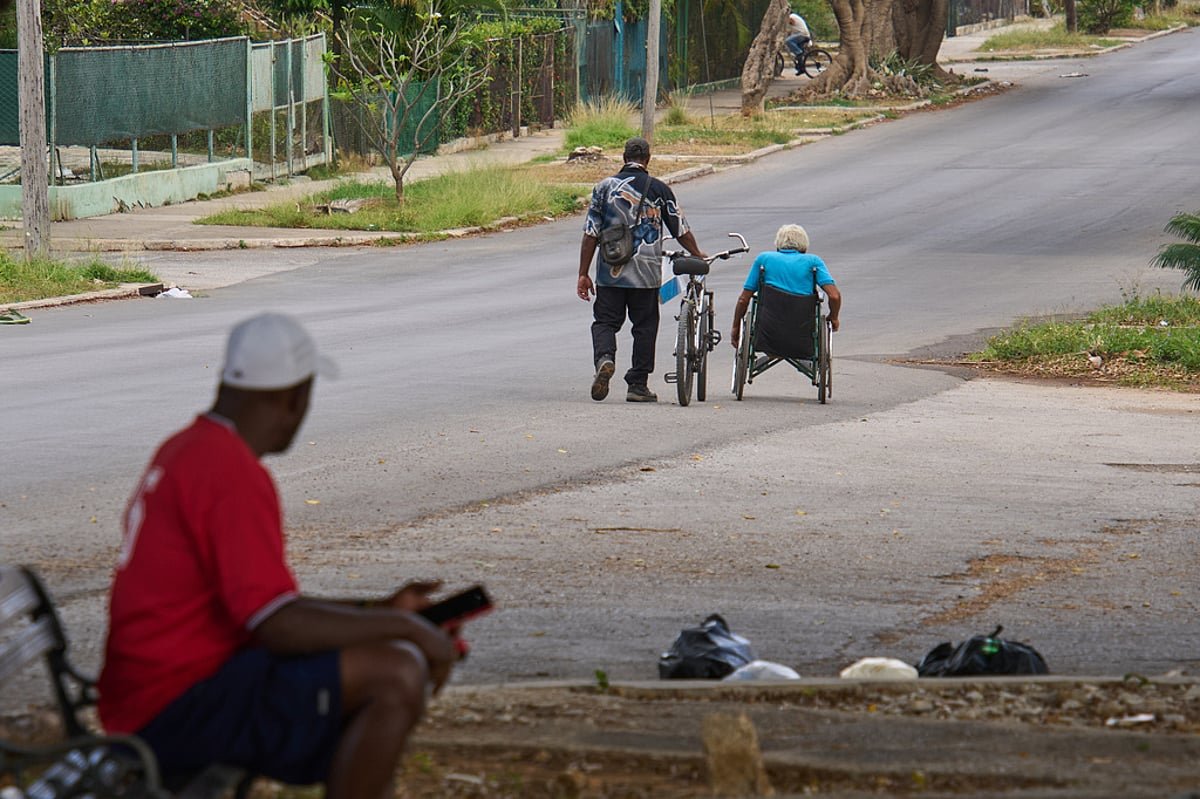

Even before the economic crisis worsened and before the wave of emigration over the past five years, Cuba was already one of the countries with the oldest populations in Latin America, a trend driven further by high life expectancy and low birth rates.
According to Cuba’s National Bureau of Statistics, by the end of 2024, almost 26% of the population was 60 or older. This is almost double the regional average of 14.2% in the same year, according to the Economic Commission for Latin America and the Caribbean, CEPAL.
In the last five years, there has been a population decline in Cuba of nearly 1.5 million inhabitants, mainly due to migration. The number of Cubans living on the island, which was 11.1 million, has dropped to just 9.7 million.
The impact of the crisis and the exodus of young people is visible at a glance. Elderly people walk the streets alone—some digging through trash, others standing in long lines for bread and rice provided by the ration book, the subsidized staples the state guarantees every Cuban.
The plight of the elderly is so critical that the government recently authorized private entrepreneurs to operate aged care services and residential facilities, a move that marks a significant departure from the island’s traditional model of full state control.
Casado insists she is still privileged. She’s mentally sharp and has no physical impairments—she doesn’t even use a cane—and gets by completely on her own. Her only medicine is half a tablet for blood pressure, which “until now” remains available in state pharmacies.
Despite poverty and loneliness, she continues to have faith in the government and blames the United States for the country’s misfortunes.
“We’re doing everything we can here to move the country forward,” she said. “But the thing is, we have a very powerful enemy and he is right there, right on our doorstep.”



