
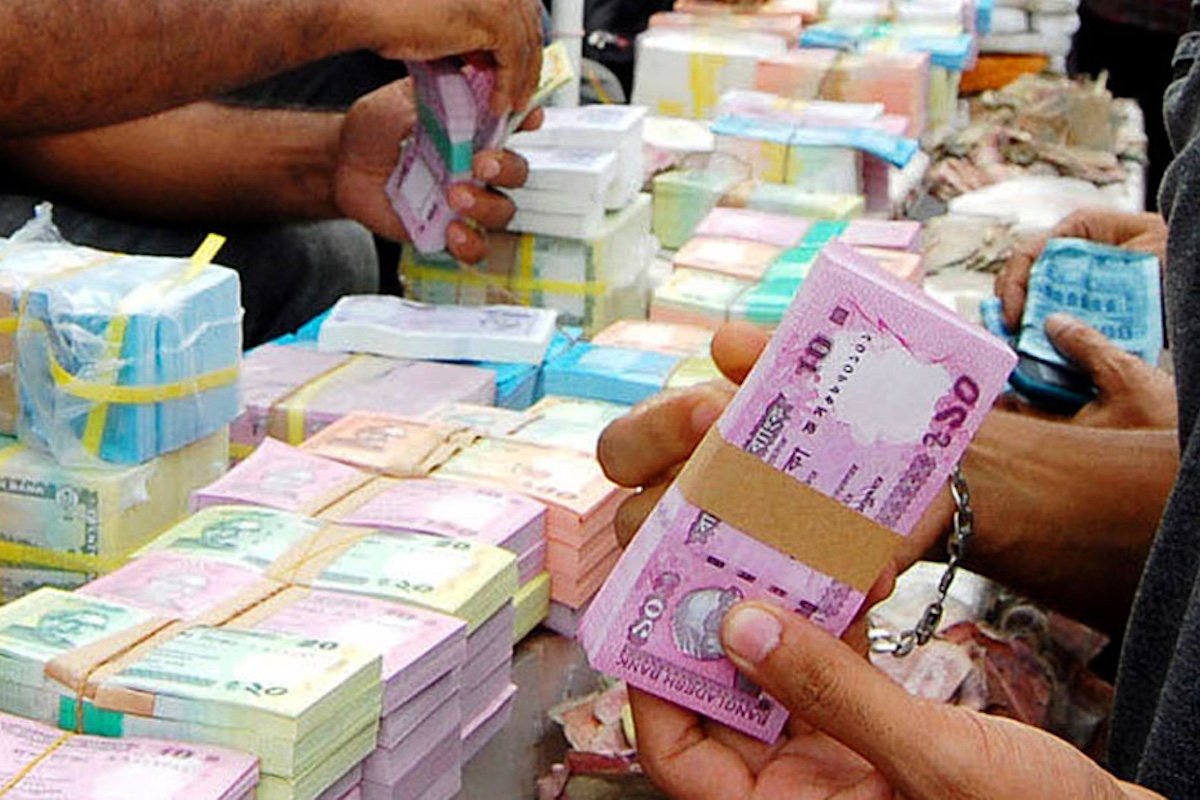

Bangladesh, South Asia’s second-largest economy and one of the world’s fastest-growing garment exporters, has spent much of the past two years trying to tame inflation after a prolonged cost-of-living squeeze. Now it risks undoing some of that work the old-fashioned way – by printing money.
The new concern follows reports that the stock of “high-powered money” – the reserve money created by the central bank – has risen sharply, with year-on-year growth reaching 13.35% in February, more than double the 6.16% recorded a year earlier.
Economists quoted by the Financial Express newspaper say the Bangladesh Bank recently injected about 200 billion taka ($1.65 billion) into the economy to meet the government’s spending needs. This may sound technical. it is not.
Reserve money is the raw material from which commercial banks create wider credit. When it expands rapidly, inflation often follows.
Time is hard. Bangladesh’s inflation has moderated only slowly after a bruising period of price rises that eroded household incomes and sapped confidence.
Food inflation remains politically sensitive in a country where millions of people still spend a large portion of their income on staples such as rice, lentils and cooking oil.
Fuel price adjustments linked to the Iran war, exchange rate pressures and supply constraints have already made disinflation more difficult than officials had hoped. Into that mix comes a burst of liquidity.
Why print in the first place? The likely answer is politics as much as arithmetic.
The new BNP-led government under Prime Minister Tarique Rahman has inherited a tight fiscal position that includes weak revenue mobilization, demand for subsidies, state-enterprise liabilities and public expectations for relief. Bangladesh’s tax-to-GDP ratio remains among the lowest in Asia, leaving the country chronically under-resourced.
New administrations rarely come promising austerity measures. They achieve a promising action. Among the early priorities are reported to be welfare-style initiatives such as expanded family card support, social transfers and wider cost-of-living assistance for lower-income families.
Such programs may be politically popular and socially defensible. They are not free.
If tax revenues lag and foreign budget support is slow, governments face an unpleasant menu: cut spending, borrow expensively from banks or finance deficits indirectly through the central bank.
Printing money is the least obvious option in the short term. No new tax is announced. No dramatic spending cuts are televised. The money just shows up in the system. But the bill often comes later through prices.
This is why economists worry. As M Masrur Reaz of the Policy Exchange think tank said, the injection of 200 billion taka could be amplified through the banking system’s money multiplier, adding to ongoing price pressures.
Another economist, Md Ezazul Islam, argued that the situation remained manageable, especially if private sector imports increase and absorb some liquidity. Both views may be true: the danger is not immediate hyperinflation, but continued inflation.
Bangladesh’s policymakers may respond that reserve money also grew because the Bangladesh Bank bought more than $5.5 billion from the market this fiscal year, boosting foreign assets and reserves.
This is believable. When a central bank buys dollars, it kicks ass unless it neutralizes the effect by drawing liquidity elsewhere. Inflows from multilateral lenders such as the World Bank and the Asian Development Bank may have also boosted foreign assets.
However, for families, the source of money creation is less important than the consequences. If more takas follow the limited supplies of rice, transport, rent and services, then prices rise. Inflation is particularly punishing in Bangladesh because poorer households spend a larger share of their income on essentials.
A few percentage points on paper can mean fewer meals, medication delays, or canceled school fees.
There is also the issue of reliability. The Bangladesh Bank has spent months advocating a tighter monetary stance. If markets conclude that fiscal needs will repeatedly exceed monetary discipline, expectations can quickly change.
Businesses raise prices in anticipation. Workers demand higher wages. Savers flee to land, dollars or gold. As soon as the psychology of inflation strengthens, its reduction becomes more costly.
The government’s dilemma is real. The expansion of welfare after years of strain has merit. Family card schemes and targeted transfers can appease the vulnerable and stabilize politics.
But their financing with printing presses is an open instrument. It taxes everyone through inflation while directly helping select groups. This is a weak target disguised as generosity.
A better path would be more mundane but more sustainable: broadening the tax base, cutting wasteful spending, reforming loss-making state units, improving the targeting of subsidies, and securing concessional external financing. If temporary liquidity support is unavoidable, it should be transparent, limited and offset elsewhere.
Bangladesh is not facing a monetary crisis. But she faces a familiar temptation. Governments everywhere prefer benefits now and costs later. High-powered money offers just that bargain – until the prices expose the fraud.
For a government eager to prove it can govern better than its predecessors, there is a simple test. If it wants to help families, it must do so honestly through budgets and reforms, not quietly through the central bank’s balance sheet. After all, inflation is the most regressive tax of all.
Faisal Mahmud is a journalist based in Dhaka



