
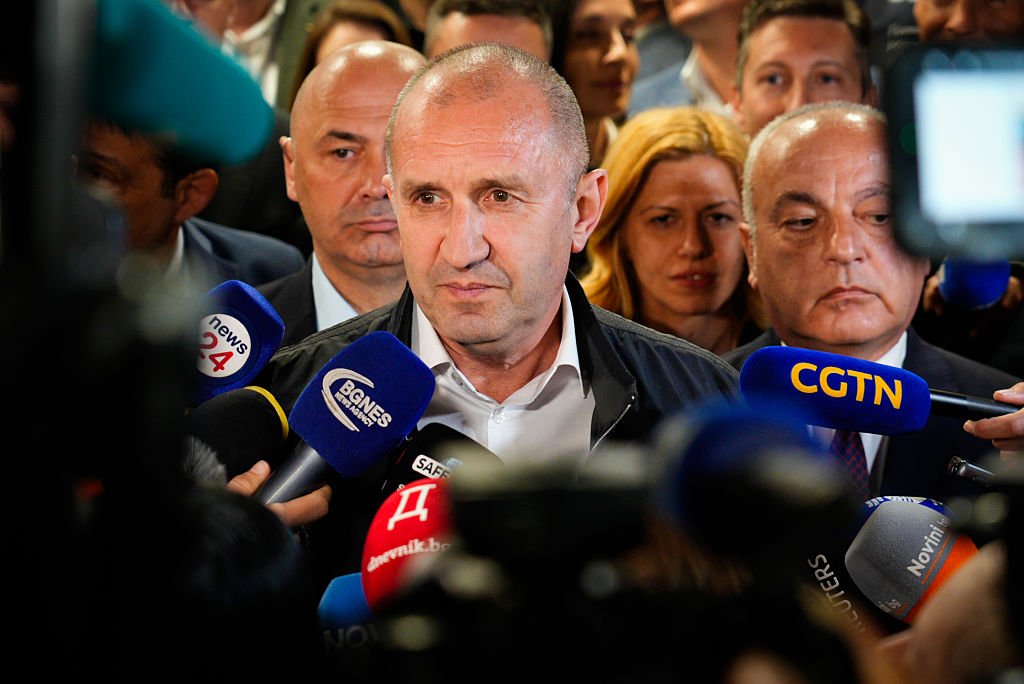

Bulgaria could significantly increase public health spending under a new government led by Rumen Radev’s “Progressive Bulgaria”, which secured a strong majority and aims to bring funding levels closer to the EU average.
The Balkan country, which is among the poorest EU member states, allocates the lowest share of its state budget to its solidarity-based healthcare system at around 5%. Chronic underfunding has increasingly shifted the burden onto patients’ out-of-pocket payments.
“Public healthcare spending should gradually increase as a share of GDP to reach European average levels, while simultaneously reducing patient co-payments,” Progressive Bulgaria said in policy statements. It is positioning itself broadly to the left, despite signaling caution about rising budget deficits.
To match EU averages, Bulgaria would need to increase public health care funding by nearly 50%, bringing it to roughly 7-8% of GDP. This means injecting more than €3 billion of additional funding into the system, bringing the total health budget close to €10 billion by 2027-2028.
The party has also pledged to build “an efficient, transparent and socially equitable health system that guarantees equal access to quality services for all citizens, regardless of income, location or social status.”
Recent polls suggest that such commitments can resonate strongly with voters. Almost half of Bulgarians struggle to cover health care costs despite the payment of health insurance contributions, highlighting systemic inefficiencies.
In 2025, almost one in four adults in Bulgaria, about 1.25 million people, will postpone or completely abandon medical services due to affordability constraints, according to a Trend survey.
Radev’s healthcare team has also pledged to uphold the controversial policy of requiring pharmaceutical companies to offer price discountswhile introducing centralized negotiations with suppliers to secure lower prices.
AU in public tenders
In recent years, Bulgaria has been rocked by scandals over large price discrepancies in prices paid by public hospitals for identical drugs, widely linked to risks of corruption in procurement practices.
Progressive Bulgaria plans to introduce a domestically developed artificial intelligence system, SIGMA AI (it bears the same name as the global AI company, but this is an unrelated domestic product), aimed at overseeing public tenders and reducing corruption.
The party has also promised support for Bulgaria’s pharmaceutical industry, which exports products worth over 1 billion euros a year.
“Our goal is to transform health care from a hospital-centered model to prevention, reduce out-of-pocket payments, and move toward centralized procurement of drugs and medical equipment,” Radev said during the campaign.
The incoming government also promises accelerated investment in the long-delayed national children’s hospital project in Sofia, estimated to cost around 500 million euros.
Another key commitment is to guarantee nationwide emergency medical coverage, which will require significant investment in medical personnel and the further development of air ambulance services.
(VA, BM)



