
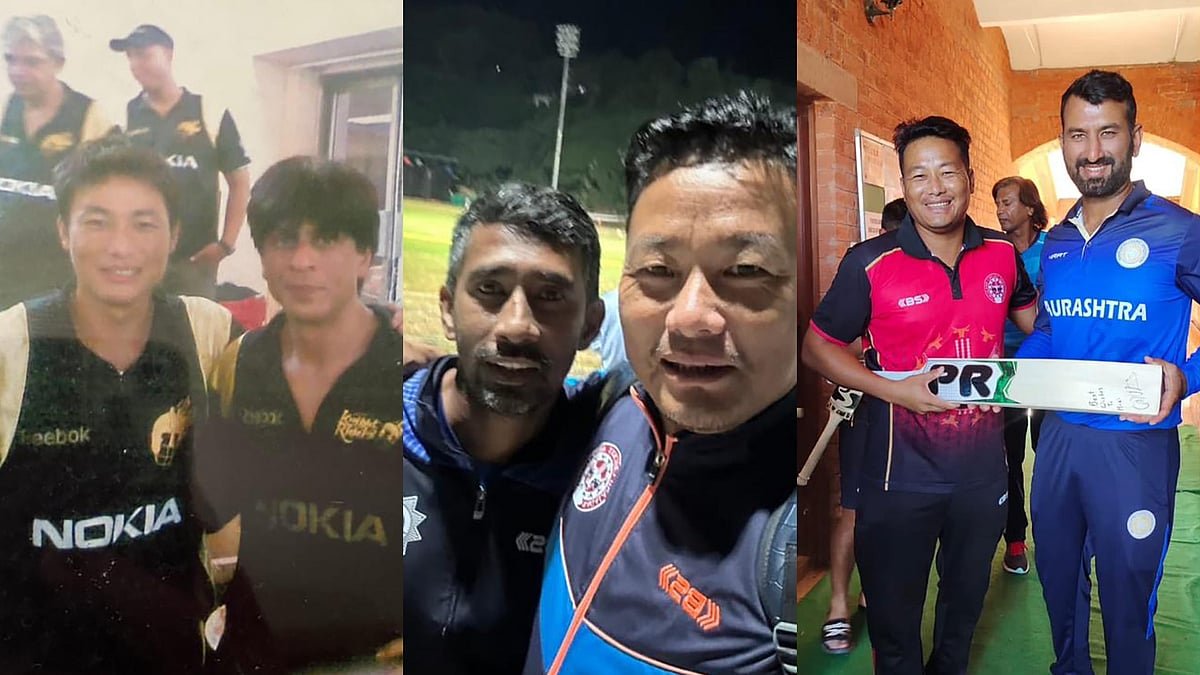

Hokaito started his club career with Flamingos in Dimapur, which is owned by Watinuksung Jamir, a businessman and current joint secretary of the Nagaland Cricket Association. But before that, Hokaito witnessed a slew of rejections from various clubs in his hometown. And his cricketing skills were not the reason, it was his age. “I was the youngest among them and they were afraid that I might get injured. So they never included me in the team. Every time I came home with a broken heart. This led my father to form a club and give opportunities to young and talented players like me. It was called the Hero Ranger Club. We also participated in the Assam tournament and made a name for ourselves by winning more than a few of our competitions.”
As he grew older, a similar initiative was taken by Jamir to allow him to make a transition to the professional level. “Uncle Wati gave me my first opportunity to play for his club (Flamingos) at a professional level and it gave me a clear vision of what I wanted from the sport. I took the game seriously after joining his club.”
By the time he turned 14 or 15, Hokaito realized he had to leave Nagaland if he wanted to pursue the game seriously. The parents regretted it, but gave him a year’s time. He moved to Guwahati, Assam and joined the Nawab Ali Training Centre. “I stayed as a PG there. In the first year, I was selected to play for Assam Blues Club. With the club, we had planned to travel to the UK and went to Calcutta to secure visas. It didn’t work out, but it gave me a wider horizon to explore. My uncle Kitto Zhimomi then moved to Tax in Commissionerate West, in Incatome. My attempt to become a cricketer He convinced my father and so I stayed with him during my first days in Calcutta, and without him I would not have been able to do anything.
Soon, he started playing for city clubs and his exploits with bat and ball meant that he found a place in the Bengal U19 team with Manoj Tiwary and Wriddhiman Saha as his teammates.
*****



