
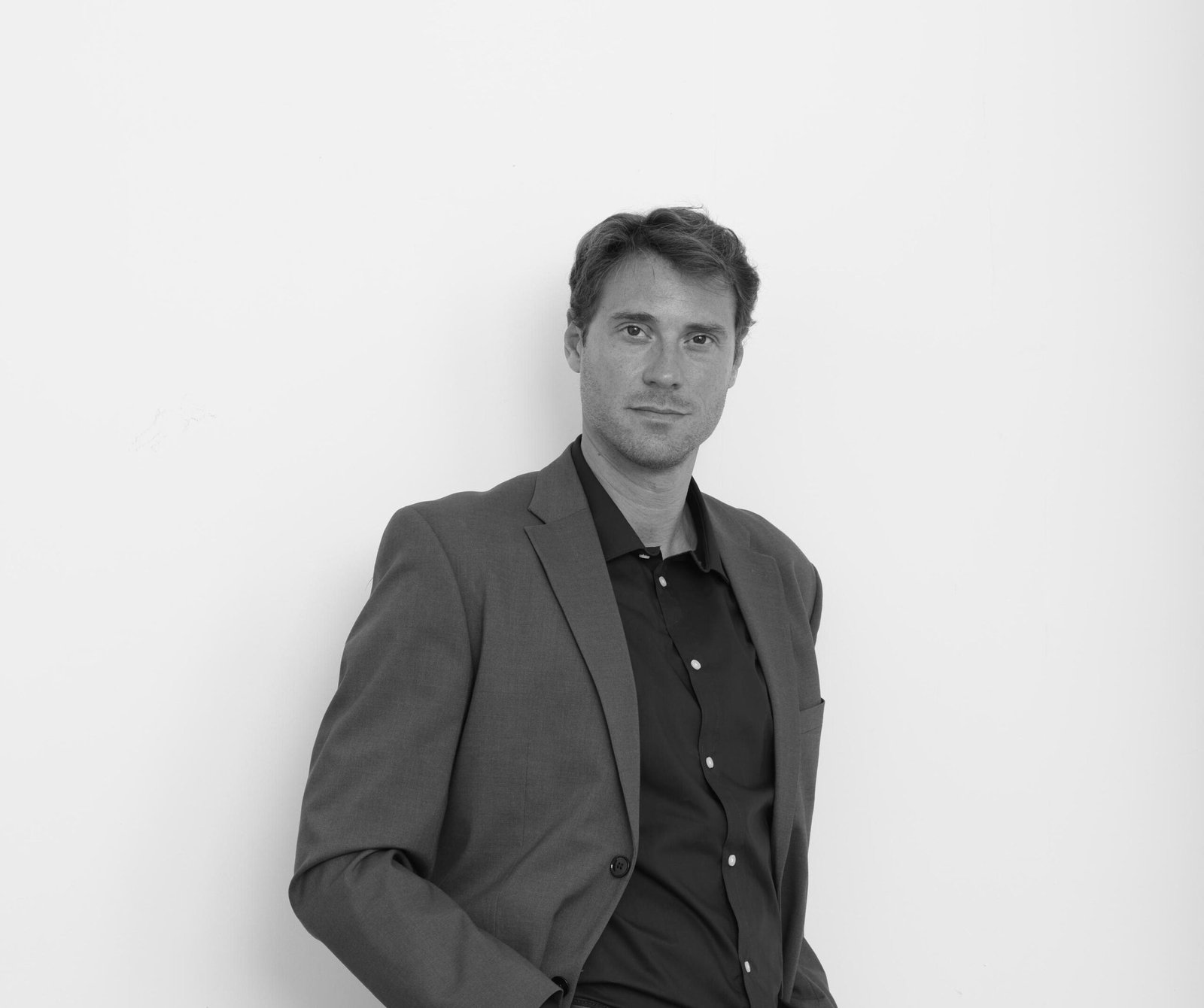


Last month, the Water Center in
Your history with Robert Wilson was long and remarkable. Can you explain why you two bark at each other like dogs? In what other unique ways have the two of you communicated?
I’ve known Bob Wilson since I was born. In the months before I could talk, he would sometimes call home, ask my parents to talk to me, I would bark on the phone and I would bark back. This non-verbal communication may take a while. It was pure play and an escape from rationality. A common practice in Wilson’s world. We have often used it in our collaboration, with a similar purpose, during the rehearsal process when we co-directed the works, and even once on stage when we performed together. Sometimes, it was simply to make the moment more special or to redirect attention. Sometimes it had a more precise purpose, such as to defuse a disagreement, express doubt, or encourage a bolder approach. Much of his communication with co-workers was non-verbal. His silence was as revealing as his words, and not just negative. In most cases, it was a constructive silence. One can make a lot of sense in it. We also used the eyes. Bob and I were usually understanding each other’s thoughts by sharing a glance. And then, each of us would simply say, “I see,” with a mischievous grin.
You grew up in a deeply creative family – your father is an actor and director, your mother is a costume designer, and your sisters became painters and opera soloists. Was there ever a moment you considered doing something outside of art, or was it inevitable?
I thought about doing other types of work, but it was always somehow related to art. I didn’t try hard to escape. More seriously, I owe a lot to my parents. While modest, they gave us incredible exposure to innovative artists, whether they were famous or completely unknown. They brought us to museums, theaters and operas. Sometimes we traveled to see an exhibition in another country. We didn’t have a television for a good part of our childhood and mostly watched cartoons. My father taught me a lot about the theater and I worked a lot with him. I was 10 years old when I went to the Aquatic Center for the first time. I stayed there for a while, without any family, working with Bob Wilson and other great professionals on a new production. Thinking about it now, I find my parents remarkably free. They allowed me to live an experience that most parents would dread.
In 2015, you directed the world premiere of an opera at the unfinished National Art Schools of Cuba, using the actual buildings as scenery. You have staged work at Columbia University for the Performance Biennale, Avignon Opera and Théâtre de la Ville. What are the challenges and rewards of programming somewhere unconventional, like Watermill?
I have always been interested in the influence of framing on a work. When I was 21, I performed in the French national company, Comédie-Française, and at the same time enjoyed performing in alternative spaces or working as a lighting technician on tour. As a director I had the opportunity to work in conventional theaters and play with the incredible possibilities that well-funded institutions bring. But the in-situ explorations also shaped me. They allowed me to question theatrical form and vocabulary in a deeper way. This is what we offer at the Watermill Center: a laboratory where artists can immerse themselves in a stimulating, unique environment and create works that they would not or could not have created in a conventional space. It is also very interesting to bring works that existed in theaters or museums and witness their growth or anamorphosis at the Watermill. Often, we welcome the first steps of works that will then be created in more conventional places. It’s like building independent bridges, so that forms find their truth regardless of context.
You have just completed Wilson’s unfinished production Seven loneliness at the Kaunas National Drama Theater in Lithuania—a piece you’ve described as shaped by the experience of standing next to a friend who is leaving. How have you navigated the line between honoring Wilson’s vision and asserting your own direction? When did you know you were making a Charles Chemin vs. a Robert Wilson decision?
We started Seven loneliness along with Bob Wilson and a valued team of longtime collaborators. As always, he began with images, references, and drawings, while I immersed myself in the concepts that emerged from the text materials. By the time we began the first brief stage of rehearsals, he knew his days were numbered, and yet he redoubled his efforts to launch this first sketch for the work, as a gesture designed beyond death, as an artistic testament. I sat next to him, knowing that he would not see the creation of the work and saw the opportunity to share it with my colleagues. As soon as he passed away, I reoriented my adaptation of Milosz’s texts and continued directing in order to pay tribute to Wilson’s poetic definition of theater and the reinvention of the relationship with space and time, which found an incredible echo within Milosz’s poetic and metaphysical texts.
At some point in the creation process, it became clear that there was only a certain extent to which I could fill the frame he had left. Because there is only one Robert Wilson, some of the work I would do would be a sort of imitation of his style, which would inevitably end up as a pale copy. Wilson often surprised his collaborators, the public and even himself by challenging and surpassing his iconic style. He also often liked to be surprised by what he could bring to his works.
Therefore, I began to influence his form with more personal and singular aspects, such as counterpoints, which brought the work to be a form of dialogue between his work and my particular approach. The decisions to make a hybrid work of that kind were very natural for me. They were activated by my understanding and admiration of what Wilson brought to the world, while fueled by my reaction to his work and reflection on art in general, my age, our times, the evolution of approaches and the renewal of forms.
I feel lucky. Extending a 42-year, almost tribal relationship and 33 years of working together in a form of artistic dialogue beyond death is a chance that very few people have. This piece is Wilson’s final artistic gesture to the world, and it is also the artistic gesture that we, as longtime collaborators, have offered to him.
Could this answer be applicable to questions about the future of the Watermill?
This dialog is fully applicable to Watermill. We will continue to emphasize Robert Wilson’s unique vision, but also the openness that Watermill carries. This openness is the engine of a renewal that will ensure that our path to artistic creation remains alive. For this, I am inspired by the reinvention that Wilson regularly did in his work and practice. The dialogue between diversity and singularity, in all forms, will serve as a compass, as well as the dialogue between future generations and innovative figures. Of course, there is a sadness that comes with such a profound loss. But this is a moment that I want to hold gently and with celebration. We owe this to Bob, Watermill, our alumni and generations of artists to come.
Wilson chose you for the role before he died last August. How were those conversations? Was there a formal moment where succession was discussed or was it more of a gradual understanding between you?
There was a gradual understanding over several years, accompanied by some formal discussions, increasingly precise in recent months. For many years we have operated with complementarity, in the theater as at the Water Mill. He was a very strong figure and there was no ambiguity about his leadership. But in recent years he shared more responsibilities and enriched his vision with several collaborators. For example, he was not as powerful in creating his famous lighting design in recent years, but relied much more than in the past on another lighting designer. Similarly, our working relationship was rich and complex. With him I would build the concepts for the works, the dramaturgy of the direction and a lot for the direction of the actors. There was a continuation of a similar nature with the Summer Program when I took over its artistic direction.
You co-directed and served as playwright on more than 20 of Wilson’s productions, and then directed Wilson himself in Krapp’s last tape. How was that?
Krapp’s last tape it was a rather unique experience, symptomatic of something that happened in some works: playing the younger Wilson. In rehearsals I was on stage playing his role, so he could direct me instead. In the final stage, we traded and I had to run it, from a role-playing perspective. The younger one was then driving the older one. As in an endless loop between the two generations, which echoed Beckett’s play remarkably well as we visited this work for nearly 10 years. In every city in the world we went to, in Asia, in South America, in the United States, all over Europe, I had to play it again, with the makeup, the wig, the costume, a fake belly, and then trade it again. It was also a tremendous learning experience to direct him in this work, where he had to learn and execute precise movements, recite the text out loud, impersonate a character, even if abstract, be consistent and convincing every night. It was a challenge and it took me a few cities to find my way around driving it and getting something solid out of it. It strengthened our trust and bond.
Since 2020, you have been the artistic director of Watermill’s International Summer Program. This residency brings 20 artists from different disciplines together every July and August. What is the most fun part about that aspect of your job?
Taking charge of the Summer Program was a beautiful evolution of my relationship with Watermill. Now I deal with less logistical tasks, but I still immerse myself with great pleasure in the artistic part of the Summer Program. With the help of several advisors, and from many applicants, I selected a group of artists, close to 30 now. They come to the Watermill for a month and create works individually and together that we present at our summer festival, alongside more popular guest artists. It’s like a cure of possibilities. It’s so different every year. We imagine the connections between artistic fields, age differences, nationalities, cultures, levels of achievement and lay out the possibilities for them to create works together, and they still always surprise us by inventing new forms and collaborations that we did not expect. It’s the most rewarding feeling: we’re just creating opportunities and these artists find their freedom no matter what. Their works are extremely original and the artistic friendships formed at Watermill will last many years for some of them.
More interviews on the Arts



