


For decades, a high-profile monograph was the last bow of the art world. An imprint from a top-tier publisher served as a final stamp of legitimacy, signaling that an artist’s work had “arrived” with enough gravitas to merit serious scholarly attention and market scale. But the purchase was significant. Iconic artists and brands were expected to lease their prestige to legacy publishing houses, effectively selling their intellectual property and creative control in exchange for the stamp of institutional validation. But in 2026, when digital ubiquity has increased the weight of print and direct-to-consumer sales have exploded in nearly every creative and commercial category, the publisher-as-gatekeeper model is starting to weaken.
Across the creative economy, artists and creators are increasingly bypassing institutional intermediaries. Musicians release independently. Writers monetize audiences through subscription platforms. Photographers license their work. Fashion and luxury brands bypass retailers and cultivate proprietary relationships with customers. In this landscape, loyalty has replaced gatekeeping as the true measure of an artist’s worth. Today’s artists and brands no longer look to the traditional middleman to prove their worth – not when they have the direct attention of their communities.
A similar disconnect is happening in the world of fine art. According to Art Basel and UBS Global Collection Survey 2025direct purchases from artists now account for 20 percent of total high-net-worth spending by value—a figure that has more than doubled in just a single year. This shift confirms that the “middleman” has lost its monopoly on prestige, as collectors become increasingly comfortable bypassing the institution to build a direct relationship with the source.
From the audience to the patron
In the art world, value is increasingly determined by proximity to the source. In the emerging atelier model, the customer is no longer just a customer; they become stakeholders in preserving the artist’s vision. Where traditional publishers cater to retail chains, this new model prioritizes the integrity of the work and the direct alchemy between artist and customer.
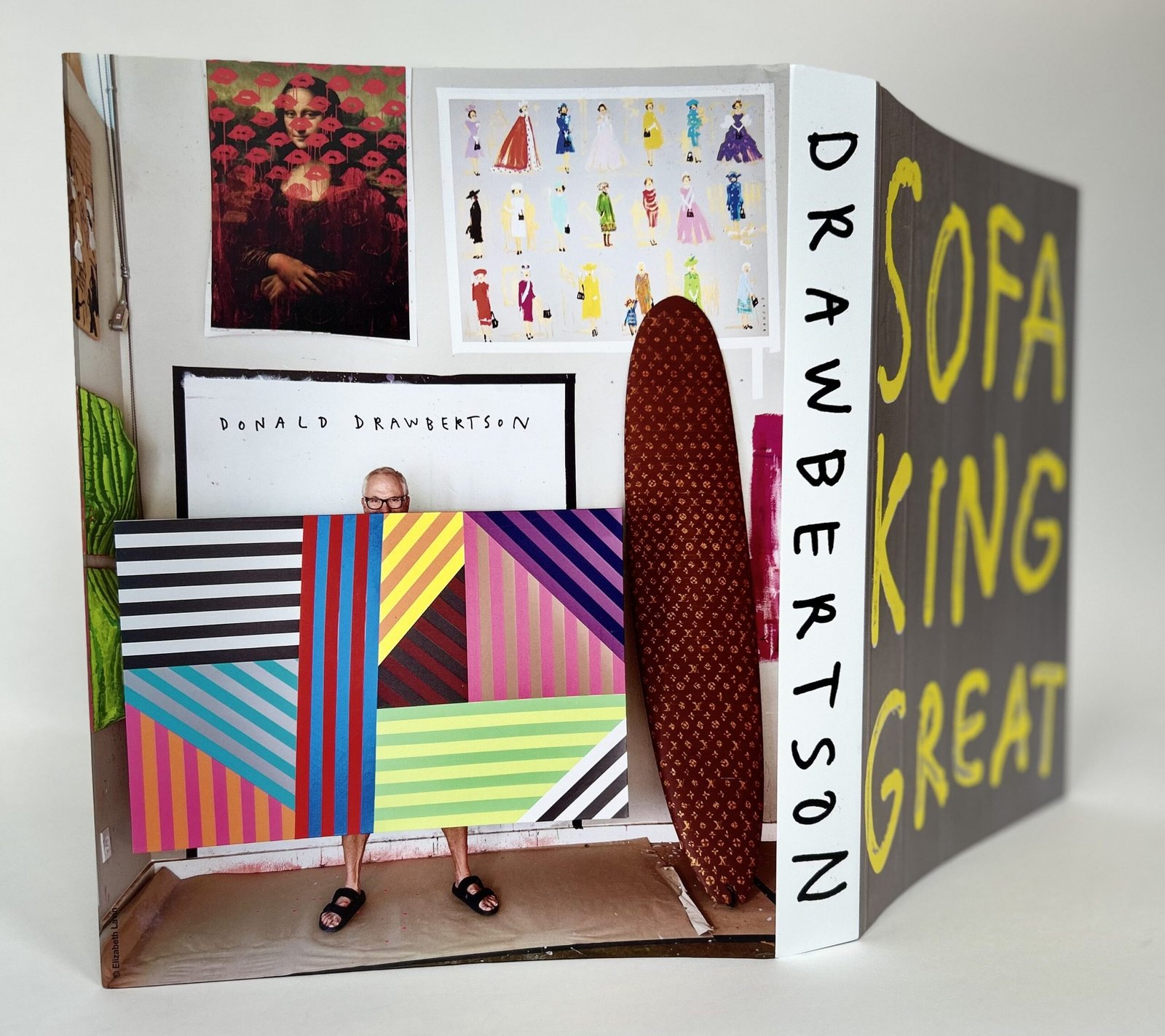
When cultural provocateur Donald Robertson decided to document his career through print, he bypassed traditional distribution for his latest monograph, King Great sofaopting instead for a direct-to-customer model—one that reflects a broader shift in luxury art publishing. Rather than relying on conventional retail channels, Robertson introduced the book through live painting events and private signings, selling directly to collectors through personal networks and at intimate gatherings.
These events, often organized in collaboration with retail insiders at places such as Bergdorf Goodman and Stanley Korshak of Dallas, transformed the traditional book launch into something closer to a cultural spectacle. Patrons participate directly in the creative environment, surrounded by the tools of Robertson’s process—paint, markers, tape, and collage materials.
The economic logic is compelling. By selling direct, artists retain the margin usually absorbed by publishers, distributors and booksellers. In Robertson’s case, the results were immediate: early events reportedly recouped the initial production investment within hours – illustrating how direct customer engagement can fundamentally change the economics of publishing. What once functioned as a traditional book signing now functions as a form of experiential patronage, where proximity to the artist becomes part of the value proposition itself.
Bringing back the publishing economy
Traditional publishing relies on a network of distributors, wholesalers and legacy retailers. While there may be great value to this model in terms of brand amplification and volume, the “middle” captures the difference and, moreover, erodes the bond between artist and patron. Artistic vision is often compromised to meet standardized rubrics, from trim sizes to retail price points. For decades, the validity tax involved surrendering creative control, revenue share, and narrative authority in exchange for the institutional imprimatur the market demanded. As a result, monographs can appear more like commodities than artifacts. By re-centering the book economy within the studio, the artist reclaims both the narrative and the margin—moving from a standard single-digit royalty to full ownership of the value of their work.
This is the “craft arbitrage”—the ability to reinvest that lost margin back into the facility itself: the art-quality paper stock, custom finishes, and limited-use techniques that traditional P&Ls find cost-prohibitive. This priority is already being reflected in the supply chain; Proprietary data from European high-end bindery collectives shows a 40 percent increase in “studio direct” commissions for custom finishes from 2023, even as traditional trade orders are consolidated.

When Galería Botello, a family-owned gallery in Old San Juan, wanted to preserve the legacy of its namesake artist Angel Botello in a monograph that would offer a personal look at his life and the evolution of his creative journey, the physical presentation of the book became central to the project. The gallery prioritized bespoke materials and finishes, capable of conveying the depth and durability of the artist’s work. The result was a large monograph bound in linen and printed on fine art stock. Retail: $150. A traditional trade publisher would likely release the work for half the price, and the facility itself would have reflected that economy. Without these limitations, however, the book functions less as a mass-market publication and more as a curated object—an object created to preserve artistic heritage rather than simply move units through retail channels.
Art before commerce
When a book is not created solely with the sales channels of major publishers in mind, the design can also become bolder, more distinctive and uncompromising. Production decisions are not subject to mass-market distribution, experimentation is welcome, and creative thresholds are expanded. The cover of an upcoming visual culinary memoir replicates a classic French bistro dish towel, or torch. Such creative risks would normally be sacrificed for institutional uniformity in a legacy house, yet they are precisely what mainstream audiences embrace. And the title of the book? Chickens don’t fly perfectly sums up the book’s message and its unconventional publishing journey. This trend is reflected in the State of the Art Book Publishing 2025 report, which notes that while trade-distributed art titles have seen an even increase, “limited-run, studio-led” editions have grown 30 percent in market share—suggesting that collectors are moving away from mass production in favor of the rare and resonant.
In an age defined by direct access, cultural authority will no longer belong only to the institutions that distribute books, but to the creators who own their narrative. The emerging atelier model reclaims authorship over both the economy and the archive. When artists control the margin, they can reinvest in the craft. When they control distribution, they can cultivate intimacy with their customers. And when they control the narrative, they transform a book from a product into a cultural artifact. In the next decade, the most valuable art books will not be the ones with the widest distribution. They will be closer to the source – objects that function not simply as publications, but as uncompromising evidence of an artist’s vision.
More knowledge about the art market



