
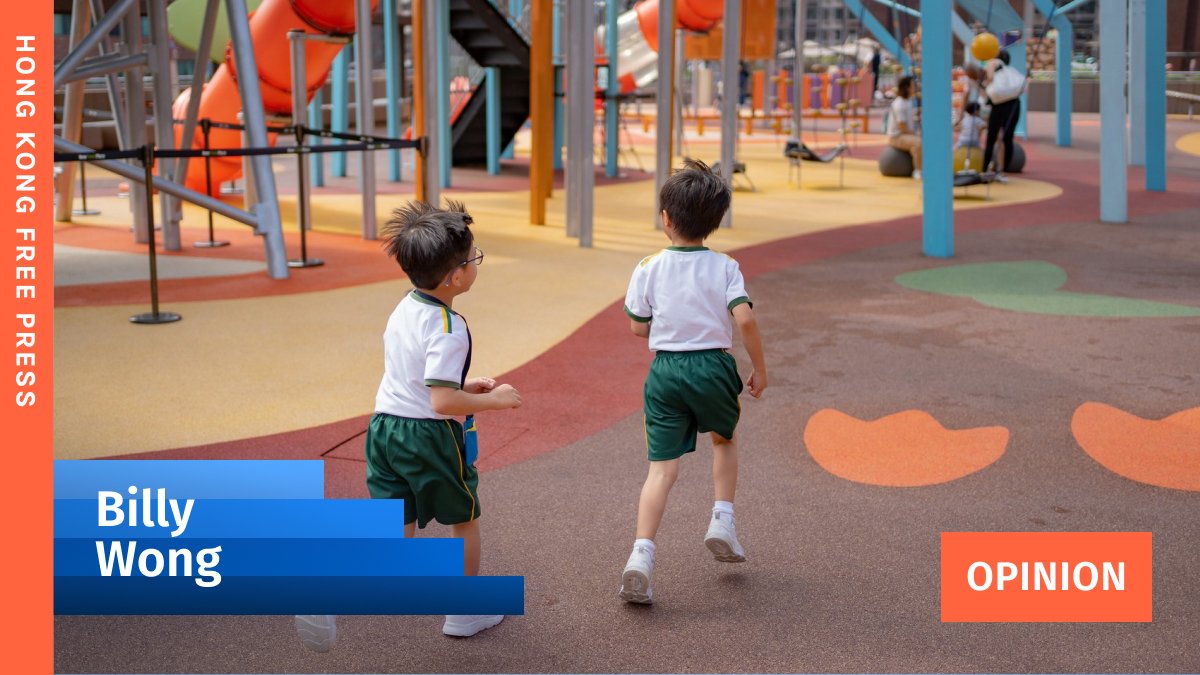

By Billy Wong
Last summer, our organization, the Hong Kong Committee for Children’s Rights, organized a forum titled “I’ve Got Something to Say”, providing a platform for those aged 10 to 17 to express their opinions. The topics were unlimited, as long as they were child-related and legal.
The first issue raised was: “Hong Kong should establish a Children’s Day to raise public awareness of children’s rights.”

The young boys who brought the case were sixth graders who, at the time, would be going to different high schools after the summer vacation.
They made a request on behalf of all children in Hong Kong. One of them said: “Adults often use holidays like Valentine’s Day and Christmas to organize fun celebrations. Why are there so few promotions for Children’s Day?”
There is no universally accepted date for Children’s Day around the world.
In mainland China, June 1 is designated as Children’s Day, giving students under 14 a day off from school. Celebrations include large-scale group performances, school fairs, gift-giving and parent-child activities. Children’s Day in Taiwan falls on April 4, which is a national holiday. It features a host of fun, family-friendly activities and sporting events.
Both Japan and South Korea celebrate Children’s Day on May 5 – a public holiday. In Japan, carp ribbons are hung, symbolizing courage and growth, while in South Korea, there are large-scale events throughout the country.
In contrast, Children’s Day is usually just another day in the classroom for students in Hong Kong, although some schools and NGOs choose to celebrate it on either April 4 or June 1.
The kids in our forum weren’t just talking from a point of self-interest. They argued that the establishment of Children’s Day would be a concrete implementation of the United Nations Convention on the Rights of the Child, which came into force in Hong Kong in 1994.
They noted that “many countries use Children’s Day to organize legal awareness campaigns, promote the ban on child labour, improve educational resources, organize visits to parliaments to learn about democratic systems… and so on”.
The young guys weren’t just clamoring for playing time. They had done their homework. I marveled in silence.
Whether it’s April 4, May 5, June 1 or November 20 – the latter being International Children’s Day, which marks the adoption by the UN General Assembly of the Declaration of the Rights of the Child in 1959 and the Convention on the Rights of the Child in 1989 – Hong Kong should officially designate East Asian Children’s Day as an official holiday in Asia Eastern.
The boys conducted a survey at their primary school in Tin Shui Wai and found that only half of their classmates knew about Children’s Day.
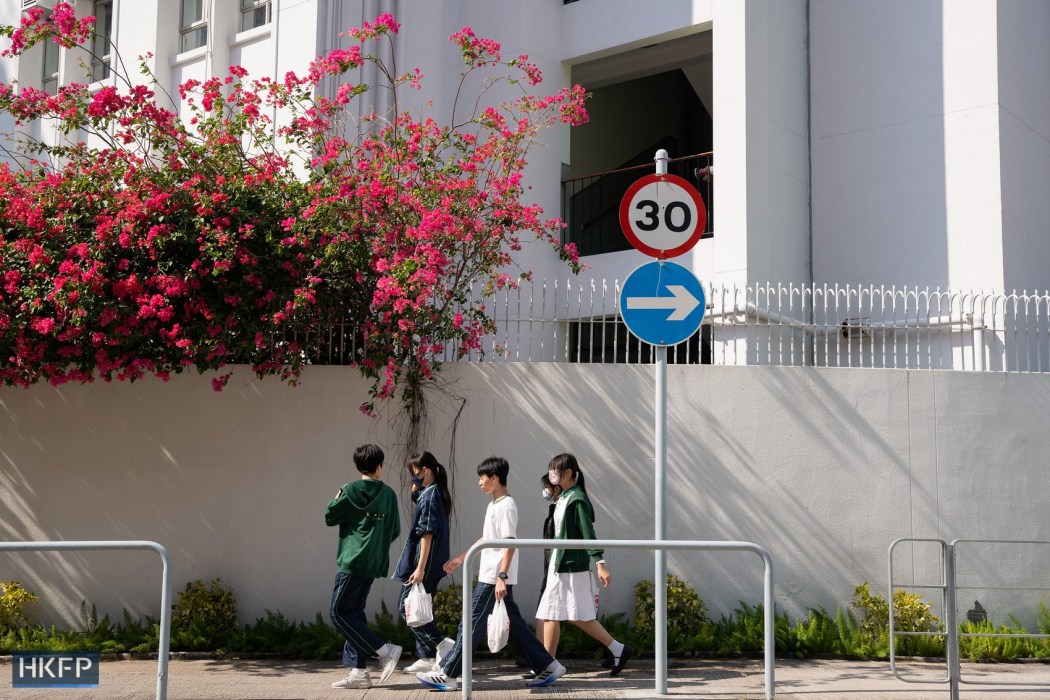
“Today’s children face academic pressure and excessive use of electronic devices, leading to a year-on-year increase in mental health issues such as depression and anxiety,” they said.
“Official Children’s Day celebrations can provide dedicated relaxation opportunities for children, such as schools organizing fun activities and families organizing parent-child interactions, helping children reduce stress and cultivate positive emotions,” they suggested.
“Children’s Day should also draw society’s attention to the circumstances of vulnerable children (such as those living in poverty, with disabilities or experiencing abuse), mobilizing donations, securing resources and raising awareness of their situations.”
‘Decisive opportunity’
Holidays don’t just have to be dazzling celebrations. As the boys said, “It’s a crucial opportunity for society to consider children’s rights and invest in the future. Its importance extends far beyond a single celebration – from individual growth to societal progress – requiring joint efforts by governments, families and educators.”
Shouldn’t we adults be ashamed of ourselves? Why has Hong Kong never put Children’s Day on the agenda for discussion as a school holiday, public holiday or statutory holiday? Or is society used to treating “children” as mere decoration, where they only appear as decorations and photo opportunities on holiday occasions?
For many critical issues – even those that directly affect children, such as school lunch programs, school governance or The recently enacted Mandatory Child Abuse Reporting Ordinance – society uses “age and maturity” as an excuse to exclude children’s voices, completely violating the Convention on the Rights of the Child principle of children’s participation.
The children have already expressed their evidence-based and heartfelt appeal. The ball is now in our court to show that they have more value to us than just decorative value in our marketing campaigns.
I believe that the Hong Kong government and the Children’s Commission will welcome this vision and lead the way to seriously consider creating a holiday dedicated to Hong Kong’s 970,000 children under the age of 18.
Ultimately, by listening to children’s voices, we can build a culture that recognizes them as individuals and as a distinct group, and learn to engage with their rights, rather than resist them. By doing so, we can set an example and help cultivate a generation of responsible and reflective decision makers.
Billy Wong is the executive secretary of the Hong Kong Committee for the Rights of the Child.
| HKFP is an unbiased platform and does not necessarily share the views of columnists or advertisers. HKFP presents a diversity of views and regularly invites figures across the political spectrum to write for us. Freedom of the press is guaranteed by the Basic Law, the Security Law, the Bill of Rights and the Chinese Constitution. Opinions are intended to constructively point out errors or defects in government, law or policy, or are intended to suggest ideas or changes through legal means without the intention of hatred, resentment or hostility against other authorities or communities. |





