
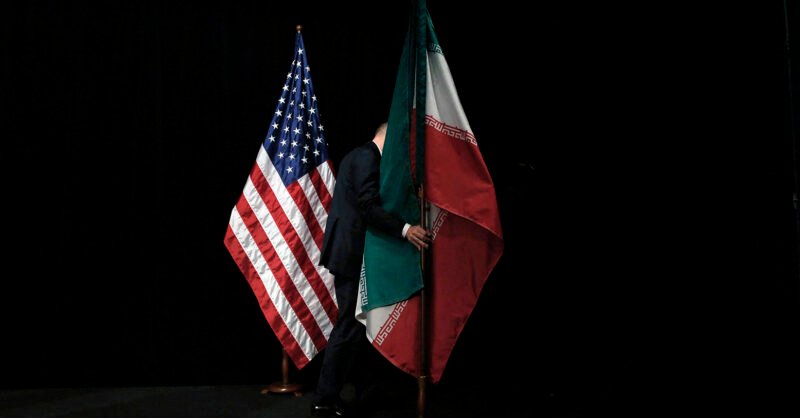

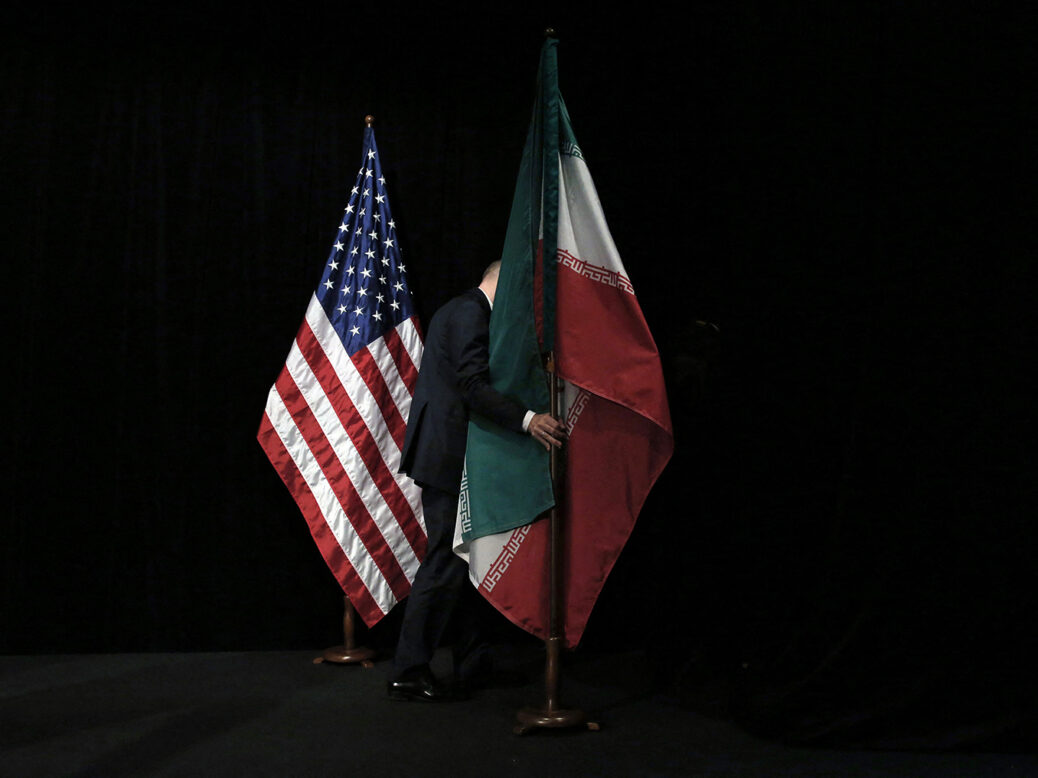
On March 23, three weeks after the US-Israel war with Iran, Kim Jong Un delivered what was a victory speech at the Supreme People’s Assembly in Pyongyang. The US was “committing state terror and acts of aggression all over the world”, the North Korean leader declared, with the rights of sovereign nations “violated by coercion and unilateral tyranny”. However, his country was now protected by its “nuclear shield”, justifying the regime’s pursuit of nuclear weapons despite the sanctions and international isolation it had caused. “Today’s reality clearly shows the legitimacy of our nation’s strategic choice and decision to reject the sweet talk of enemies and secure our nuclear arsenal forever,” Kim said. It was as close as he could get to saying I told you so.
Since coming to power after his father’s death nearly 15 years ago, Kim has prioritized the development of nuclear weapons – and the missiles needed to deliver them – channeling the country’s scarce resources into a formidable weapons program. North Korea is currently estimated to have 40-50 nuclear warheads, along with enough fissile material to build about 40 more. In recent weeks, Kim has shown off the country’s other military prowess, leading a major military parade in Pyongyang alongside his daughter and potential successor Kim Ju Ae, who is thought to be around 13 years old. Father and daughter stood together in the stands wearing black leather goggles. They have also been photographed overseeing missile tests from a warship off the coast of North Korea, firing rifles at a weapons factory and driving a tank during military exercises.
Unlike the Iranian leadership, which stopped short of developing nuclear weapons, Kim’s relentless pursuit of the bomb appears to have given the regime security along with three high-profile meetings with a US president, a status not accorded to his father and grandfather. The danger, nonproliferation experts warn, is that other American adversaries — and perhaps even some allies — compare the fortunes of Tehran and Pyongyang and conclude that Kim chose the more cautious approach.
“From North Korea’s perspective, what’s happening in Iran reflects their worldview,” explained Ankit Panda, a senior fellow at the Carnegie Endowment for International Peace and author of The New Nuclear Age: On the Precipice of Armageddon. “This is a country that has closely studied the American way of war since 2003, when they saw the United States invade Iraq and try to kill Saddam Hussein at the beginning of that war. So everything the North Koreans have done has been trying to shore up their security against threats to their regime.”

Subscribe to the New Statesman today and save 75%
North Korean diplomats have long cited the examples of Iraq, Afghanistan and Libya as evidence of what happens to countries that do not have nuclear weapons in the 21st century. Trump’s then-director of national intelligence, Dan Coats, RECEIVED in 2017, Kim had seen “what has happened around the world regarding nations possessing nuclear capabilities and the influence they have.” The unfortunate lesson was this: “If you had nuclear weapons, never give them up. If you don’t have them, get them.” The subsequent Russian invasion of Ukraine (which gave up its Soviet-era nuclear warheads in 1994) and now the Iran war have only strengthened this argument. The cumulative effect of the US-Israeli attacks on Iran last year and the current conflict “will increase interest globally in the possession of nuclear weapons,” Panda told me. “I hope the North Koreans don’t become trendsetters in the 21st century, but they are constantly cited as a case that really stands apart from Iraq, Iran, Libya, and so on.”
Another lesson that Tehran and others can learn from this war is the futility of engaging in diplomatic negotiations with the US. “Iran tried to negotiate with the United States twice, and during those negotiations they got bombed,” said Kelsey Davenport, director of nonproliferation policy at the Arms Control Association. “So what credible assurance can the U.S. offer that the negotiations will be respected? This credibility deficit will shape Iran’s thinking, and at some point it may conclude that it is paying too high a price for nuclear weapons it does not have, and that crossing the threshold (to weaponization) would provide more certainty.”
This does not mean that we should expect an immediate strike on nuclear weapons at the end of this war. But assuming some iteration of the current Iranian regime survives, Davenport warned that the conflict would strengthen those elements who have long argued that nuclear weapons would deter future attacks. “At the end of this war, Iran will still retain the know-how to build a bomb, and they likely have key materials and technology, so the question is how much this conflict will affect Iran’s political decision-making on nuclear weapons.”
Perhaps counterintuitively, given the extensive capabilities the US and Israel have already demonstrated during this war, Davenport argued that it had also illustrated the limits of US conventional military power, which remains unable to target Iran’s most deeply entrenched facilities. “I wouldn’t be surprised if we see Iran take some steps to rebuild parts of its programs deeper underground,” she said, “into fortified, fortified facilities that the U.S. can’t destroy from the air.”
Panda, too, warned that the severity of the damage to Iran’s conventional capabilities during this conflict could only make the surviving leadership more determined to pursue nuclear weapons. “Three conditions are possible at the end of this conflict: some version of a revolutionary Iranian regime remains in charge, without a very strong conventional deterrent capability and with 400 kilograms or so of highly enriched uranium and centrifuge components,” he said. “This is a perfect storm for a case of the dreaded spread.” Rather than putting a definitive end to Iran’s nuclear ambitions, he warned that this war could have just the opposite effect, “creating, in essence, an Iranian North Korea.”
Tehran’s path to the bomb would still be complicated. While North Korea was developing its nuclear weapons, it retained significant conventional capabilities, which, thanks to the geography of the Korean Peninsula, enabled Pyongyang to threaten massive retaliation against the South Korean capital, Seoul, to deter potential attacks. The Iranian regime is unlikely to emerge from this war in a similar capacity, although it has shown the ability and willingness to target ships in the Strait of Hormuz and exploit the global economic consequences.
Beyond Iran, Davenport sees another “perfect storm” for wider spillovers as countries around the world learn their lessons from the war and the broader geopolitical context. “Allies and adversaries no longer trust that the US will act in good faith, not only when it comes to negotiating non-proliferation agreements, but also when it comes to security guarantees and enhanced nuclear deterrence commitments,” she explained. Another factor is the growing divide between the five known nuclear weapons states, China, France, Russia, the UK and the US. “For decades they were relatively united in prioritizing nonproliferation, but that unity has now been almost completely destroyed,” she said, noting that Iran and North Korea had already demonstrated “how a state can exploit divisions between great powers to mitigate the consequences of advancing toward the nuclear threshold.”
“Nuclear weapons have returned to the center of international security in a way we haven’t seen since the Cold War,” Panda said. “We’re seeing these dramatic changes in the nuclear order along multiple axes, and there’s just tremendous uncertainty about how the dust settles here.” This uncertainty is compounded by the fractious nature of US domestic politics and the instability emanating from Washington. “Our allies are smart people, and if the U.S. is the cornerstone of your country’s national defense — you could be Estonia, you could be Japan, you could be Spain, any of America’s treaty allies — you can’t look at what’s happening in Washington and see a country that’s going to be predictable in the future, so I think our allies are going to do a lot more to protect against insecurity.”
This process is already happening in parts of Europe, where US allies have had to contend with Trump’s “Liberation Day” tariffs, his threats to seize Greenland and his continued skepticism of NATO and the European Union, alongside Russia’s war on Ukraine. Poland’s Prime Minister Donald Tusk announced on March 2 that his country had entered into talks with France and other European allies on “advanced nuclear deterrence”. Like him is explained “We are arming ourselves together with our friends so that our enemies never dare to attack us,” the decision said in a social media post. Germany PLANs to join French nuclear drills later this year and has also launched talks on joint deterrence. Unlike the UK which SUPPORTED on US support for the maintenance of its Trident missiles, France’s nuclear arsenal is completely independent of the US.
“Even if the United States elects an international, pro-alliance democratic president in 2028, I don’t think that fixes this,” Panda said. “We’re not going back to the world as it was in 2024, and we’re certainly not going back to the world as it was in 2015, before Trump’s first term. When it comes to the global nuclear order, there’s no turning back.”
On this last point, at least, US allies and adversaries would likely agree. Standing in front the brave, a new nuclear-powered submarine at a naval base in Brittany earlier this month, French President Emmanuel Macron DECLARING that the world had reached a “geopolitical turning point fraught with dangers”. France would therefore adopt a new doctrine of “forward deterrence”, which would involve building up the country’s arsenal of nuclear warheads for the first time in decades. “In this dangerous and uncertain world,” Macron said, “you have to be afraid if you want to be free.”
(Further reading: Battle for the Strait of Hormuz)
Content from our partners



