
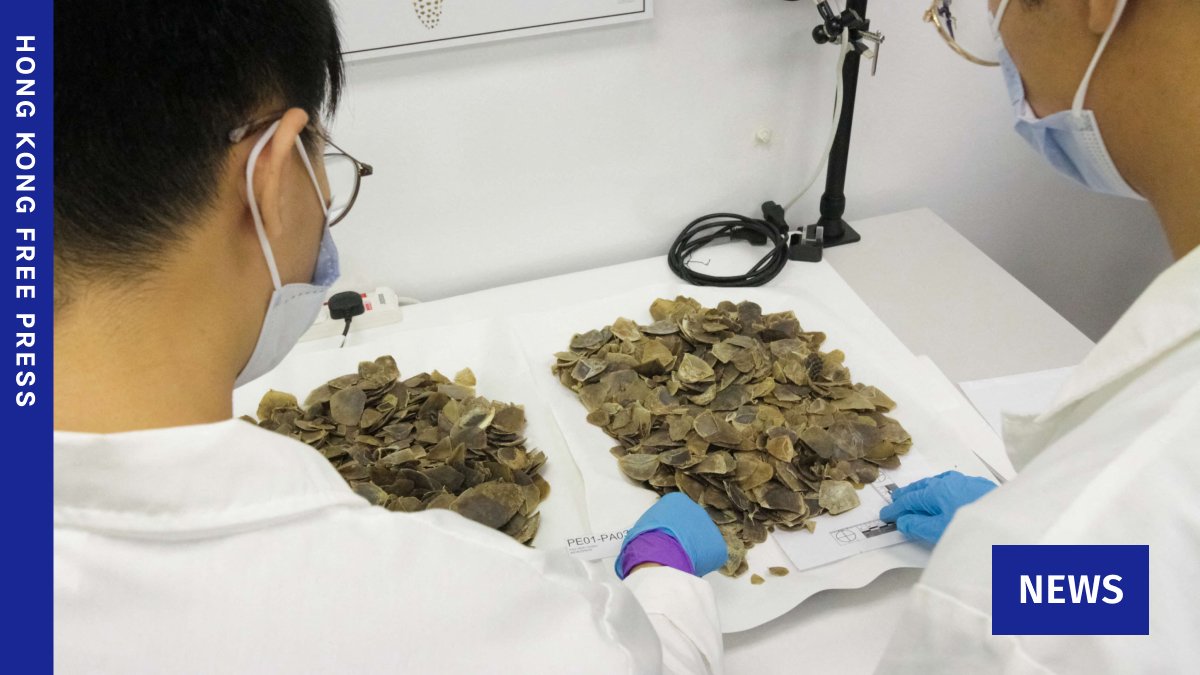

Singapore has seized more than 830 kilograms of Asian pangolin scales hidden in a shipment bound for Cambodia, authorities said on Saturday, calling it the largest shipment of its kind discovered in the city-state.

Falsely declared as “dried fish skin”, the scales – estimated to be from more than 2,200 pangolins – were found in 30 bags on December 29 after officials intercepted a truck carrying marine cargo, Singapore’s National Parks Board said in a statement.
The announcement came after Singapore released a report on Saturday on the country’s role in tackling illegal wildlife trade in the shipping sector.
“Based on preliminary investigations, the cargo was transiting through Singapore en route from Indonesia to Cambodia,” the statement said.
“This marks the largest catch of Asian pangolin scales in Singapore to date,” he added, noting that investigations are ongoing.
The scales were identified as belonging to Sunda pangolins, a critically endangered species native to Southeast Asia, including Singapore.

Pangolins are protected by the CITES wildlife treaty, to which Singapore is a signatory.
“Singapore adopts a zero-tolerance stance on illegal trade in endangered wildlife species, and their parts and derivatives,” the statement said.
Pangolins are among the most endangered species in the world, and their scales are valued in countries such as China and Vietnam, where they are used in traditional medicine as a remedy for various ailments.
Their scales are similar in texture to nails and offer no scientifically proven medical benefits.
Under Singapore law, those found guilty of trading protected species without a valid CITES permit face a fine of up to S$200,000 ($154,702) per specimen (not more than S$1 million or the market value of the items) and up to eight years in prison.





