
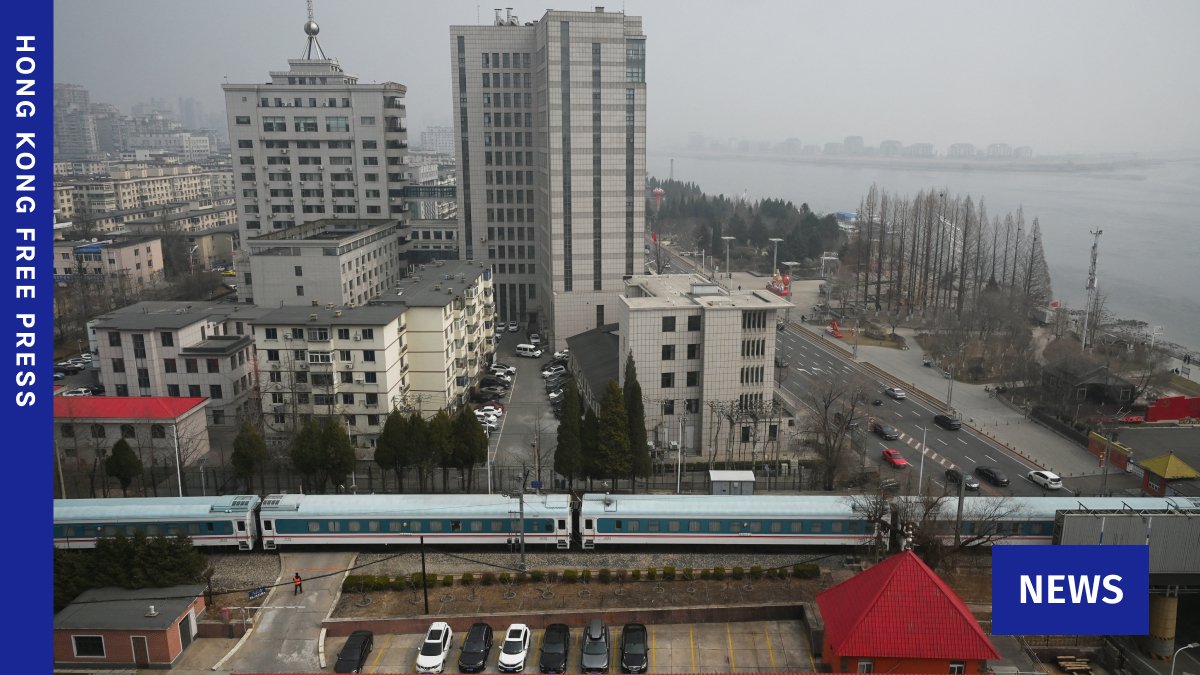

Now retired, Wang Meili wants to see the world — including North Korea, the isolated nation that lies across the river from her lifelong home in northeastern China.

North Korea has long maintained tight controls on foreign visitors and effectively closed its borders at the start of the Covid-19 pandemic six years ago.
It has since partially reopened and restored daily passenger train services with China this month, but has yet to resume issuing tourist visas to Chinese citizens, who once made up the bulk of its overseas visitors.
“We would like to get visas to go. I already have my passport,” said 68-year-old Wang, who grew up in the border city of Dandong.
In another apparent sign of North Korea’s reopening, Air China will resume flights to Pyongyang on Monday.
But for now, only those with work or study visas can go.
AFP reporters in Dandong, the main gateway for cross-border travel and trade, saw a mostly empty passenger train creaking over a bridge in North Korea this week.

Nearby, tourists on another bridge, partially destroyed by American bombs during the Korean War, posed for pictures and brought binoculars to the North Korean city of Sinuiju on the opposite bank.
Cruise ships took curious visitors to watch North Koreans cycle along the Yalu River that separates the two countries or clean boats on shore. Uniformed guards stood at regular points along the border.
Li Shuo, the manager of a Dandong-based travel agency, said the resumption of passenger train services had had “no impact” on his business.
Unable to lead tours in North Korea, he has offered trips through border areas so customers can capture their own glimpses of the secretive state from afar.
“We can only wait for news” on tourist visas, Li said, adding that they “would be a good thing for domestic tourists.”
“A lot of people want to go,” he said.
“People are brainwashed”
Others were less inclined.
A Chinese tourist from the northeastern city of Shenyang told AFP that a glimpse of North Korea from Dandong was close enough for him.
“It’s totalitarian there, people are brainwashed,” he said, declining to give his name given the sensitivity of the subject and his work in the public sector.
“Actually, there is also brainwashing here in China, but it is not that severe,” he said.
AFP also spoke to tourists from outside China – including Hong Kong, Japan and Australia – all drawn to Dandong for a rare glimpse of the country it borders.

Louis Lamb, a 22-year-old nurse from Brisbane, told AFP that the trip to North Korea was “a bucket list item”.
“You can see (North Korea) from a certain perspective in what we see from our media,” Lamb said, adding that he would like to experience the country for himself.
Although parts of the opposite riverbank looked “deserted,” he said, “it’s a lot more developed than I thought.”
China is a major supporter of diplomatically isolated North Korea, although Pyongyang has drawn noticeably closer to Russia since the start of the war in Ukraine.
But trade with China, much of it through Dandong, is a key lifeline for North Korea’s moribund economy under UN sanctions over its nuclear weapons program.
Cross-border shipments rose to $2.7 billion last year and have almost returned to pre-pandemic levels, according to Chinese customs data.
AFP reporters saw a steady stream of trains and cargo trucks carrying goods from Dandong to Sinuiju.
‘go home soon’
For some in Dandong, North Korea’s tentative reopening sparked hope of returning home.
Thousands of North Koreans are thought to reside in the city of two million people, despite sanctions barring them from working abroad.

North Korea’s sudden border closure in 2020 trapped many of them out of the country for years, and Pyongyang later strengthened defenses along the border to deter illegal crossings.
Staff at a North Korean restaurant in Dandong prevented AFP reporters from filming or taking photos of a large screen showing a patriotic music and dance performance.
A waitress from Pyongyang told AFP she had been in China for more than six years without returning home.
Western experts say such workers endure deplorable living and working conditions, have their movements restricted and see most of their wages commandeered by the North Korean state.
But after a long wait, travel between the two nations now seemed to be getting easier, the waitress said, declining to give her name.
“I’ll be going home soon.”





