
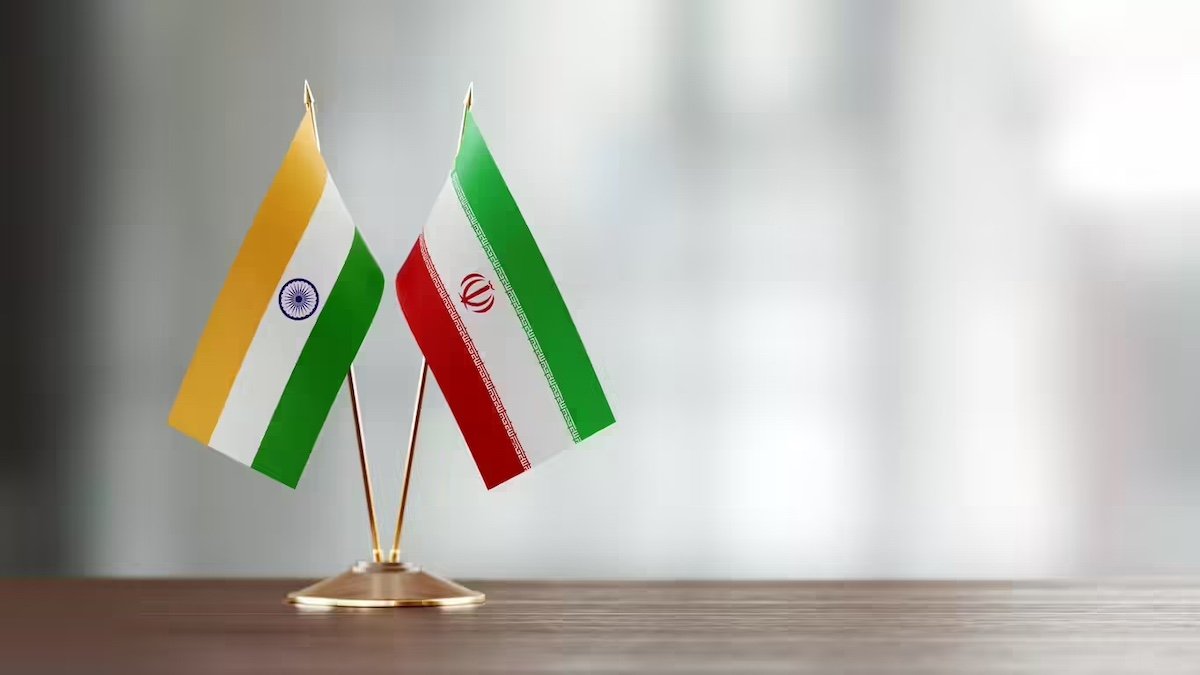

The growing confrontation in the Persian Gulf is entering uncertain territory, with risks extending far beyond the region. For India, the stakes are extremely high – economically, strategically and politically – sparking calls for India to step in as a mediator.
Given its deep economic stakes and extensive relationships in the region, India seems, at first glance, to be a natural candidate. However, New Delhi has shown little appetite for such a role. This is not a missed opportunity, but a demonstration of a deliberate and evolving strategic choice.
India’s foreign minister, Subrahmanyam Jaishankar, has made it clear that India does not see itself as a “mediator” in complex geopolitical conflicts. This position underscores a broader doctrine of strategic autonomy—one that prioritizes flexibility, avoids entanglement, and relies on calibrated engagement rather than high-visibility intervention.
The stakes for India in the Persian Gulf are undeniable. A significant portion of its crude oil and natural gas imports transit through the Strait of Hormuz, making any disruption an immediate economic concern.
The Gulf region is also one of India’s largest trading partners, with bilateral trade running into the hundreds of billions of dollars. Additionally, over nine million Indians live and work in the region, contributing substantial remittances that support domestic economic stability.
This exposure alone should give India a strong enough incentive to support de-escalation. However, it does not automatically translate into a willingness to mediate.
At the heart of the current crisis lies a fundamental disagreement over the region’s security architecture. Iran has signaled its preference for a regional framework that reduces the role of outside powers, especially the US. For Washington and its Gulf allies, such proposals are seen as a direct challenge to an established order that has long guaranteed regional stability.
This divergence has created a structural deadlock. Iran seeks to reshape the security environment, while the US and its partners aim to preserve it. In such a polarized environment, mediation is not just about facilitating dialogue – it requires influence on both sides and a willingness to absorb political risk.
India, despite its strong relations across the divide, is not positioned to impose outcomes or guarantee security guarantees. Nor does it intend to take on such responsibilities. Instead, India’s approach can be better understood as a “stabilisation without mediation”.
Instead of positioning itself as an official mediator, New Delhi is engaging all relevant actors through bilateral channels, keeping open lines of communication while avoiding public alignment with one side.
This approach reflects both prudence and realism. Traditional intermediaries in the region face inherent limitations. The US is a major online actor in the conflict. European powers have limited influence over Iran. Regional players are themselves deeply invested in the outcome. China, while influential, is often viewed through the lens of great power competition.
In contrast, India maintains a unique position. It has long civilizational and economic ties with Iran, a strategic partnership with the United States, deepening engagement with the Gulf states, and a carefully managed relationship with Israel. Most importantly, she has maintained these connections without allowing one relationship to dominate the others.
Although this multi-alignment provides India with diplomatic access, New Delhi seems more intent on using that access to reduce friction than to lead formal negotiations.
There are also clear risks associated with open mediation, especially when India is not a net security provider in the region. Taking on a prominent mediating role could expose India to diplomatic setbacks if negotiations fail, potentially straining its relations across the region. It could also draw India into security engagements that it has traditionally shied away from.
By contrast, quiet diplomacy allows India to protect its core interests—uninterrupted energy flows, trade continuity and diaspora security—without overstretching itself.
This does not mean that India is a passive actor. Its ongoing engagement with regional stakeholders, its investments and vested interests in connectivity initiatives such as Chabahar Port and the India-Middle East-Europe Corridor (IMEC), and its growing economic footprint all contribute to shaping the broader strategic environment.
The Gulf crisis is as much about competing visions of regional order as it is about immediate conflict. In such a context, the ability to maintain dialogue across divisions may be more valuable than the ability to broker formal agreements. Therefore, India’s choice is not between action and inaction. Rather, it is between different modes of engagement.
For now, New Delhi seems to have concluded that its interests are best served not by stepping into the spotlight as a mediator, but by operating in the background as a stabilizing force — leveraging its relationships, maintaining flexibility and keeping channels open in an increasingly volatile region.
In a region defined by strategic mistrust, entrenched positions and competing security visions, this alone can be a meaningful contribution.
Raghu Gururaj is a former ambassador and retired Indian foreign service officer.



