
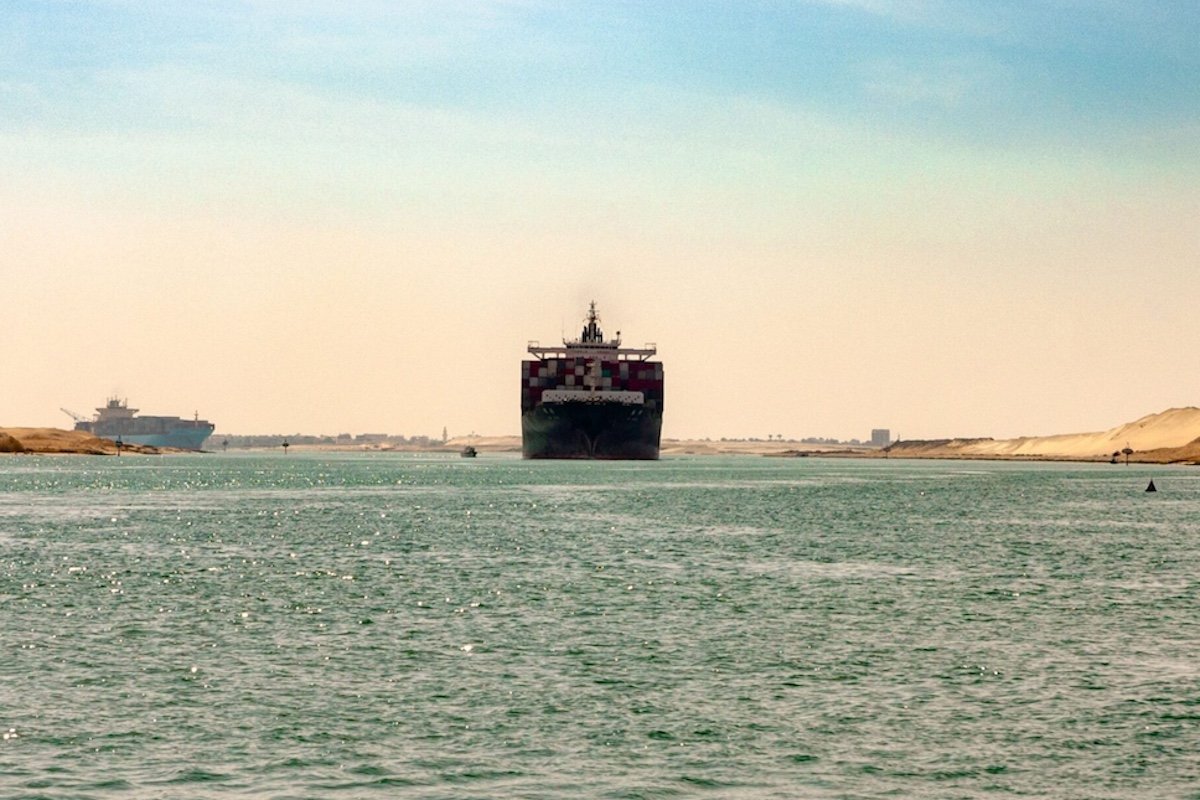

As a result of US and Israeli military actions against Iran since February 28, the Strait of Hormuz – a vital chokepoint between the Persian Gulf and the Gulf of Oman – has been effectively closed to shipping by most nations. In response, US President Donald Trump has asked major European countries and US Indo-Pacific allies to participate in an escort operation.
Several European powers and also Australia have flatly rejected his request, however, and other nations, including China, Japan and South Korea, have maintained a neutral and non-committal stance.
The arguments presented by the US administration to justify its military operation against Iran have been inconsistent and extremely incoherent. Furthermore, this war is generally considered illegal, as it is not based on a UN resolution. Therefore, third-party nations have no legal justification to intervene as President Trump wants.
Although Iran and the US have signed the United Nations Convention on the Law of the Sea (UNCLOS), neither country has ratified the treaty. In practice, however, Iran has generally adhered to UNCLOS, managing the strait with a traffic separation scheme consisting of two lanes, each 2 miles wide.
Now, although Iran has not officially suspended freedom of navigation, it has attacked many ships in the strait and has set up a verification system to allow the passage of ships it deems to be from friendly countries.
Trump’s ego threatens global stability
The illegal military operation that the U.S. fondly calls “Epic Fury” has disrupted the global distribution of oil and gas, but for what purpose?
The two previous military operations of President Trump’s second term, Midnight Hammer on June 22, 2025, against Iran’s nuclear facilities and Absolute Resolution on January 3, 2026, to kidnap the president of Venezuela, appear to have encouraged him to ignore the warnings he should have received about this much more problematic attack on Iran.
Trump’s stance is made clear in videos released by the White House, which mix images of war with cartoon clips. This deeply frivolous approach to using the world’s most powerful military may sit well with his core supporters in the Make America Great Again movement, but for everyone else it simply reveals his narcissistic egotism and raises further doubts about his fitness to command.
Without clearly articulated war aims, without consulting US allies and without the support of the US Congress, President Trump has involved the US in a military and geopolitical quagmire. Trump is likely to suffer devastating domestic political consequences, but it is the global consequences that are of immediate concern.
The US has launched an election war – recklessly, unfairly and unthinkingly causing an economic disaster for the entire world, not least for the long-term US allies he now expects to clean up his mess for. It is not surprising that they are reluctant to get involved, but closing the Strait of Hormuz could force them to play some sort of role in its reopening.
Practice of a vessel tracking operation
Escort operations are generally conducted in wartime, when naval forces assist third parties in transiting a war zone. But there has been no official declaration of war against Iran, which makes the legal situation uncertain. Furthermore, this war has now expanded to include all Middle Eastern countries, as Iran has attacked at least seven Arab countries in retaliation for attacks by the US and Israel.
Iran initially focused on US military bases, but has since targeted civilian, economic and infrastructural facilities. A multinational naval operation to escort ships through the Strait of Hormuz would be insufficient to deter Iran from continuing to damage the global economy.
President Trump has compared escorting ships through the Strait of Hormuz to effective anti-piracy operations in the Gulf of Aden, but the situation is fundamentally different and the comparison is wrong.
At the beginning of the war, Trump declared that the US Navy would escort ships through the Strait of Hormuz, but he apparently changed his mind and tried to shift the problem to the countries most dependent on this choke point.
Well, the US broke it, so the US must fix it: The US 5th Fleet, based in Bahrain, must take responsibility for ensuring freedom of navigation.
Ignoring strategic realities
Some self-proclaimed military experts who do not understand maritime security argue that Iran has laid extensive minefields to block the strait. These apologists for President Trump claim that the global energy supply chain is collapsing, so dependent countries must participate in escort operations.
But the claim of an energy crisis is overstated: the International Energy Agency agreed on March 11 to release emergency oil reserves to stabilize prices.
Moreover, the assumption that Iran would lay extensive minefields takes insufficient account of the national interest. History shows that while mines are effective, the eventual cost of clearance falls heavily on the coastal state – in this case, Iran. Iran says it doesn’t need minescan control the strait by other means.
The need for strategic clarity
Trump must now clearly state the goals of the military operations against Iran and, most importantly, he must take responsibility. to resolve the situation in order to ensure freedom of navigation. Otherwise, the US risks entering another catastrophic and endless conflagration, just like the last 25 years of counter-terrorism efforts.
South Korea, facing an unrelenting enemy, feels particularly badly used by Trump. The US has undermined the effectiveness of the ROK-US defensive posture against North Korea by unilaterally moving Patriot-3 and THAAD batteries from Korea to the Middle East without consultation, only to then seek Korean naval deployments to Hormuz.
Overall, it is hard to avoid the conclusion that this terrible and unnecessary war has resulted from President Trump’s personal agenda: to distract the American public from the ongoing Epstein saga and to boost his own ego through (so he expected) quick and satisfying military success. The parallels between Trump and Russian President Putin have never been clearer.
Sukjoon Yoon is a visiting researcher at the Korea Institute of Military Affairs, a policy advisor at the Ministry of National Defense of the Republic of Korea, and a retired Navy captain. The views conveyed here are his own.



