
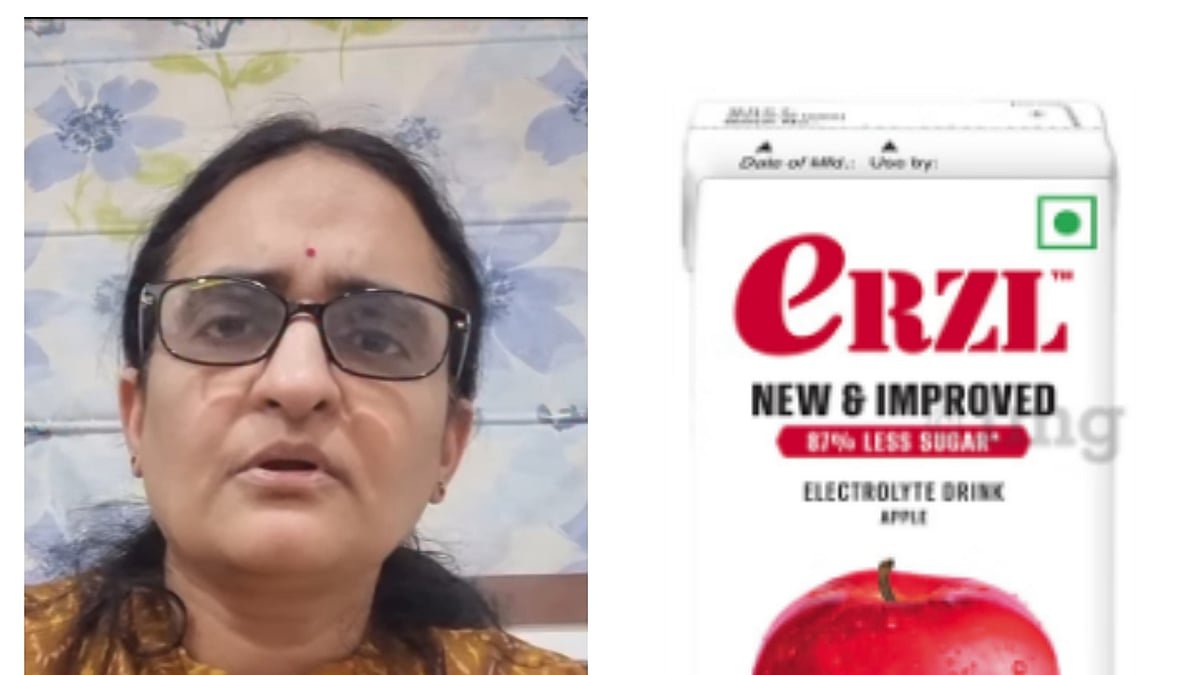

A Hyderabad-based paediatrician, who was at the forefront of a legal battle against misleading marketing of ORS, has now received a legal notice from pharmaceutical giant Johnson and Johnson, accusing it of spreading false information about its energy drink.
The legal dispute came from Kenvue (the pharmaceutical company’s consumer health arm) after Dr Sivaranjani Santosh had warned on social media of the rebranded CRZL energy drink, one that could be confused with an ORS drink and contained sucralose, an artificial sucralose sweetener that is not suitable for children under two.
In October last year, Dr Sivaranjan’s eight-year battle had led to Food Safety and Standards Authority of India (FSSAI) banning all food brands from casually using the label “Oral Rehydration Salts” or “ORS” unless the formulation is in full compliance with guidelines issued by the World Health Organization (WHO).
Dr. Sivaranjani has fought against sugary energy drinks that are often passed off as health drinks or rehydration solutions.
ORSL
polemic
According to a media report, Johnson and Johnson had bought a Bengaluru-based industry’s ORSL energy drink in 2014. Eventually, it was distributed as a fruit-based electrolyte drink in the country.
The drink was labeled and marketed as an oral rehydration salt that could be consumed for diarrheal infections to restore electrolytes.
Last October, FSSAI banned the use of the suffix or prefix ‘ORS’ for fruit-based or non-carbonated drinks that do not conform to the WHO standard formula.
Recently, the pharmaceutical giant introduced to the market a re-branded energy drink ERZL and positioned it as a product with a renewed composition, with 1.4 times more electrolytes and 8 times less sugar. The drink’s packaging labeled it as an ‘electrolyte drink’ as opposed to ORS.
Dr Sivaranjani in her recent social media posts raised a concern about the similarity in the brand names, ORSL and ERZL, claiming that people who previously consumed the ORSL product as an ORS drink would continue to see the re-branded product the same way. Also, she noted that ERZL had sucralose, an artificial sweetener linked to increased risk of insulin resistance, diabetes and gut inflammation.
She also claimed that this form of sugar is not recommended for children under two.
In defence, the pharma giant sent her a legal notice, saying that the composition of ERZL is fully compliant with FSSAI food products standard, calling her social media posts malicious and inaccurate.
What do the parties say?
Speaking of fDr Sivaranjani said all her videos were to spread awareness and not to fuel speculation or malign any brand.
“People who usually buy ORSL as an over-the-counter ORS drink won’t hesitate to buy ERZL for similar function. My goal was to make people see the difference between an ORS drink and an energy or electrolyte drink,” she said. f.
However, Johnson and Johnson dismissed her claims as baseless and falsely made.
The ERZL product is neither intended nor marketed for diarrheal conditions and its packaging clearly identifies the same, said the notice sent by Kenvue, saying it is marketed for fatigue and exhaustion and not for diarrhea.
Defending its position on the presence of sucralose in the formulation, the notice clarified that ERZL is not a ‘baby food’ and questioned its expertise on sucralose.
What is ORS?
Oral rehydration therapy is a therapeutic treatment for treating dehydration caused by illnesses such as diarrhea. The solution is a mixture of water, sugar and electrolytes (mainly sodium and potassium). The sugar used to make the intestines absorb electrolytes is mainly glucose.



